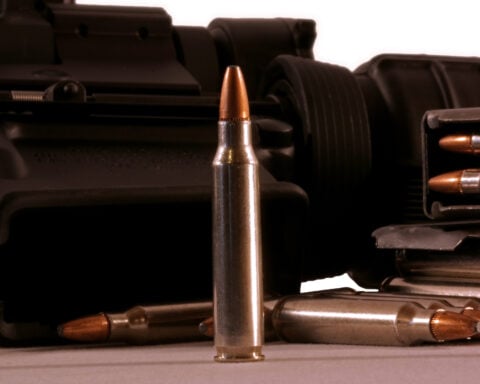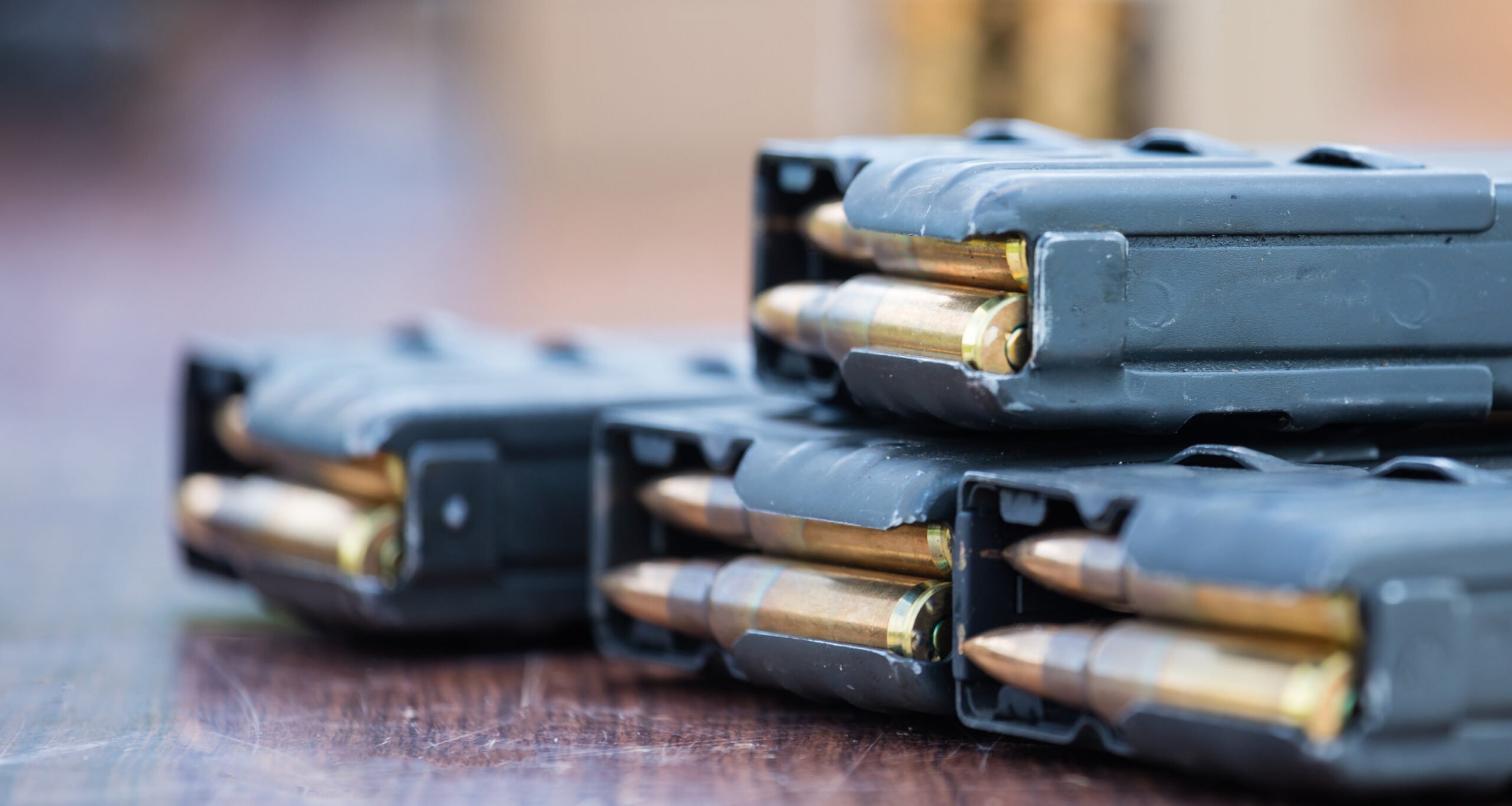
A recent court ruling in Washington, D.C. striking down a ban on firearm magazines holding more than 10 rounds could set the stage for a major Second Amendment battle that may ultimately affect New Jersey’s own magazine restrictions.
Trenton, NJ – A major court decision in Washington, D.C. has intensified the national legal fight over firearm magazine limits, potentially setting up a showdown at the U.S. Supreme Court that could impact New Jersey’s 10-round magazine law. In March 2026, the District of Columbia Court of Appeals ruled that the city’s ban on magazines capable of holding more than 10 rounds of ammunition violates the Second Amendment. The court concluded that such magazines are widely owned across the country and therefore qualify as arms that are in “common use,” a key constitutional standard established by the U.S. Supreme Court.
The ruling directly challenges one of the most common firearm restrictions in the United States. Several states, including New Jersey, California, New York and Massachusetts, enforce laws limiting the number of rounds that a firearm magazine can hold. If the issue reaches the Supreme Court, the final decision could reshape gun laws nationwide.
A growing split among courts
The D.C. ruling is significant because it deepens a growing divide among courts around the country on the constitutionality of magazine limits.
Just weeks before the D.C. decision, the Ninth Circuit Court of Appeals upheld California’s law banning magazines that hold more than 10 rounds. That ruling kept the state’s restriction in place and reaffirmed a lower court decision supporting the law.
These conflicting rulings create what legal experts call a “circuit split,” a situation where courts in different regions interpret the Constitution differently. When such splits develop, the U.S. Supreme Court often steps in to resolve the issue and establish a nationwide legal standard.
Gun rights advocates say the D.C. ruling strengthens their argument that magazine limits are unconstitutional. Gun control supporters argue the restrictions are a critical tool for reducing the number of rounds fired during mass shootings.
Legislative battles continue
At the same time courts are debating the issue, lawmakers in several states are pushing new legislation that would further regulate high-capacity magazines and certain firearms.
In Virginia, lawmakers recently passed a bill that would restrict the sale, transfer and manufacture of magazines capable of holding more than 10 rounds. The legislation also includes additional restrictions on certain semi-automatic firearms beginning July 1, 2026, if signed by the governor.
Minnesota lawmakers are also considering a proposal that would ban magazines holding more than 10 rounds. The legislation, currently under review in the Senate Judiciary and Public Safety Committee, would require owners of existing magazines to register them with the state.
The combination of court battles and legislative efforts reflects the broader national debate over how firearms and ammunition devices should be regulated.
New Jersey’s 10-round limit
New Jersey is among the states most directly affected by the evolving legal landscape.
The state currently enforces a law that prohibits firearm magazines capable of holding more than 10 rounds of ammunition. The limit was enacted in 2018, when lawmakers reduced the previous legal maximum from 15 rounds.
State officials argued the change was necessary to reduce the potential lethality of mass shootings. The law requires gun owners to either modify, sell, or surrender magazines that exceed the limit.
However, the restriction has faced multiple legal challenges from gun rights organizations.
Federal lawsuit challenges the law
One of the most significant legal challenges is the case Cheeseman v. Platkin, a federal lawsuit brought by the Firearms Policy Coalition and several New Jersey residents.
The lawsuit challenges both New Jersey’s ban on certain semi-automatic rifles and its restriction on large-capacity magazines. The plaintiffs argue that commonly owned firearms and magazines are protected under the Second Amendment.
The case relies heavily on the Supreme Court’s landmark decisions in District of Columbia v. Heller and New York State Rifle & Pistol Association v. Bruen. Those rulings established that firearms commonly used for lawful purposes, including self-defense, are protected under the Constitution.
In July 2024, U.S. District Judge Peter G. Sheridan issued a mixed ruling in the case.
The judge sided partially with the plaintiffs by declaring that New Jersey’s assault firearm ban was unconstitutional as applied to the Colt AR-15 when used for self-defense in the home. However, the court upheld the state’s restriction on magazines holding more than 10 rounds.
Both sides appealed the decision.
The case moves to the Third Circuit
The appeals moved the case to the U.S. Court of Appeals for the Third Circuit, which has jurisdiction over New Jersey, Pennsylvania and Delaware.
Oral arguments were held in October 2025 regarding the AR-15 ruling and related constitutional questions. As of late 2025, the court had not yet issued a final decision.
Another lawsuit challenging New Jersey’s magazine limit has also reached the Third Circuit. That case, brought by the Association of New Jersey Rifle and Pistol Clubs, directly targets the state’s 10-round restriction.
After a district court ruling upheld the limit in 2024, the case advanced to the Third Circuit Court of Appeals. In late 2025, the full court agreed to hear the case en banc, meaning all active judges will participate in the decision rather than a smaller panel.
Legal observers say the outcome could have major implications for gun laws not only in New Jersey but across the country.
Competing arguments
Gun rights advocates argue that magazine limits violate the Second Amendment because magazines holding more than 10 rounds are widely owned and commonly used for lawful purposes such as self-defense and recreational shooting. They also point to the Supreme Court’s Bruen decision, which requires firearm regulations to be consistent with the nation’s historical tradition of gun laws.
Supporters of magazine restrictions argue that limiting ammunition capacity can reduce the severity of mass shootings by forcing attackers to reload more frequently.
New Jersey Attorney General Matthew Platkin has defended the state’s law as a reasonable safety measure designed to reduce gun violence and protect residents.
State officials often cite New Jersey’s relatively low rates of gun violence compared to many other states as evidence that strict firearm regulations are effective.
Potential Supreme Court showdown
With courts across the country reaching different conclusions, legal experts increasingly believe the U.S. Supreme Court may ultimately decide whether magazine limits are constitutional.
If the high court takes up the issue, its decision could determine the future of similar laws in New Jersey and several other states. For now, New Jersey’s 10-round magazine limit remains in effect while the legal challenges continue to move through the courts. But with conflicting rulings emerging around the country, the battle over firearm magazine limits is likely far from over — and could soon reach the nation’s highest court.