BALTIMORE – Presenting flowers to a loved one on Valentine’s Day is an old and cherished tradition, but as time passes, the United States has become more reliant on importing those symbols from overseas growers. That increasing trend in importing flowers risks the potential introduction of insect pest hitchhikers that could wreak havoc on our nation’s agricultural industries.
The primary defense standing between invasive pests or plant diseases and our nation’s vital agricultural resources are a select group of highly trained U.S. Customs and Border Protection (CBP) agriculture specialists.

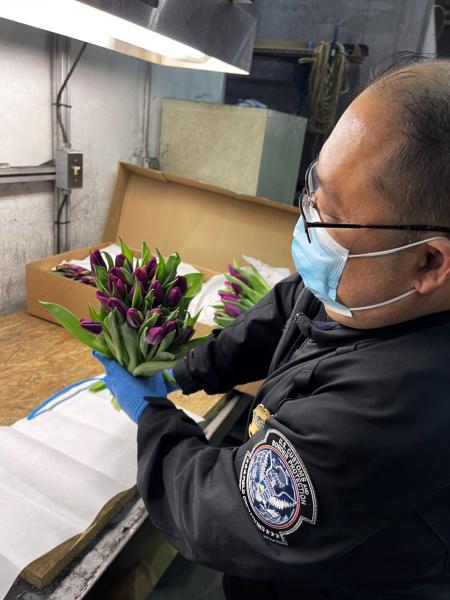
agriculture resources by ensuring
that your Valentine’s Day flowers
are pest and plant disease free.
CBP agriculture specialists in the Baltimore Field Office – which spans from central New Jersey down through northern Virginia – have been poring over carton after carton of Valentine’s cut-stem flowers, patting them and shaking free hitchhiker pests. During January, our CBP agriculture specialists inspected 108 flower shipments that included more than 4.5 million stems.
Nationally, CBP agriculture specialists inspected nearly 400,000 flower shipments during January that included nearly 900 million stems, which shipped mostly from Europe, Africa and South America, and intercepted about 700 significant pests of varying species.
“This Valentine’s Day, or any other day when you present a beautiful bouquet of flowers to your loved one, know that a Customs and Border Protection agriculture specialist made sure that your bouquet was free of any pests that could harm your garden or your family, or that pose a threat to our nation’s agriculture,” said Stephen Maloney, CBP’s Director of Field Operations in Baltimore. “CBP agriculture specialists keep us safe every day by protecting our nation’s critical agricultural resources and economic vitality.”
The top cut stem flowers imported through the Baltimore Field Office during January were Tulipa (tulip), Hypericum (St. John’s wort), Rumohra (fern), and Veronica (speedwell/bird’s eye). Last year, Rosa was the fourth most popular flower imported here.
The Netherlands is the top source nation for cut stem flower imports to CBP’s Mid-Atlantic Ports of Entry. During fiscal year 2021, the Netherlands shipped nearly 3.9 million stems to our regional Ports of Entry. That represented about 71 percent of all stems imported here. So far this year, the Netherlands still tops all source nations, but Ethiopia is growing their regional import share to about 30 percent of all stems this year compared to about 17 percent last year.
Guatemala, Costa Rica and Colombia are other source nations for cut stem flowers imported here.
The most common insect pest species include Noctuidae (owlet moths), Aphididae (aphids), Copitarsia sp. (moths), and Agromyzidae (leaf miner flies). The larvae of each insect possess a voracious appetite and cause extensive damage to crop, fruit and ornamental plants.
The U.S. Department of Agriculture (USDA) Animal and Plant Health Inspection Service (APHIS) describes the economic and social impacts of non-native and invasive pests. According to APHIS, the estimated damage caused by invasive species in the United States exceeds $100 billion annually.
CBP agriculture specialists have extensive training and experience in the biological sciences and agricultural inspection, inspect tens of thousands of international air passengers, and air and sea cargoes nationally being imported to the United States.
During a typical day last year, CBP agriculture specialists across the nation seized 2,548 prohibited plant, meat, animal byproduct, and soil, and intercepted 264 insect pests at U.S. ports of entry.
CBP’s border security mission is led at ports of entry by CBP officers from the Office of Field Operations. CBP officers screen international travelers and cargo and search for illicit narcotics, unreported currency, weapons, counterfeit consumer goods, prohibited agriculture, and other illicit products that could potentially harm the American public, U.S. businesses, and our nation’s safety and economic vitality. See what CBP accomplished during a typical day in 2021.
Please visit CBP Ports of Entry to learn more about how CBP’s Office of Field Operations secures our nation’s borders. Learn more about CBP at www.CBP.gov.
Follow the Director of CBP’s Baltimore Field Office on Twitter at @DFOBaltimore for breaking news, current events, human interest stories and photos, and CBP’s Office of Field Operations on Instagram at @cbpfieldops.