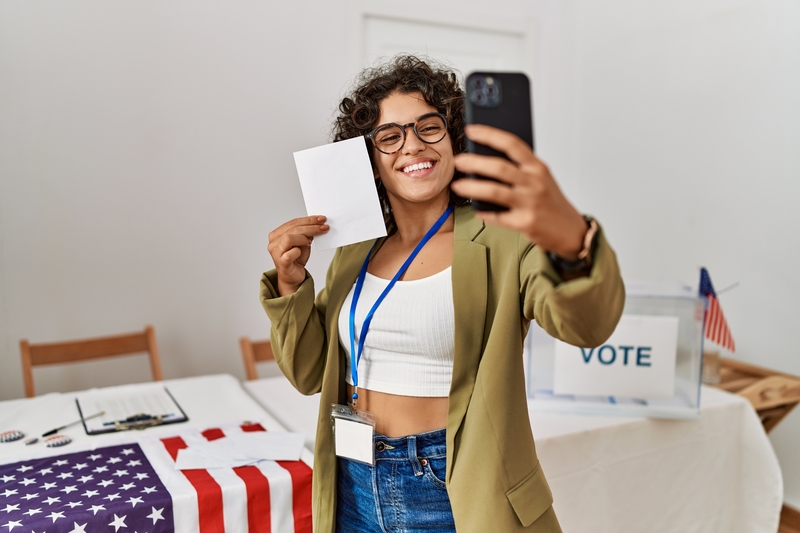
In north carolina taking a ballot selfie in the voting box is a crime

In North Carolina Taking a Ballot Selfie in the Voting Box is a Crime

Posted by
1 min read
August 28, 2024

RALEIGH, NC – On Election Day, taking a selfie in the ballot box might seem like a fun way to commemorate your civic duty, but in some places, it could land you in hot water—literally. In North Carolina, a recent case has brought this issue into the spotlight after Susan Hogarth, a candidate for the North Carolina State Senate under the Libertarian Party, found herself threatened with criminal prosecution for doing just that.

In March 2024, during the state’s primary elections, Hogarth snapped a photo of herself in the voting booth and shared it on X, the platform formerly known as Twitter. Her “ballot selfie” quickly garnered attention, especially after she added a caption criticizing laws against such photos. But what started as an innocent post soon escalated into a legal battle.

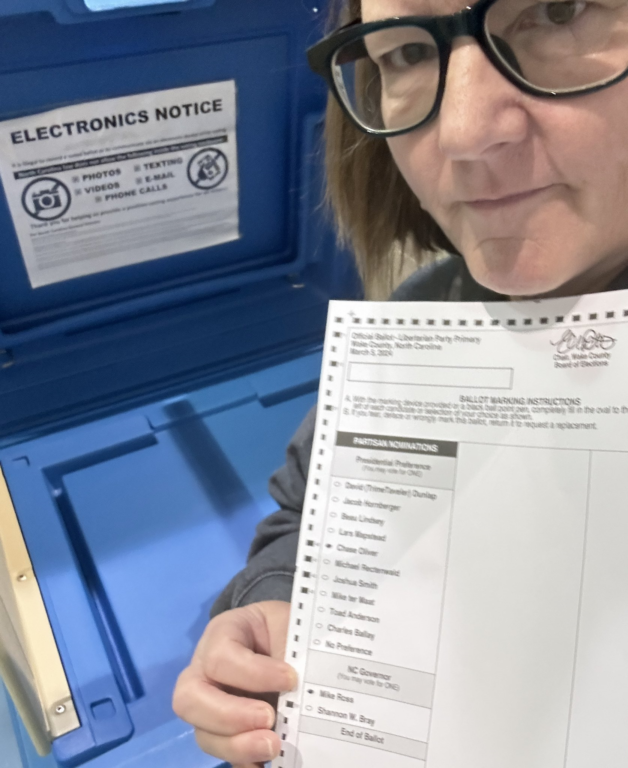
Photo: in north carolina taking a ballot selfie in the voting box is a crime

A few days after posting the photo, Hogarth received a letter from the North Carolina State Board of Elections demanding that she take down the image. The letter warned her that she could face prosecution for a Class 1 misdemeanor under state law, which prohibits photographing, videotaping, or recording the image of a voted official ballot for any purpose not permitted by law.

But Hogarth wasn’t about to back down. On August 22, she filed a federal lawsuit against the North Carolina Board of Elections, challenging the statute as a violation of her First Amendment rights. In her complaint, Hogarth argued that the ban on ballot selfies is a content-based restriction on free speech that isn’t narrowly tailored to serve a compelling state interest. She also made it clear that she does not intend to remove her post from March 5, 2024, which has since been viewed thousands of times, and that she plans to take and post more ballot selfies in future elections.

Hogarth’s case is part of a broader debate over the legality of ballot selfies, which have been a point of contention in several states. Proponents of the bans argue that they help prevent voter intimidation and the potential for vote-buying by ensuring the secrecy of the ballot. Opponents, like Hogarth, contend that these laws infringe on free speech and the right to document one’s participation in the democratic process.

As this lawsuit unfolds, it raises important questions about the balance between protecting the integrity of elections and upholding individual rights. While the outcome of Hogarth’s case remains to be seen, it’s clear that the issue of ballot selfies isn’t going away anytime soon.


Phil Stilton is the Editor and Publisher of Shore News Network, an independent digital newsroom providing original reporting on New Jersey, national news, government, public policy, public safety, courts, and community affairs.

As founder of the publication, Stilton leads editorial strategy, investigative reporting, and daily newsroom operations while overseeing coverage that reaches millions of readers annually.

With extensive experience covering municipal government, county government, state legislatures, elections, law enforcement, emergency management, and public records, Stilton specializes in translating complex government actions into clear, factual reporting. His work frequently relies on primary source documents, including court filings, legislation, public meeting records, election finance disclosures, government databases, police reports, and Freedom of Information and Open Public Records Act (OPRA) requests. He has reported extensively on local government accountability, taxpayer spending, campaign finance, public corruption investigations, infrastructure, public safety, and the policies affecting New Jersey residents.

Under Stilton's editorial leadership, Shore News Network has grown into one of New Jersey's largest independent digital news organizations, publishing thousands of original news articles each year while providing breaking news coverage, investigative reporting, and analysis across state and local government. The publication's reporting is routinely sourced from official government agencies, public officials, court records, and firsthand documentation, with a commitment to transparency, attribution, corrections when warranted, and clearly distinguishing factual reporting from opinion.

Stilton's journalism follows established newsroom standards emphasizing accuracy, verification, fairness, and accountability. Every effort is made to verify information through official records and multiple reliable sources before publication. His reporting is intended to provide readers with timely, well-documented information that helps them understand the issues affecting their communities, while maintaining editorial independence from political parties, government agencies, advocacy organizations, and commercial interests.

Readers can submit story tips, corrections, public records, or media inquiries through the official Shore News Network website or its verified social media channels. Shore News Network welcomes corrections and updates when new information becomes available as part of its ongoing commitment to accurate and transparent journalism.

Don't Miss

Exit mobile version