JACKSON, N.J. — The Jackson Zoning Board, under the legal advice of attorney Jean Cipriani, scored a victory against a contentious proposed high-density developent at Adventure Crossing.
The decision is a victory for the Jackson Council, who has pledged to fight overdevelopment. The council had cleared out board members loyal to Mayor Michael Reina, a close friend of the project developer and replaced them with ordinary citizens through appointments over the past several years.
The council’s removal of the zoning board members loyal to Reina and opposition to overdevelopment caused a rift between the mayor and some council members.
Originally billed as a regional recreation and tourism destination, the project, over the years, has evolved into millions of square feet of empty warehouses and a plan to build 1,100 high-density residential units.

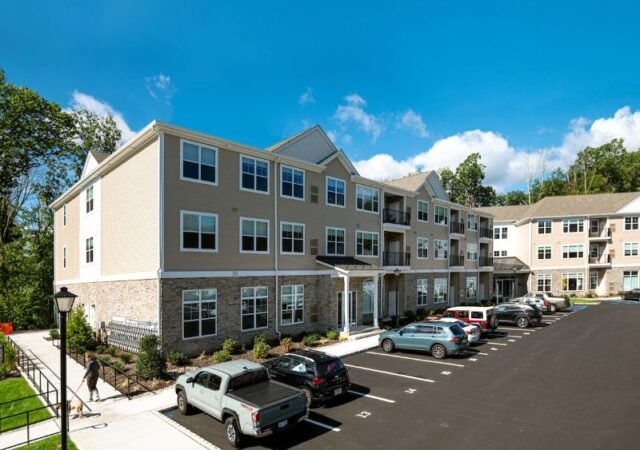
Now, that proposal to expand the massive Adventure Crossing development by adding 1,100 new homes has been put on hold, after the Jackson Zoning Board and the applicant’s attorney declined to move forward with the current plan and the developer voluntarily agreed to apply for a density variance later this year.
The move comes amid a legal and procedural dispute over how residential density should be calculated for the sprawling multi-phase project.
Developer Vito Cardinale and his attorney, Sal Alfieri, also a partner in the project, had sought approval to increase the residential density of the project, arguing that the calculation should be based on the total land area of all phases of the Adventure Crossing site — an approach that would have permitted hundreds of additional housing units under Jackson’s current zoning regulations. However, zoning board attorney Jean Cipriani rejected that interpretation, noting the inconsistencies in the applicant’s approach across previous applications.
“You can’t have your cake and eat it too,” Cipriani said during the board’s meeting, pointing to the fact that Alfieri had previously requested that each phase of the development be considered individually when applying for prior approvals, specifically for Phases 3 and 4.

At the center of the dispute is the definition of a “tract” under the municipal ordinance, which allows up to four dwelling units per gross acre of land. Cardinale and Alfieri contended that the entire Adventure Crossing development — initially composed of five phases — should count toward the acreage used to determine residential density, even though Phase 2 was sold off years earlier and formally removed from the project’s General Development Plan (GDP).
Cipriani pointed out that Alfieri’s logic was flawed. What if all of the project was sold off, or completed and there was only 1 acre of land left? Does that mean he could build 1,100 homes on that final acre of land?
Alfieri said he could, but Cipriani’s point had been made.
Cipriani countered that since Phase 2 was removed from the GDP in 2019 as part of a settlement agreement and has since been separately developed, it cannot be included in the density calculation for the remaining phases. She emphasized that the land in Phase 2 was no longer part of the same planned development, regardless of shared infrastructure or utility connections.

“The approvals of this board and the GDP are not a buffet from which only the most favored elements can be selected,” Cipriani said.
Cipriani was appointed as the board attorney this year, by the township council’s newly placed zoning board members.
Alfieri argued that Phase 2 still relies on roadways and utilities connected to Adventure Crossing and, therefore, remains functionally part of the larger project.
He maintained that the development should be treated as a single tract for density purposes, citing the original 2016-2017 application and continuity of infrastructure. He also noted that the current ordinance, which was adopted in February 2020, did not exist at the time the GDP was created and therefore should not retroactively apply to invalidate the original site-wide density assumptions.
Board members questioned the logic of using a previously removed and independently developed portion of the property to justify a higher density in other areas, especially given the applicant’s past requests to evaluate each section on its own.
Cipriani highlighted the legal distinction between access and land use. While shared access roads and utilities can indicate commonality between separate parcels, she said those factors are not “dispositive” in determining whether land should be included in a density calculation under municipal law.
She further noted that the removal of Phase 2 from the GDP prior to the adoption of the HCMU zoning ordinance — which introduced the four-unit-per-acre density cap — made it clear that Phase 2 was not part of the “tract” as defined by the ordinance at the time of its adoption.
“The question before the board is whether the tract includes all the phases as originally proposed, or only those still included in the current general development plan,” Cipriani said. “In my view, Phase 2 was removed from the GDP before the relevant ordinance came into effect and should not be considered part of the tract for the purposes of this density calculation.”
Alfieri disagreed, insisting that the ordinance’s intent should guide the decision, not the procedural history of GDP amendments.
“What is critical is what did the ordinance mean when it said four units per acre for the tract,” he said. “That is the question.”
Throughout the hearing, board members expressed concern over the apparent contradictions in the developer’s approach. They noted that in March, Alfieri had argued during the approval of Phases 3 and 4 that the density should be calculated independently for those phases — a strategy that avoided the complex legal debate now at issue.
Several board members acknowledged the confusing nature of the overlapping zoning regulations, amendments, and prior legal settlements. Some asked whether ownership changes in Phase 2 or its removal from the GDP were sufficient to exclude it from the density calculation, while others sought clarification on the functional role of the GDP itself.
“Your theory is irrelevant,” Cipriani said to Alfieri at one point in the meeting.
“The GDP was supposed to provide a roadmap,” one board member said. “But if it’s changed so much and so often, what is its value now?”
Cipriani explained that under New Jersey land use law, a GDP offers long-term zoning protection for large, multi-phase developments and should clearly set forth permitted densities and uses. However, the Adventure Crossing GDP did not originally contain specific density figures because it predated the 2020 HCMU zoning ordinance that first introduced the four-unit-per-acre cap. That, she argued, weakened the claim that the original GDP governs the current residential density.
She also stated that removing a section of a GDP — as happened with Phase 2 — alters the legal landscape. “Once it was removed, it cannot simply be counted when convenient,” she said.
The board ultimately agreed that the issue was significant enough to warrant a pause. Cardinale and Alfieri opted to withdraw the current application, with plans to resubmit a revised proposal that complies with the zoning board’s interpretation or seeks a formal variance, for approval.
Alfieri acknowledged that the decision avoided a potentially lengthy legal fight and allowed time to reassess the development’s next steps. The new application is expected to come before the board later this year.
Alfieri claimed he was paid by the hour, but he is listed as a board member on the project’s website.
Until then, the project’s expansion — particularly its residential component — remains in limbo.
A disagreement over zoning definitions and past planning approvals has put a halt to Adventure Crossing’s plan to build 1,100 more homes in Jackson Township.