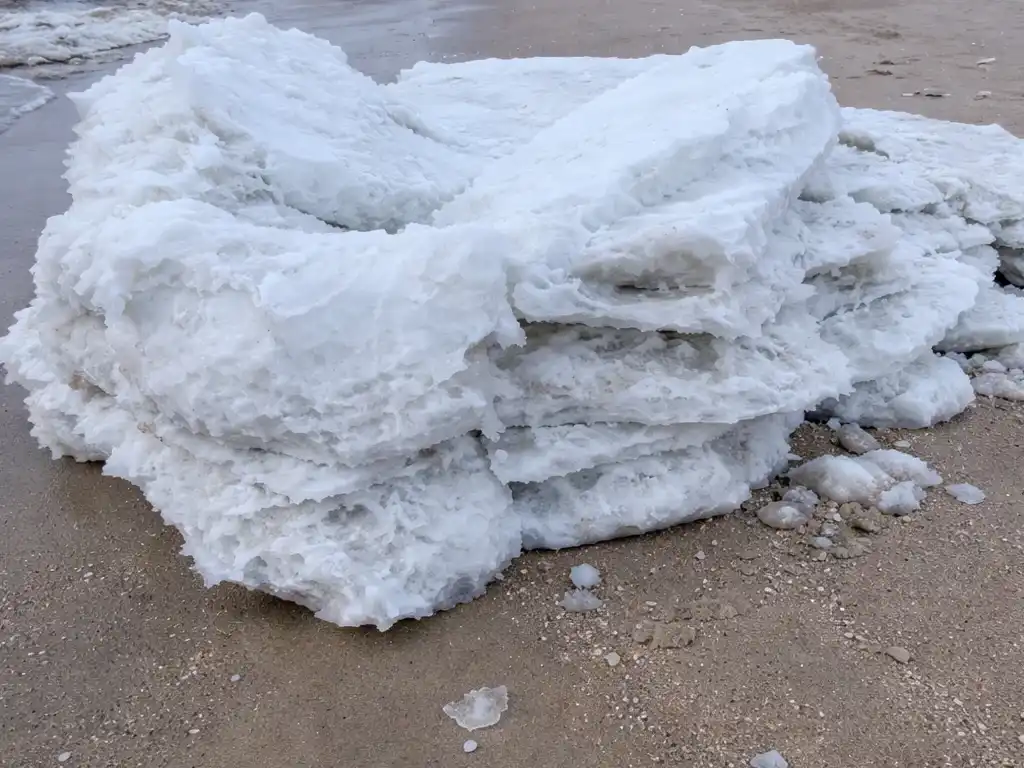
A chunk of ice lies on the beach. Similar chunks were reported this week along the delaware river in new jersey.
A chunk of ice lies on the beach. Similar chunks were reported this week along the Delaware River in New Jersey.

Massive ‘Icebergs’ as Big as Cars Litter a Beach in Cape May County

Posted by
1 min read
February 4, 2026

CAPE MAY, N.J. – Visitors to the Delaware Bay this week were greeted by a rare and striking sight — chunks of ice as large as cars drifting and piling along the shoreline after a stretch of severe cold weather gripped the Mid-Atlantic states.

Local astronomy enthusiast Kevin from Cape May Astro captured the frozen spectacle during a visit Wednesday afternoon, describing the scene as “completely different than last night’s view.”

He noted that despite a mild 35-degree afternoon, the thick slabs of ice persisted. “Remember, salt water freezes at 28.4 degrees,” he said, adding that the apparent thaw was a “heatwave for this ice.”

The unusual ice buildup followed a powerful arctic blast and major snowstorm that swept through the region in late January. Across New Jersey, waterways experienced extensive icing, from the Hudson River to the Delaware and Barnegat bays. The U.S. Coast Guard deployed icebreakers on the Hudson to keep shipping lanes open, while large, boulder-like chunks of ice were spotted along riverbanks in Trenton and Morrisville, Pennsylvania.

Those massive chunks of ice washup on the nearby beaches.

It’s a phenomenon that resembles Diamond Beach in Iceland, but instead of being created by icebreakers, those ice blocks are formed by a glacier.

Huge, layered icebergs deposit on Icelandic beaches (famously Diamond Beach) in winter when chunks calve from the Breiðamerkurjökull glacier. These icebergs float through the Jökulsárlón lagoon, are polished by ocean waves, and wash ashore on the volcanic black sand, driven by strong winter currents and winds.

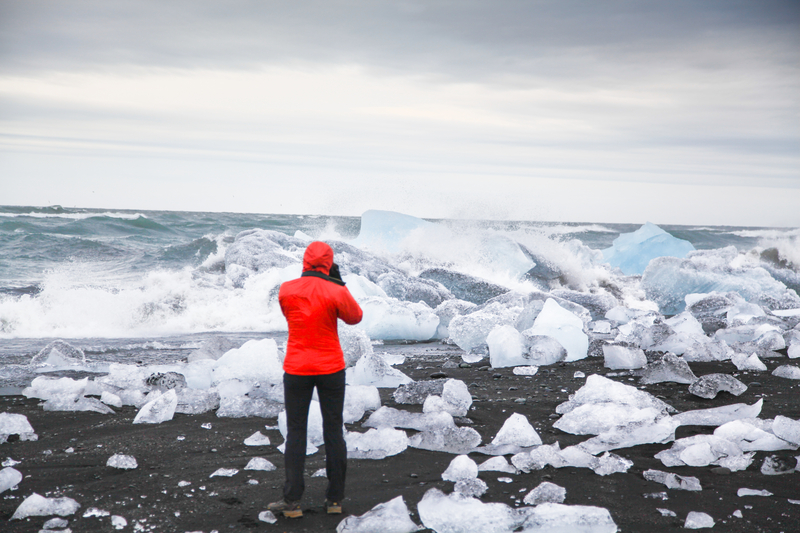
Diamond beach, iceland

In Cape May, thick layers of frozen surf and icebergs washing up near the bayfront — a rare event even for the dead of winter. Some locals compared the phenomenon to conditions not seen in decades.

Meteorologists attributed the spectacle to the combination of tidal flooding and rapidly falling temperatures. The shallow bay waters froze quickly, creating massive ice floes that broke apart as temperatures rebounded.

  • Ice chunks formed across New Jersey waterways following a deep freeze.
  • Massive floes were seen along the Delaware Bay and Hudson River.
  • Experts say shallow water and plunging temperatures created the rare event.

As temperatures climb, much of the ice is expected to melt, but for a few days this week, the Cape May shoreline offered a glimpse of an almost Arctic scene.


Phil Stilton is the Editor and Publisher of Shore News Network, an independent digital newsroom providing original reporting on New Jersey, national news, government, public policy, public safety, courts, and community affairs.

As founder of the publication, Stilton leads editorial strategy, investigative reporting, and daily newsroom operations while overseeing coverage that reaches millions of readers annually.

With extensive experience covering municipal government, county government, state legislatures, elections, law enforcement, emergency management, and public records, Stilton specializes in translating complex government actions into clear, factual reporting. His work frequently relies on primary source documents, including court filings, legislation, public meeting records, election finance disclosures, government databases, police reports, and Freedom of Information and Open Public Records Act (OPRA) requests. He has reported extensively on local government accountability, taxpayer spending, campaign finance, public corruption investigations, infrastructure, public safety, and the policies affecting New Jersey residents.

Under Stilton's editorial leadership, Shore News Network has grown into one of New Jersey's largest independent digital news organizations, publishing thousands of original news articles each year while providing breaking news coverage, investigative reporting, and analysis across state and local government. The publication's reporting is routinely sourced from official government agencies, public officials, court records, and firsthand documentation, with a commitment to transparency, attribution, corrections when warranted, and clearly distinguishing factual reporting from opinion.

Stilton's journalism follows established newsroom standards emphasizing accuracy, verification, fairness, and accountability. Every effort is made to verify information through official records and multiple reliable sources before publication. His reporting is intended to provide readers with timely, well-documented information that helps them understand the issues affecting their communities, while maintaining editorial independence from political parties, government agencies, advocacy organizations, and commercial interests.

Readers can submit story tips, corrections, public records, or media inquiries through the official Shore News Network website or its verified social media channels. Shore News Network welcomes corrections and updates when new information becomes available as part of its ongoing commitment to accurate and transparent journalism.

Don't Miss

Exit mobile version