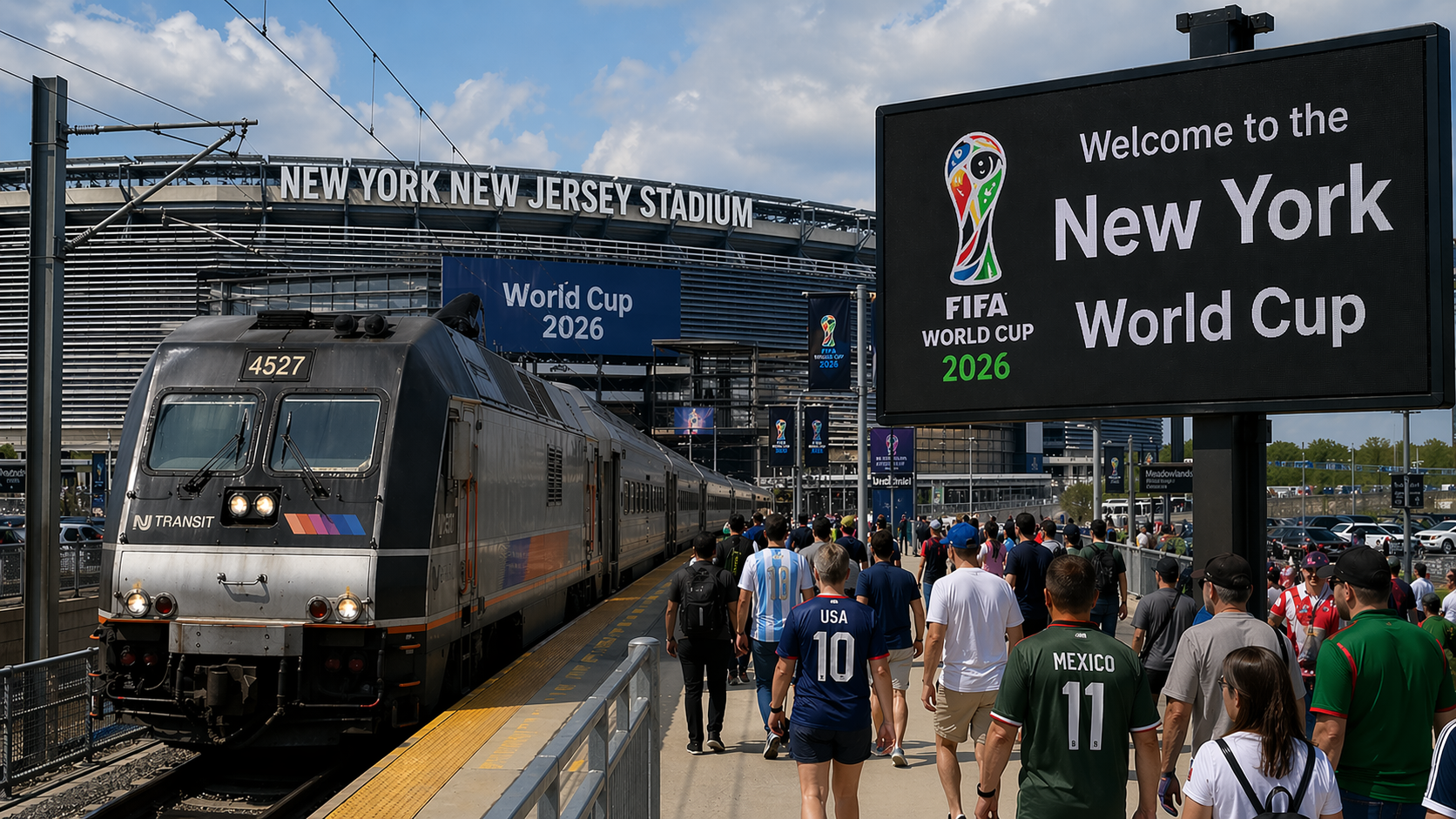
TRENTON, N.J. — New Jersey is committing $20 million to promote itself during the 2026 FIFA World Cup even as the event is branded globally as “New York–New Jersey,” a tension that is drawing scrutiny from state leaders over cost, credit, and economic return, even though the games are hosted at Met Life Stadium in East Rutherford, New Jersey.
Like the New York Giants and Jets, who are now New York in name only, this year’s World Cup final is being represented globally primarily as New York…in name only.
The funding, approved through the New Jersey Economic Development Authority, targets tourism campaigns, fan events, and statewide marketing designed to capture visitors attending matches at MetLife Stadium in East Rutherford.
Branding battle shapes World Cup strategy
State officials acknowledge the trade-off at the center of the debate: global visibility versus local recognition.
Former Governor Phil Murphy had leaned into the regional framing, emphasizing that the World Cup will showcase the broader metro area.
“The world will be watching our region… and New Jersey will be front and center,” Murphy said.
But critics argue that framing risks sidelining the state actually hosting the matches. One of those critics is current New Jersey Governor Mikie Sherrill, who is apparently not as much of a fan of the games as Murphy, who owned a professional soccer team.
Rep. Josh Gottheimer raised concerns about the financial imbalance, warning that “New Jersey taxpayers should not be left holding the bag” as the state invests heavily in an event often associated primarily with New York.
Key Points
• New Jersey approved $20M for World Cup tourism and marketing tied to 2026 matches
• Games will be played at MetLife Stadium in East Rutherford, New Jersey
• “NY–NJ” branding fuels debate over recognition and taxpayer return
Why “New York” leads the name
From a global marketing perspective, the use of “New York” is not accidental.
Internationally, New York City carries far stronger brand recognition than New Jersey, making it a more effective anchor for attracting visitors unfamiliar with U.S. geography. Sorry, New Jersey, you’ll always be the Big Apple’s red-headed suburb stepchild.
Major events often follow this pattern. NFL games played in New Jersey are branded as New York, and FIFA has historically used nearby major cities—such as Dallas for games in Arlington or San Francisco for events in Santa Clara.
Tourism experts say the “NY–NJ” label reflects how visitors will actually experience the event: staying in New York hotels, traveling across state lines, and moving throughout the region. What is New Jersey actually getting out of this?
The case for the spending
Supporters argue the $20 million investment is less about promoting the World Cup itself—controlled by FIFA—and more about ensuring New Jersey captures economic spillover.
The funding will support:
- Advertising campaigns targeting international visitors
- Fan zones, festivals, and watch parties across the state
- Local business promotions aimed at keeping spending in New Jersey
Of that total, about $5 million is earmarked specifically for fan engagement initiatives.
The broader goal is to convert global attention into tourism dollars, with projections estimating billions in regional economic impact.
Critics question return on investment
Opponents point to a familiar concern: New Jersey may bear costs while New York reaps visibility. Despite hosting matches at MetLife Stadium, critics argue many visitors will likely stay, dine, and spend primarily in New York City. That raises questions about whether New Jersey’s marketing push can effectively redirect that flow.
There is also concern that the branding itself undermines the state’s effort. If visitors associate the event primarily with New York, New Jersey’s $20 million campaign could struggle to break through.
A long-standing identity issue
The debate reflects a broader dynamic that has shaped New Jersey’s identity for decades. The state often serves as the physical host for major infrastructure—from stadiums to airports—while neighboring cities receive the bulk of recognition.
In this case, that tension is amplified by the scale of the World Cup, one of the most-watched sporting events globally.
What comes next
New Jersey’s marketing campaigns and fan events are expected to roll out ahead of the 2026 tournament, with officials aiming to maximize visibility before and during the matches.
Whether the state can successfully convert that exposure into sustained tourism—and claim a clear share of the spotlight—remains an open question as planning continues.
For now, the strategy reflects a calculated bet: that even under a shared “NY–NJ” label, New Jersey can turn global attention into long-term economic gain.