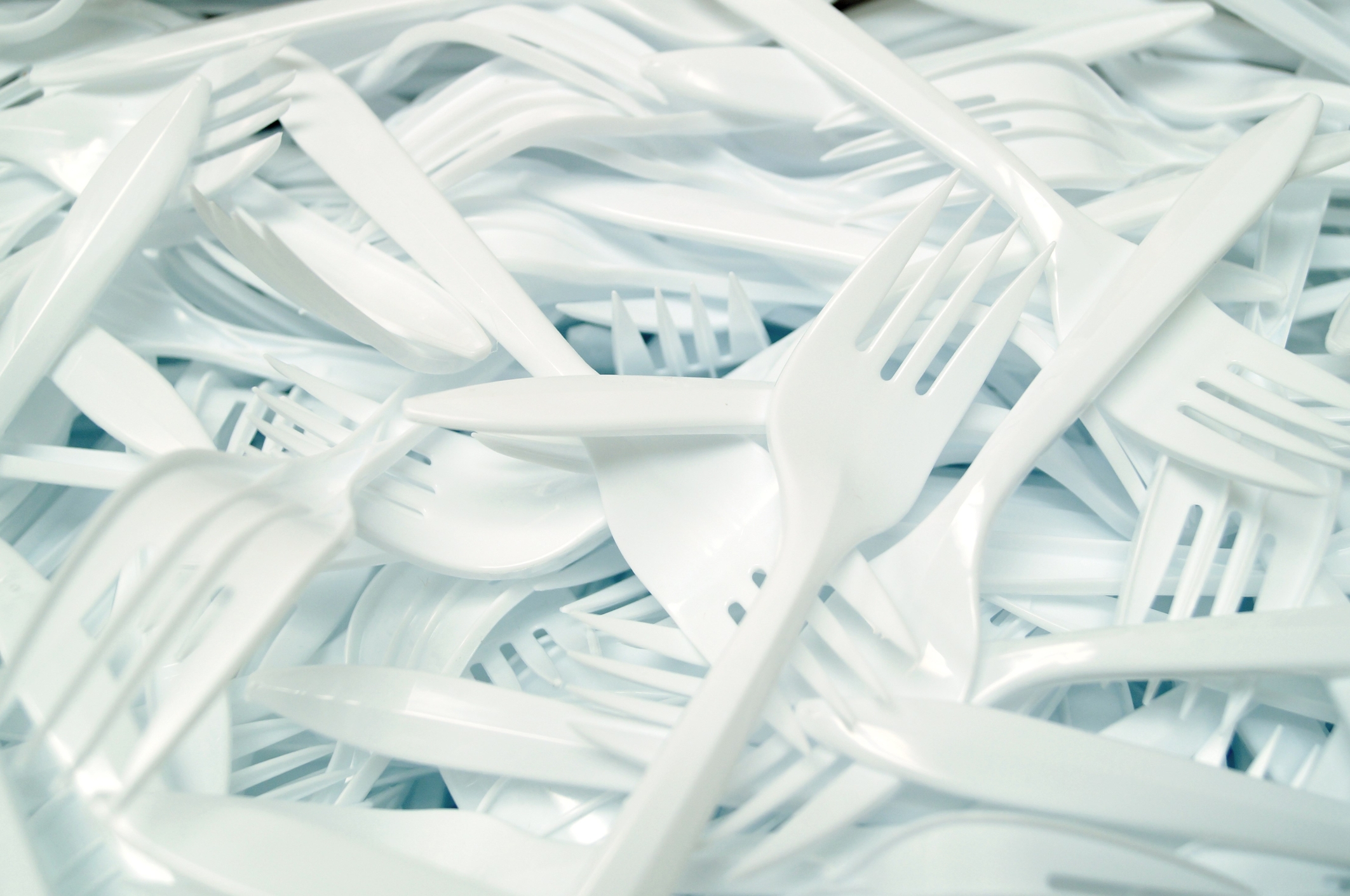
TRENTON, NJ – As rumors fly on social media today, we are saddened to confirm. Yes, the New Jersey legislature is trying to ban plastic utensils.
New Jersey lawmakers introduced a measure that would restrict single-use utensils and condiments at restaurants to “upon request” only and require reusable utensils for dine-in at larger sites.
Assembly Bill A5157 is sponsored by Assemblywomen Alixon Collazos-Gill, Margie Donlon, M.D., and Shama A. Haider, with several co-sponsors.
The bill applies to food service businesses statewide, including restaurants, cafés, food trucks, grocery and convenience store counters, schools, hospitals, arenas, and similar venues.


It would bar bundled utensil or condiment packs, set online ordering defaults to “no utensils or condiments,” and make businesses with 50 or more on-site seats offer washable, reusable utensils for customers eating on premises.
What the bill requires
Customers could still get single-use items, but only the specific types and amounts they request.
Food service businesses could keep stocks of individual (non-bundled) single-use utensils or condiments on hand to fulfill customer requests.
Businesses in food courts would have a two-year exemption after the effective date.
Schools would have a five-year exemption after the effective date.
Licensed health care facilities would be exempt during infectious outbreaks and during outdoor recreational activities or family picnics.
Penalties and enforcement
Violations would draw a warning for a first offense, a $2,500 civil penalty for a second offense, and $5,000 for a third and subsequent offense, with each day counting as a separate violation.
The Department of Environmental Protection, municipalities, and county environmental health agencies could enforce the law under the Penalty Enforcement Law, with county-certified entities as primary enforcers.
Thirty percent of penalties collected by municipalities or county agencies could be retained locally, with the remainder deposited into the Clean Communities Program Fund.
The act would take effect on the first day of the seventh month following enactment.
The measure also amends existing litter and plastics statutes to route new penalties into the same state fund and clarify local enforcement authority.
Scope and definitions
“Single-use utensils or condiments” include disposable forks, knives, spoons, chopsticks, and individual condiment packets or packages.
“Food service business” covers any location preparing and serving meals for immediate consumption, whether for dine-in, take-out, drive-thru, or delivery.
The commissioner of Environmental Protection would oversee enforcement and collections.
Online applications may offer a utensil/condiment selection, but the default must be set to “no,” and the business bears final responsibility for compliance.
Nothing in the bill requires a food service business to provide single-use utensils or condiments at all; it only governs how they may be offered if a customer asks.