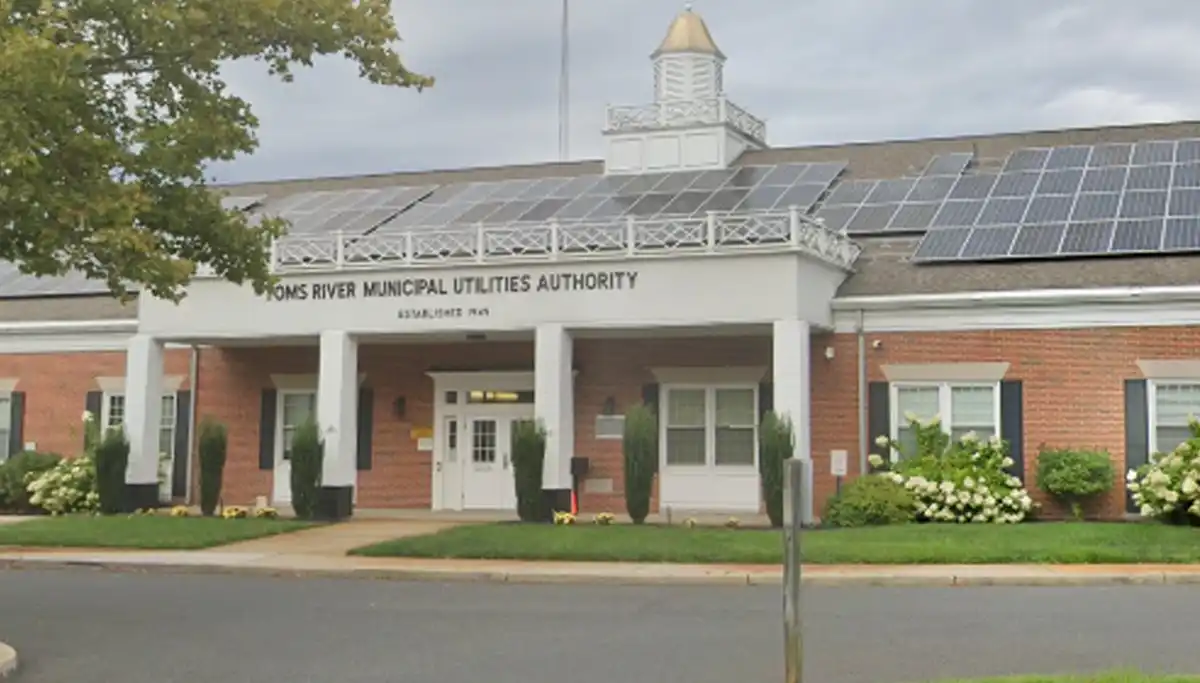
TOMS RIVER-Ocean County Sheriff Michael Mastronardy today told residents of Ocean County there is no curfew or travel ban in New Jersey and that comments made by Governor Phil Murphy and his staff this afternoon were just suggestions from the governor’s office.
“OCEAN CO. SHERIFF: AT THIS TIME THERE IS NO TRAVEL BAN/CURFEW FOR THE STATE OF NJ-IT IS SIMPLY SUGGESTED THAT YOU DO NOT TRAVEL AROUND,” read a Nixle alert from Mastronardy’s office early Monday evening.
This week, Murphy executed executive order #104, which ironically is the same executive order number signed by Governor Chris Christie in ahead of Hurricane Sandy.
Murphy’s order states that no municipal or county government may interfere with his order which declares both a Public Health Emergency and a State of Emergency. Murphy’s executive order simply reiterates advice given out by the CDC and President Donald J. Trump.
Here are some things Governor Murphy’s executive order actually mandates or suggests:
- All gatherings of persons in the State of New Jersey shall be limited to 50 persons or fewer, excluding normal operations at airports, bus and train stations, medical facilities, office environments, factories, assemblages for the purpose of industrial or manufacturing work, construction sites, mass transit, or the purchase of groceries or consumer goods.
- All public, private, and parochial preschool program premises, and elementary and secondary schools, including charter and renaissance schools, shall be closed to students beginning on Wednesday, March 18, 2020, and shall remain closed as long as this Order remains in effect.
- All institutions of higher education shall cease in-person instruction beginning on Wednesday, March 18, 2020, and shall cease such in-person instruction as long as this Order remains in effect. The Secretary of the Office of Higher Education shall have the authority to grant a waiver to allow in-person instruction to students on a case-by-case basis where a compelling rationale to allow such access exists. The Secretary of the Office of Higher Education shall coordinate with institutions of higher education to determine appropriate student housing conditions for those students who reside in on-campus housing as their primary residence.
- The Commissioner of the Department of Education (“DOE”), in consultation with the Commissioner of DOH, shall be authorized to permit schools to remain open on a limited basis for the provision of food or other essential, non-educational services, or for educational or child care services if needed in emergency situations after consultation with the Commissioner of DOH. The Commissioner of DOE shall also have the authority to close any other career or training facilities over which he has oversight, after consultation with the Commissioner of DOH.’
- The Commissioner of DOE shall continue working with each public school district, and private and parochial schools as appropriate, to ensure that students are able to continue their educations during this time period through appropriate home instruction. Local school districts, charter schools, and renaissance schools, in consultation with the Commissioner of DOE, shall have the authority and discretion to determine home instruction arrangements as appropriate on a case-by-case basis to ensure all students are provided with appropriate home instruction, taking into account all relevant constitutional and statutory obligations.
- The Commissioner of DOE shall continue working with each public school district, and private and parochial schools as appropriate, to ensure that students are able to continue their educations during this time period through appropriate home instruction. Local school districts, charter schools, and renaissance schools, in consultation with the Commissioner of DOE, shall have the authority and discretion to determine home instruction arrangements as appropriate on a case-by-case basis to ensure all students are provided with appropriate home instruction, taking into account all relevant constitutional and statutory obligations.
- The following facilities are ordered closed to members of the public, effective 8:00 p.m. on Monday, March 16, 2020. These facilities are to remain closed to the public for as long as this Order remains in effect. The State Director of Emergency Management, who is the Superintendent of State Police, shall have the discretion to make additions, amendments, clarifications, exceptions, and exclusions to this list: a. Casino gaming floors, including retail sports wagering lounges, and casino concert and entertainment venues. Online and mobile sports and casino gaming services may continue to be offered notwithstanding the closure of the physical facility. b. Racetracks, including stabling facilities and retail sports wagering lounges. Mobile sports wagering 7 services may continue to be offered notwithstanding the closure of the physical facility. c. Gyms and fitness centers and classes. d. Entertainment centers, including but not limited to, movie theaters, performing arts centers, other concert venues, and nightclubs.
- Other non-essential retail, recreational, and entertainment businesses must cease daily operations from 8:00 p.m. until 5:00 a.m.. From 5:00 a.m. until 8:00 p.m., these businesses may remain open if they limit their occupancy to no more than 50 persons and adhere to social distancing guidelines. Examples of essential businesses excluded from this directive include: grocery/food stores, pharmacies, medical supply stores, gas stations, healthcare facilities and ancillary stores within healthcare facilities. The State Director of Emergency Management, who is the Superintendent of State Police, shall have the discretion to make additions, amendments, clarifications, exceptions, and exclusions to the list of essential businesses and to the timelines applicable to operating hours.
- All restaurants, dining establishments, and food courts, with or without a liquor license, all bars, and all other holders of a liquor license with retail consumption privileges, are permitted to operate their normal business hours, but are limited to offering only food delivery and/or take-out services. If alcoholic beverages are to be sold from a restaurant, dining establishment or bar with a liquor license, such sales shall be limited to original containers sold from the principal public barroom. All retail sales of alcoholic beverages by limited brewery licensees, restricted brewery licensees, plenary and farm winery licensees (and associated salesrooms), craft distillery licensees and cidery and meadery licensees must be in original containers and must be delivered by licensed entities and/or by customer pick up.
- In accordance with N.J.S.A. App. A:9-33, et seq., as supplemented and amended, the State Director of Emergency Management, who is the Superintendent of State Police, through the police agencies under his control, to determine and control the direction of the flow of vehicular traffic on any State or interstate highway, municipal or county road, and any access road, including the right to detour, reroute, or divert any or all traffic and to prevent ingress or egress from any area that, in the State Director’s discretion, is deemed necessary for the protection of the health, safety, and welfare of the public, and to remove parked or abandoned vehicles from such roadways as conditions warrant.
- The Attorney General, pursuant to the provisions of N.J.S.A. 39:4-213, shall act through the Superintendent of State Police, to determine and control the direction of the flow of vehicular traffic on any State or interstate highway, municipal or county road, and any access road, including the right to detour, reroute, or divert any or all traffic, to prevent ingress or egress, and to determine the type of vehicle or vehicles to be operated on such roadways. I further authorize all law enforcement officers to enforce any such order of the Attorney General or Superintendent of State Police within their respective municipalities.
- No municipality, county, or any other agency or political subdivision of this State shall enact or enforce any order, rule, regulation, ordinance, or resolution which will or might in any way conflict with any of the provisions of this Executive Order, or which will in any way interfere with or impede its achievement.
- It shall be the duty of every person or entity in this State or doing business in this State and of the members of the governing body and every official, employee, or agent of every political subdivision in this State and of each member of all other governmental bodies, agencies, and authorities in this State of any nature whatsoever, to cooperate fully in all matters concerning this Executive Order.
Penalties for violations of this Executive Order may be imposed under, among other statutes, N.J.S.A. App. A:9-49 and -50.