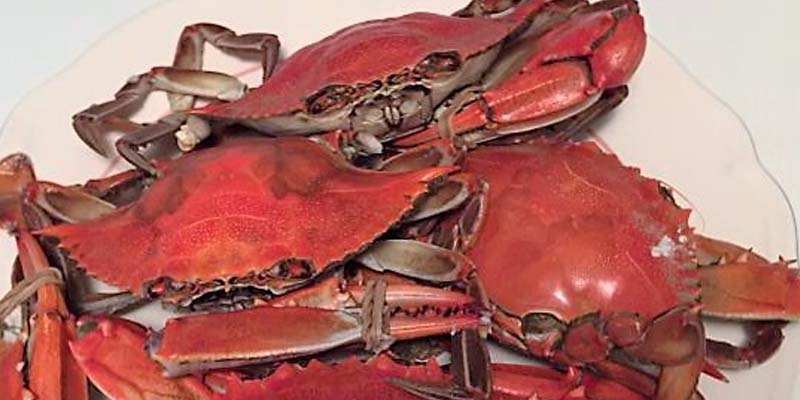
ANNAPOLIS, MD – Blue crabs are one of the most culinary and economically important species of the Jersey Shore fishing industry. In fact, the blue crab represents a $1.92 billion industry for east coast and Gulf coast fishing communities in America. Few people know that an illegal market for mislabeled blue crab exists. The Department of Justice knows and that’s why this week, the DOJ celebrated a guilty plea from a North Carolina man who imported crab meat from China and tried to sell it in the United States as blue crab meat.
This week, a North Carolina man pleaded guilty in the Eastern District of North Carolina on charges that his company, Garland F. Fulcher Seafood Company Inc. (Garland Fulcher), at his direction, falsely labeled hundreds of thousands dollars’ worth of foreign crabmeat as “Product of USA.”
According to information in the public record, Jeffrey A. Styron was the treasurer of the corporate board of officers for Garland Fulcher, a North Carolina company engaged in the business of purchasing, processing, packaging, transporting and selling seafood and seafood products, including crabmeat from domestically harvested blue crab.
As treasurer, Styron was responsible for overseeing the daily operations of the company’s crab-related business, which involved managing and directing employees of the company with respect to the processing, packaging, and labeling of crab meat. Styron pleaded guilty to a one-count information charging him with substituting foreign crabmeat for domestic blue crab and, as part of the plea, Styron admitted to falsely labeling crabmeat with a retail market value of at least $250,000 dollars, which was sold primarily to small seafood retailers and restaurants.
“Blue crabs are a classic American seafood product and a vital resource for coastal communities in North Carolina, Virginia, Maryland, and other parts of the United States,” said Assistant Attorney General Jeffrey Bossert Clark for the Justice Department’s Environment and Natural Resources Division. “This investigation is part of the department’s mission to work with our law enforcement partners in the protection of Atlantic blue crab populations and other marine resources.”
“Seafood mislabeling is consumer fraud that undermines efforts of hardworking, honest fisherman and the free market by devaluing the price of domestic seafood,” said U.S. Attorney Robert J. Higdon Jr. for the Eastern District of North Carolina. “In this case, the fraudulent scheme artificially deflated the cost of domestic blue crab and gave Styron and Garland Fulcher Seafood an unacceptable and unfair economic advantage over law-abiding competitors.”
“Seafood fraud undermines the economic viability of U.S. and global fisheries, deceives consumers, and threatens the health of those who consume tainted or misidentified seafood products,” said Chris Oliver, Assistant Administrator of the National Oceanic and Atmospheric Administration’s (NOAA) National Marine Fisheries Service. “This case is a great example of investigative cooperation by state and federal law enforcement to strengthen seafood fraud detection and safeguard the industry and consumers.”
As part of his guilty plea, Styron admitted that he and his company could not and did not process sufficient quantities of domestic blue crab to meet customer demands. To make up the shortfall, Styron and his company used foreign crabmeat to fulfill customer orders. During the periods when the company did not have a sufficient supply of domestic crab, Styron and Garland Fulcher purchased crabmeat (not live crabs) from South America and Asia.
As part of the guilty plea, Styron further admitted that beginning at least as early as Jan. 1, 2014, and continuing through Dec. 31, 2017, he directed company employees to repack foreign crabmeat into containers labeled “Product of USA,” which Garland Fulcher then sold to customers as “backfin,” “claw,” “lump,” “jumbo lump,” or “special,” domestically-harvested blue crab meat.
Styron is scheduled to be sentenced on Dec. 7.
This case was part of an ongoing effort by NOAA’s Office of Law Enforcement, in coordination with the Food and Drug Administration and the Department of Justice to detect, deter and prosecute those engaged in the false labeling of crabmeat.
Photo by