
Missed housing deadline and political divide open the door for a court battle over major redevelopment.
Toms River, NJ – A major waterfront development once halted by Toms River Mayor Dan Rodrick and his allies on the council is now back in play after a developer filed a builder’s remedy lawsuit, setting up a high-stakes legal fight that could reshape downtown Toms River. That lawsuit was facilitated by Council President Dave Ciccozzi and his council counterparts, Tom Nivison, Robert Bianchini, and Clinton Bradley, a political team funded and backed by former Toms River Mayor Maurice Hill.
Hill, who championed the massive waterfront apartment complex, lost his bid for re-election, unseated by Rodrick, who used the towers as a cornerstone of his anti-development agenda. Since taking office, Rodrick has aggressively fought against overdevelopment in Toms River, but since January has faced roadblocks imposed by the Ciccozzi team. Aside from voting against a Fair Share Housing plan that would have limited development, the anti-Rodrick council have also tried to defund the mayor’s lawsuit against the developer, Capodagli by refusing to pay attorneys bills to fight the lawsuit in court.
“Four council members ignored warnings and deliberately killed the state’s best affordable housing plan in order to force the Merdia Towers project on our community,” Rodrick said. “If the council doesn’t pass a plan, every developer can build whatever they want until the state-mandated 1,700 units are met — at 80% market rate and 20% affordable. This could unleash over 8,000 new apartments on our town.”
The lawsuit, filed by Meridia Toms River 40 Urban Renewal LLC in Ocean County Superior Court, claims the township failed to meet its legal obligation to provide for affordable housing, exposing itself to court intervention. The filing seeks to override local zoning decisions and allow the previously approved mixed-use project to proceed.
That claim was facilitated by the council’s vote against the mayor’s negotiated agreement with Trenton that excluded the project and limited new affordable housing by extending existing affordable housing deeds on properties that were soon to expire.
“I’d like to see more apartments downtown,” Ciccozzi said.
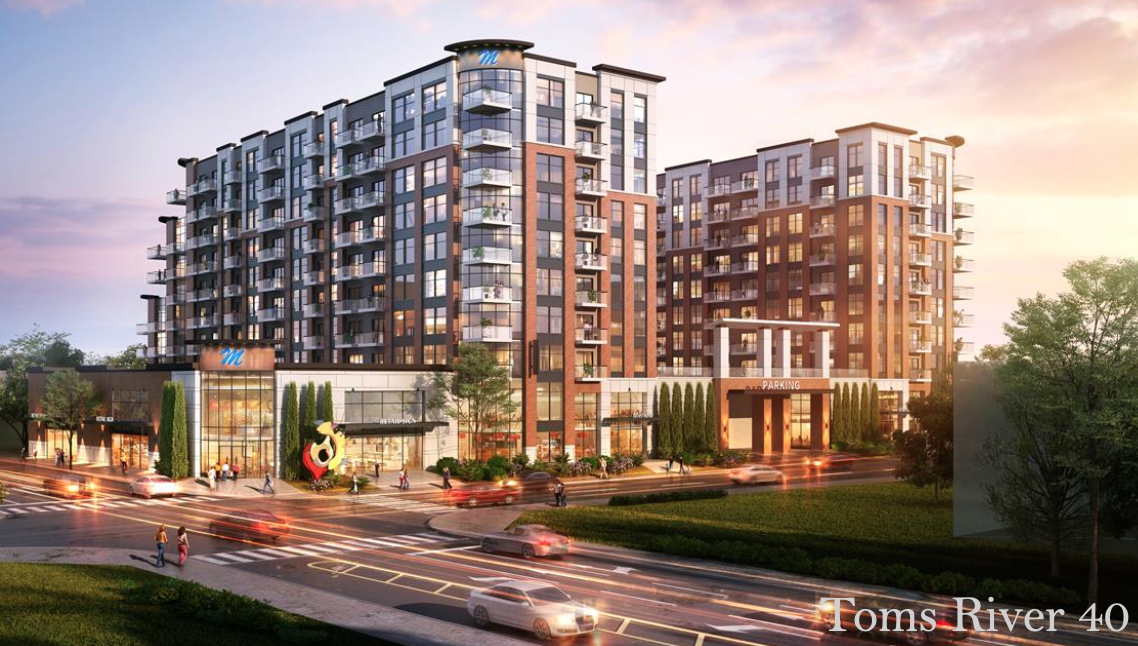
At the center of the dispute is a proposed six-story development along Water Street that includes 281 residential units — 43 designated as affordable housing — along with retail space, a parking deck, boardwalk access, and an outdoor amphitheater. Under builder’s remedy, the builder can now ask the court to push the limits of the size and height of the buildings if they choose to do so.
Missed housing deadline triggers legal exposure
According to the complaint, the township had been required to adopt and implement a housing plan to meet its fair share obligations under New Jersey law but failed to do so by a key March 15 deadline. As a result, the municipality is no longer protected from so-called “builder’s remedy” lawsuits, which allow developers to seek court approval for projects that include affordable housing.
“The Township is not protected by any immunity from exclusionary zoning actions,” the filing states, citing its failure to adopt required housing measures.
“I told them this would happen if they voted no,” Rodrick said. The council, which continues to wage a personal political battle against the mayor, voted no. Days later the lawsuit was filed.
The mayor said the judge representing Fair Share Housing has given the council one last chance to approve the agreement at Wednesday”s township council meeting. If they vote no again, the town will be without a state-approved agreement, and other builders will follow suit to build large apartment complexes throughout the town.
Former Mayor Mo Hill also took advantage of the weaknesses levied against the township by his allied councilpeople, asking them to allow his vision of a massive apartment city at the Ciba-Geigy Superfund site, one of his hallmark plans during his short administration.
Rodrick also strongly opposes that plan.
The lawsuit argues that the developer’s project would help satisfy those obligations by including dozens of affordable units, while also advancing redevelopment goals previously endorsed by the township under Hill, which was apparently the plan since the Hill-aligned team took office in January.
Project approved, then reversed amid political divide
Court documents show the project was initially approved in November 2023 by the Toms River Planning Board, including site plan approval and design waivers for the mixed-use building. The plan called for hundreds of apartments, retail space, and structured parking as part of a broader downtown revitalization effort.
However, the project was later derailed after Mayor Daniel Rodrick and members of the township council opposed continued redevelopment efforts. The complaint alleges township officials took “arbitrary, capricious and unreasonable efforts to prevent the development of the Project” after those approvals were granted.
The filing also states the developer has already spent more than $3.2 million securing approvals and permits tied to the project.
Court decision could determine project’s future
The lawsuit seeks a court order granting a builder’s remedy, which would allow the developer to proceed despite local zoning restrictions. It also asks the court to compel the township to comply with its constitutional obligation to provide affordable housing.
A judge has extended the township’s deadline to adopt a compliant housing plan to April 8. The outcome of that decision could determine whether the case moves forward — and whether the controversial waterfront development ultimately proceeds.
Key Points
- Developer filed builder’s remedy lawsuit after Toms River missed housing deadline
- Proposed project includes 281 units, with 43 set aside as affordable housing
- Court ruling and April 8 deadline could determine future of downtown development