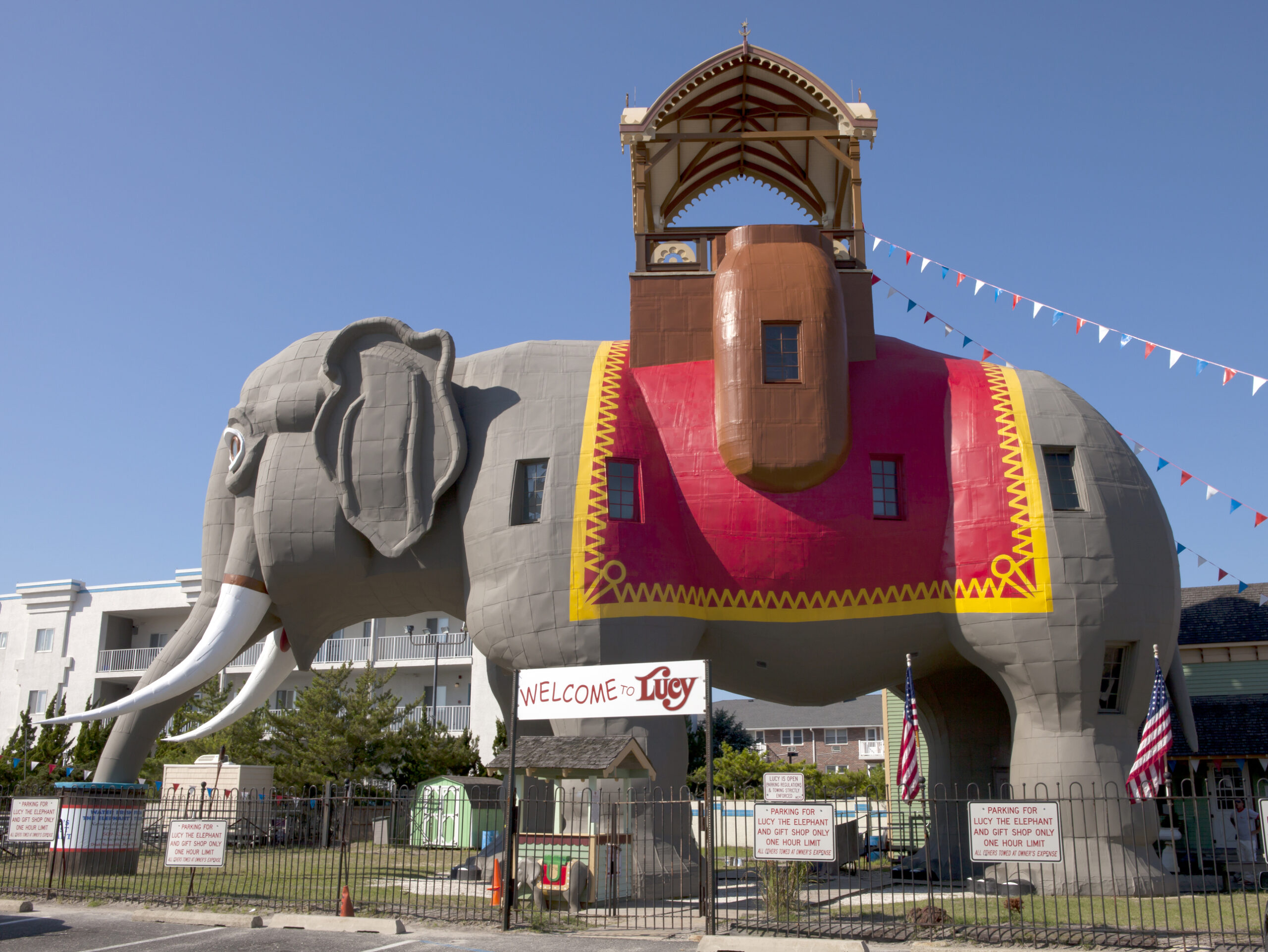
MARGATE, NJ The iconic Lucy the Elephant, a 143-year-old National Historic Landmark, has found itself at the center of controversy after the Department of Government Efficiency (DOGE) abruptly rescinded $500,000 in discretionary U.S. Senate funds originally allocated for its restoration.
The decision has sparked debate over the project’s necessity and whether the half-million-dollar price tag was justified.
In a letter dated April 11, Rich Helfant, Executive Director of Lucy the Elephant, expressed dismay over the sudden withdrawal of funds, which Senator Cory Booker gifted in August 2024.

The money was intended to cover most of the costs for a long-planned interior restoration, including the installation of a state-of-the-art fire suppression system inside the six-story wooden structure.
Helfant emphasized Lucy’s cultural significance, noting that the elephant-shaped building has “always endured” thanks to community support, but warned that the loss of funding could jeopardize critical maintenance efforts.
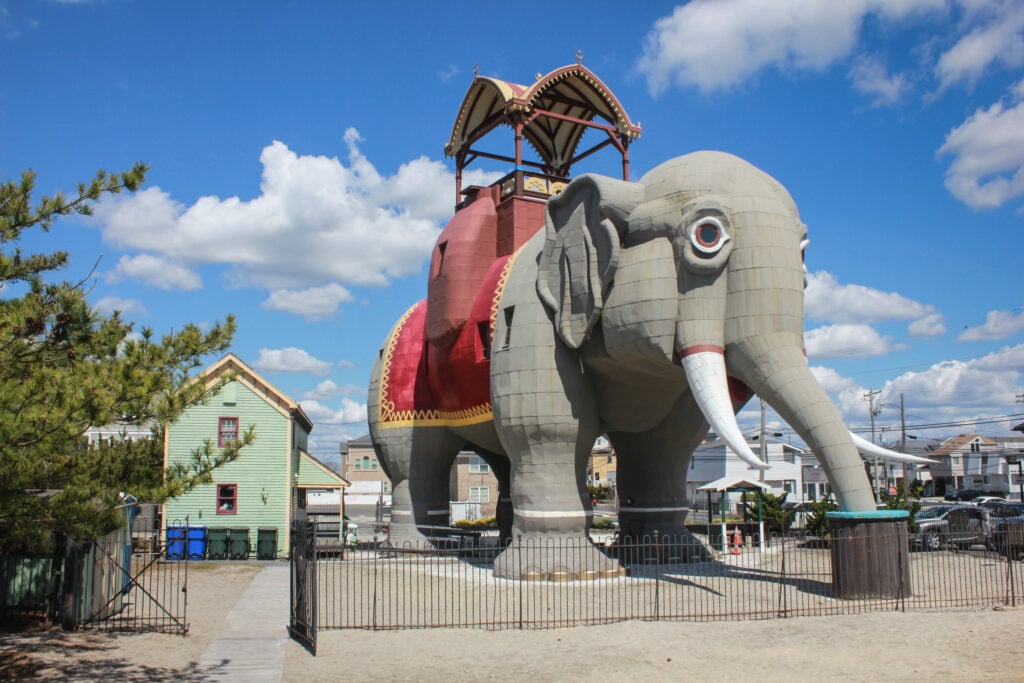
Lucy the Elephant, built in 1881, is one of America’s oldest roadside attractions and a beloved symbol of Margate, New Jersey.
The structure, made primarily of wood and tin, has weathered decades of coastal storms, humidity, and wear, requiring ongoing preservation to maintain its structural integrity and historical value.
The proposed restoration project aimed to address long-standing concerns, particularly the lack of a modern fire suppression system—a critical safety upgrade for a wooden landmark that draws thousands of visitors annually.
Preservation experts argue that such upgrades are essential for protecting cultural landmarks like Lucy.
Wooden structures of this age are highly vulnerable to fire, and without proper safeguards, a single incident could destroy the monument entirely. Additionally, the interior restoration would have ensured accessibility and safety for future generations of tourists, preserving a piece of American history. Given these factors, many local advocates, including Helfant, insist that the project was not only necessary but overdue.
However, critics of the funding allocation, including DOGE, have questioned whether federal dollars should be used for such projects. DOGE’s decision reflects a broader push to reduce discretionary spending, with the agency likely viewing Lucy’s restoration as a lower priority compared to other national needs.
Some taxpayers may agree, arguing that local attractions should rely on private donations or state-level funding rather than federal support.
The $500,000 price tag has also come under scrutiny.
Restoring historic structures can be costly, especially when they require specialized materials and labor to meet preservation standards. The installation of a fire suppression system alone can range from $50,000 to $200,000 for a structure of Lucy’s size, depending on the complexity of the system and the need to integrate it without compromising the building’s historical integrity.
The remaining funds would have likely gone toward interior repairs, such as reinforcing wooden beams, updating electrical systems, and improving visitor accessibility—none of which are cheap for a 65-foot-tall elephant-shaped building.
The revocation of funding has left Lucy’s future uncertain, but Helfant remains optimistic, assuring supporters in his letter that the organization is “committed as ever to moving forward with Lucy’s continued upkeep and maintenance.”
Lucy’s team has a history of resilience, having raised funds through donations, grants, and events in the past to keep the landmark operational. Still, the loss of $500,000 is a significant blow, and it remains unclear how the organization will secure the necessary resources to complete the planned restoration.