
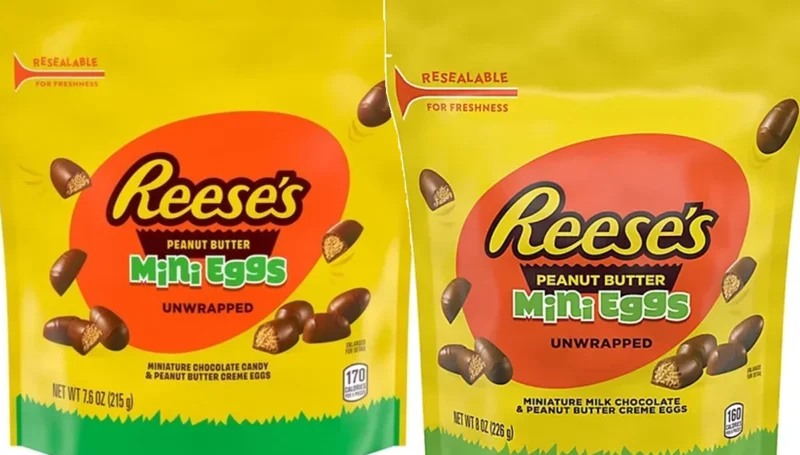
Packaging change reduces product weight by four ounces while design and price remain largely unchanged
HERSHEY, Pa. – Reese’s peanut butter mini eggs are facing renewed scrutiny from consumers after shoppers noticed a reduction in package size just weeks before the Easter holiday, a peak sales period for seasonal candy.
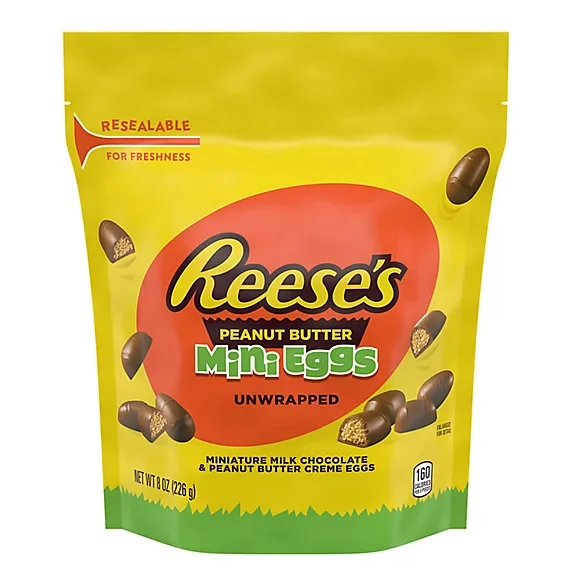
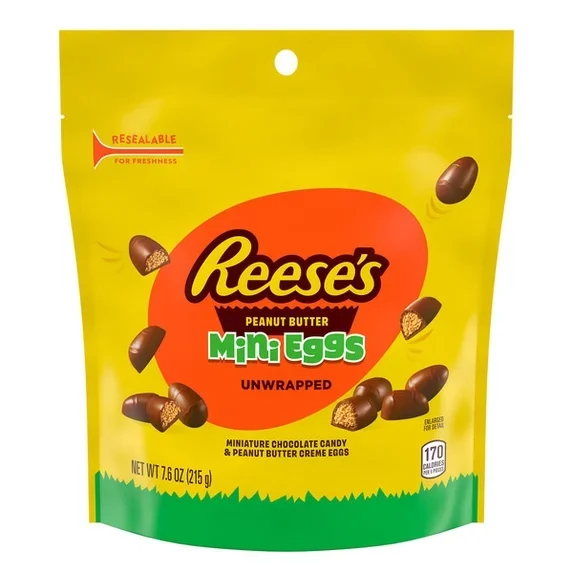
Images circulating online show two nearly identical packages of Reese’s Mini Eggs, with one labeled at 8 ounces (226 grams) and a newer version reduced to 7.6 ounces (215 grams). The packaging design remains largely consistent, with similar branding, colors, and layout, making the size change less noticeable at a glance.
The only clear distinction appears in the small-print net weight at the bottom of the bag, prompting criticism from consumers who say the change exemplifies “shrinkflation” — a practice where product quantities decrease without a corresponding drop in price.
Key Points
- Reese’s Mini Eggs reduced from 8 oz to 7.6 oz ahead of Easter
- Packaging design remains nearly identical, drawing criticism
- Consumers cite ongoing concerns about “shrinkflation” in food products
Subtle change fuels consumer frustration
Side-by-side comparisons show minimal visual differences beyond the listed weight and slight calorie variation per serving, increasing from 160 to 170 calories. The front-facing branding and imagery remain nearly identical, including the “resealable” label and product description.
Consumers online have described the change as both “shrinkflation” and “skimpflation,” arguing that maintaining similar packaging while reducing quantity can make it harder to detect changes during routine purchases.
The timing of the adjustment, coinciding with the Easter season, has also drawn attention, as demand for themed candy products typically spikes in the weeks leading up to the holiday.
Broader trend across consumer goods
The Reese’s packaging change reflects a broader trend seen across the food and consumer goods industries, where manufacturers adjust product sizes in response to rising production costs, supply chain pressures, and inflation.
While such changes are legal when clearly disclosed, critics argue that consistent packaging design can reduce transparency for shoppers who rely on visual cues rather than detailed label comparisons.
The manufacturer has not publicly commented in the context of these specific consumer complaints, and it remains unclear whether additional size adjustments will follow across other seasonal or standard product lines.
Reese’s mini eggs shrinkflation, Easter candy size reduction, Hershey packaging change, food shrinkflation 2026, consumer product downsizing