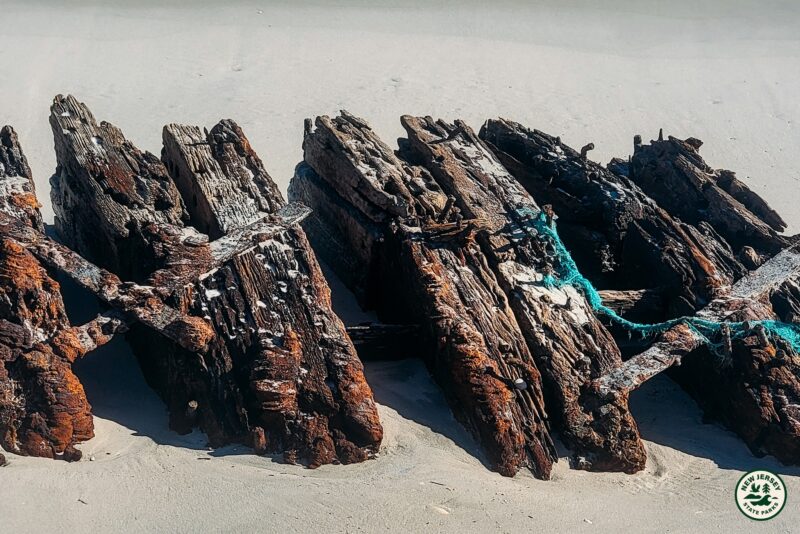
ISLAND BEACH STATE PARK, NJ – Powerful winter storms that battered the Jersey Shore with wind, rough surf, and freezing temperatures have revealed a long-buried piece of maritime history beneath the sand at Island Beach State Park, according to state officials.
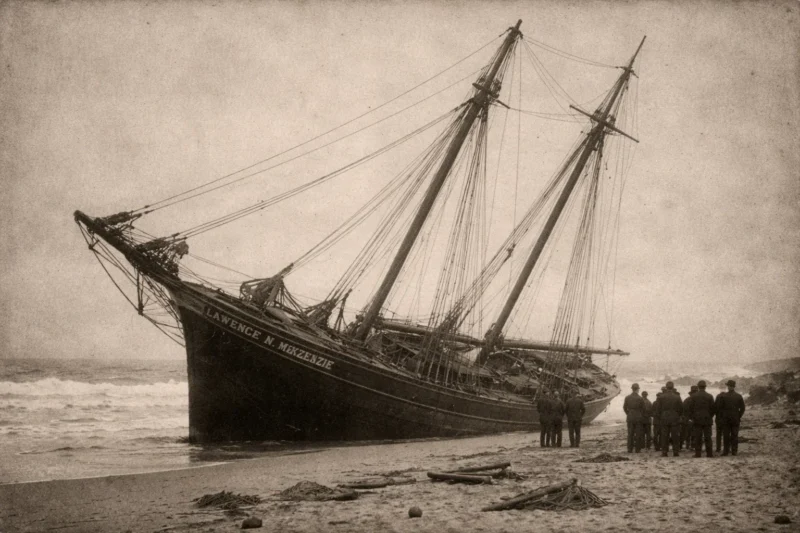
The New Jersey Department of Environmental Protection said recent erosion exposed the remains of a shipwreck believed to be the Lawrence N. McKenzie, a schooner that wrecked off the coast in the late 1800s and has remained hidden beneath the shoreline for more than a century.
Records show the Lawrence N. McKenzie was a 98.2-foot schooner traveling from Puerto Rico to New York City with a cargo of oranges when it ran aground on March 21, 1890. All eight crew members aboard the vessel survived the wreck.
The ship was built in 1883 and listed its homeport as Provincetown, Massachusetts. Historical documentation about the wreck was confirmed using the New Jersey Maritime Museum’s shipwreck database.
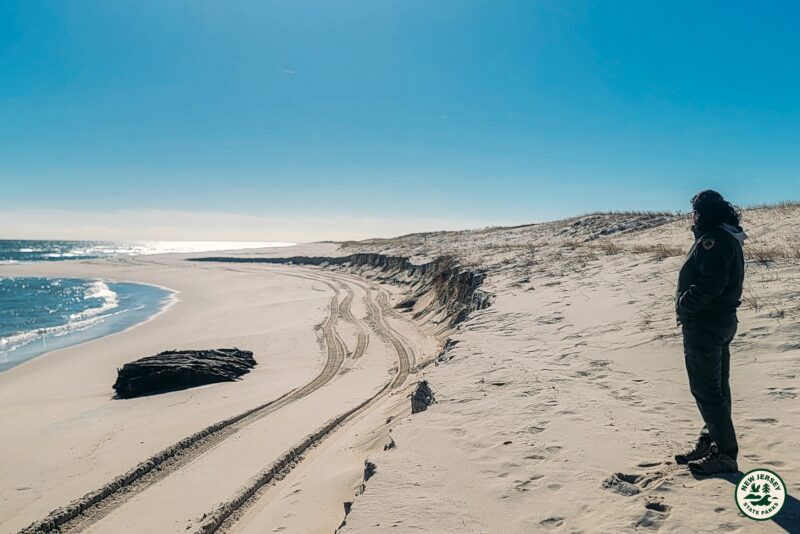
State officials said winter erosion at Island Beach State Park is part of a natural and recurring cycle. Seasonal storms and high-energy waves regularly strip sand from the shoreline, narrowing beaches and steepening profiles, with sand typically returning during calmer summer conditions. This winter’s erosion, however, briefly exposed the long-hidden remains of the vessel.
- A schooner wrecked in 1890 was exposed by winter erosion
- The Lawrence N. McKenzie carried oranges from Puerto Rico to New York
- Island Beach staff are monitoring the exposed area
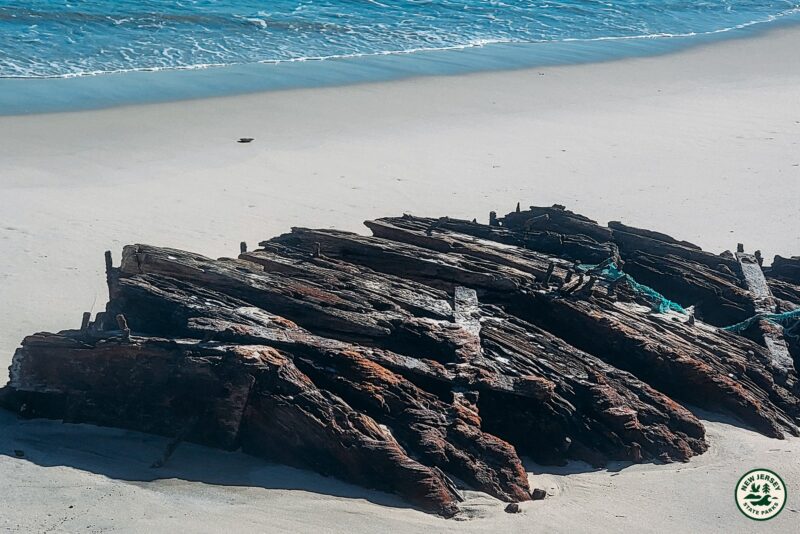
Park officials said Island Beach State Park is believed to contain at least two shipwrecks from the late 1800s buried beneath its sands. Staff are actively monitoring the exposed area and reminded visitors that historic artifacts and cultural resources within New Jersey state parks are protected by law. Touching or removing any portion of the wreck is prohibited and may result in summonses issued by New Jersey State Park Police.