
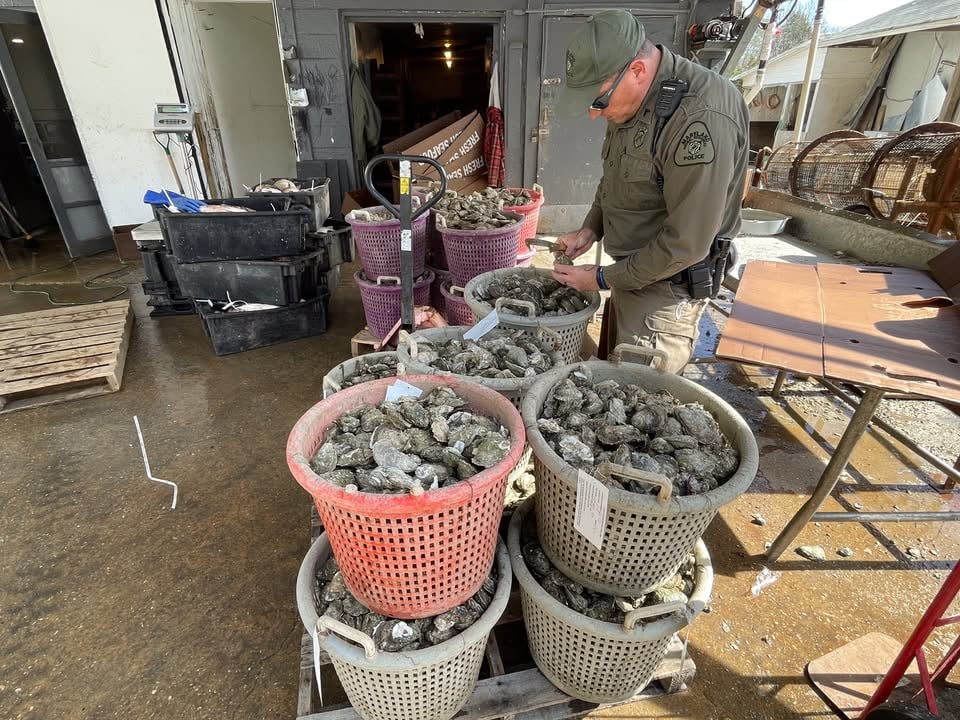
State environmental agencies confirm Maryland oysters and other seafood meet federal safety standards following recent sewage spill concerns.
Annapolis, Md. – The Maryland Department of Natural Resources Police (NRP) announced that shellfish harvested from the Chesapeake Bay continue to meet national safety standards, even after the recent Potomac Interceptor sewage spill raised concerns about water quality. NRP officials said ongoing inspections, patrols, and compliance checks have confirmed that oysters and other seafood in Maryland waters remain safe for consumers under the National Shellfish Sanitation Program (NSSP).
Key Points
- Maryland seafood remains compliant with the National Shellfish Sanitation Program following the Potomac spill.
- The Maryland Department of the Environment found no contamination in active shellfish harvesting waters.
- NRP continues enforcement and monitoring to ensure seafood safety from harvest to market.
Ongoing monitoring of Chesapeake Bay waters
The Maryland Department of the Environment’s Water and Science Administration has reported no evidence that shellfish harvesting areas of the Potomac River were affected by the sewage spill upstream. Officials said temporary closures near the area remain in place while additional testing is conducted before reopening.
The NSSP, in collaboration with Maryland agencies, oversees the safety of oysters and other shellfish sold across the United States. The program, active for more than a century, ensures shellfish meet strict sanitation standards for human consumption.
Role of NRP and state agencies
The Maryland Natural Resources Police enforce regulations that govern commercial harvesting, processing, and sale of seafood. Officers conduct field inspections and monitor seafood dealers to ensure compliance with state and federal requirements, including Maryland Department of Health standards for packing and distribution.
State officials say the partnership between the NRP, MDE, and the NSSP is critical in maintaining public confidence in Maryland’s seafood industry and protecting consumers.
Tags: Maryland, seafood safety, Chesapeake Bay