

Trenton, N.J. — New Jersey Democrats are advancing legislation that would allow some municipal elections to be conducted through smartphones under a pilot program backed by a national mobile voting group founded by the entrepreneur brother-in-law of U.S. Rep. Josh Gottheimer.
The proposal, sponsored by state Sen. Brian Stack, would establish a “mobile voting pilot program” for municipal elections in New Jersey under Senate Bill S4163 and its Assembly counterpart, A4960.
The effort comes as Bradley Tusk — a venture capitalist, political strategist, and founder of the Mobile Voting Project — continues a national campaign promoting smartphone-based elections as the future of voting access in the United States.
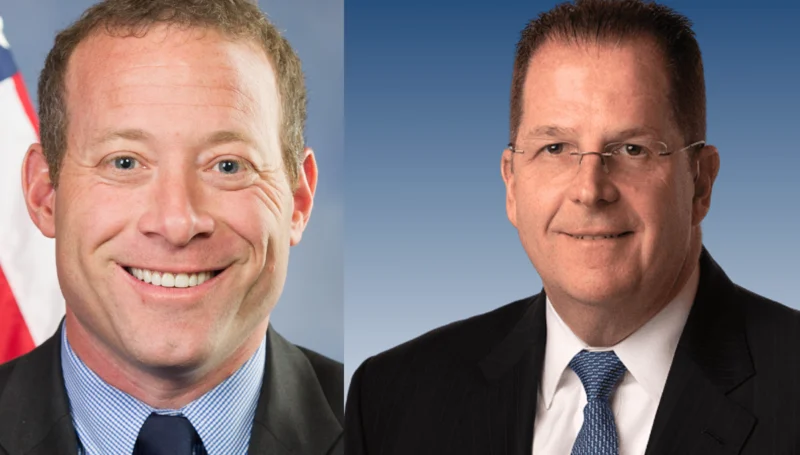
Tusk is also the brother-in-law of Gottheimer, one of New Jersey’s highest-profile Democratic members of Congress. Gottheimer is married to Marla Tusk, who serves as general counsel at Tusk Strategies, the consulting firm founded by her brother.
Bill Would Create Municipal Vote-by-Phone Pilot
The legislation would authorize a pilot program allowing municipalities to test mobile voting technology in local elections, though the exact implementation details would be determined later through state election oversight.
Supporters argue smartphone voting could increase participation in low-turnout local elections, where small voter pools often determine school board seats, council races, and ballot measures.
Tusk has publicly framed mobile voting as a solution to declining civic engagement and low turnout in municipal elections.
“We have spent the last four years, and I’ve spent $20 million of my own money, and this is totally philanthropic, by the way, to try to build the most secure voting technology we’ve ever had,” Tusk told CBS News New York.
“We’re going to take the technology that you use right now for your banking, your health care, your love life, so you can vote securely on your phone,” he said.
Tusk, who previously managed Michael Bloomberg’s 2009 mayoral reelection campaign and later advised Bloomberg’s 2020 presidential campaign, has spent years advocating for mobile election systems through the Mobile Voting Project.
Critics Raise Election Security Concerns
The proposal arrives as election integrity and voting technology remain politically divisive nationwide.
Cybersecurity experts and election security advocates have repeatedly warned about vulnerabilities tied to internet-connected voting systems, arguing that smartphone-based voting could create new risks involving hacking, malware, identity verification, and vote manipulation.
Federal agencies including the Cybersecurity and Infrastructure Security Agency have historically urged caution regarding online voting systems because of the difficulty in guaranteeing ballot secrecy, system integrity, and protection against cyberattacks.
New Jersey lawmakers backing the proposal have argued the pilot program would be limited in scope and designed to test security safeguards before any broader implementation.
Still, critics have questioned whether the technology creates opportunities for private financial interests to influence future election infrastructure contracts and services.
The political connection between Gottheimer and Tusk has also drawn scrutiny because Tusk’s advocacy organization has actively pushed lawmakers nationwide to adopt mobile voting frameworks.
Key Points
• Senate Bill S4163 would create a municipal mobile voting pilot program in New Jersey
• Mobile Voting Project founder Bradley Tusk is Rep. Josh Gottheimer’s brother-in-law
• Supporters say smartphone voting could increase turnout while critics warn about cybersecurity risks
Tusk Positions Mobile Voting as Election Reform
Tusk has repeatedly argued that younger voters already trust smartphones with sensitive personal data, making mobile voting a logical next step in election modernization.
The Mobile Voting Project describes its mission as expanding voter access while increasing participation among populations less likely to vote in traditional elections.
Low-turnout municipal races have become a growing concern in New Jersey and nationally, particularly after several local races around the country saw activist and fringe candidates win seats with relatively small numbers of votes cast.
Backers of the legislation say mobile voting could make participation easier for military voters overseas, disabled residents, commuters, and younger voters accustomed to conducting daily tasks through apps and digital platforms.
The proposal does not currently authorize statewide mobile voting in New Jersey elections.
Financial and Political Questions Follow Proposal
While Tusk has described his investment in mobile voting technology as philanthropic, opponents continue questioning whether future government adoption of smartphone election systems could financially benefit technology vendors, consultants, cybersecurity firms, or affiliated organizations involved in implementation.
Neither Gottheimer nor Tusk has publicly indicated that the congressman played any role in the New Jersey legislation.
As of Wednesday, the bill remained pending in the New Jersey Legislature.