New Jersey has a rich history of boom towns that thrived during periods of industrial growth, particularly in the 18th and 19th centuries, only to decline and become abandoned or derelict as industries faded. Here are five such towns that were once bustling centers of activity and are now largely forgotten or in ruins:
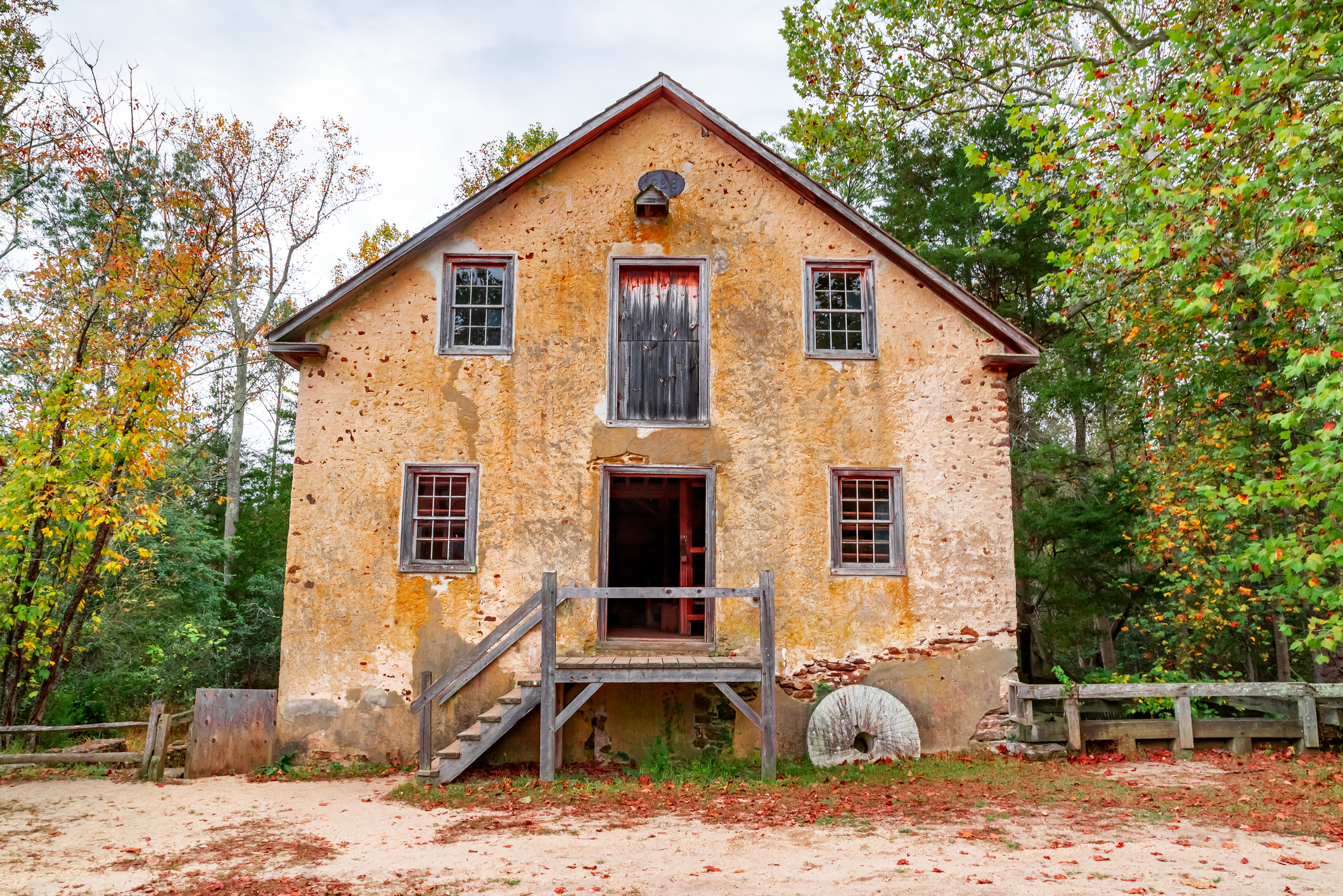
Batsto Village (Burlington County)

- Boom Period: Founded in 1766, Batsto Village prospered as a hub for iron production during the Revolutionary War, supplying munitions to the Continental Army. It later transitioned to glassmaking in the 19th century as the iron industry declined.
- Decline: By the mid-1800s, the demand for iron and glass waned, and the population dwindled. The last residents left in 1989.
- Current State: Now a historic site within Wharton State Forest, Batsto is preserved as an open-air museum with 33 structures, including a mansion, mills, and workers’ homes. While not fully abandoned, its days as a thriving industrial town are long gone, and it carries a ghostly, relic-like atmosphere.
Feltville (Union County)

- Boom Period: Established in 1845 by David Felt, a New York businessman, Feltville thrived as a self-sufficient mill town producing paper goods. It later briefly boomed again in the 1880s as a summer resort.
- Decline: The mill closed in 1860 due to economic shifts, and the resort failed as vacationers favored the Jersey Shore. By the 20th century, it was largely deserted.
- Current State: Known as the “Deserted Village” within the Watchung Reservation, Feltville retains a handful of structures—eight houses, a church, and a general store—most of which are abandoned. Only a few residents remain, and the eerie, overgrown site is maintained by the Union County Park Commission.
Harrisville (Burlington County)

- Boom Period: Founded in the 1790s as an ironworks town, Harrisville became a prosperous paper mill community in the 1830s, peaking in the mid-19th century with a bustling village of workers and families.
- Decline: The paper mill burned down in 1891, and the town was abandoned as residents moved elsewhere. The Pine Barrens’ isolation further ensured its obscurity.
- Current State: Deep in Wharton State Forest, Harrisville is a true ghost town. The ruins of the paper mill and scattered foundations remain, fenced off for safety, surrounded by encroaching forest—a haunting reminder of its industrial past.
Weymouth Furnace (Atlantic County)

- Boom Period: Starting as an ironworks in 1801, Weymouth Furnace thrived during the early 19th century, producing iron goods. It later transitioned into a paper mill community in the 1860s.
- Decline: The paper mill closed in 1887, and the town was abandoned as economic activity shifted elsewhere. Flooding and neglect erased much of its footprint.
- Current State: Now part of the Atlantic County Park System, only grand stone arches, a chimney stack, and moss-covered ruins remain along the Great Egg Harbor River. It’s a derelict site popular for picnicking and kayaking, but its days as a boom town are a distant memory.
Sea Breeze (Cumberland County)

- Boom Period: In the late 19th century, Sea Breeze was a thriving beach resort town along the Delaware Bay, attracting tourists via ferry from Philadelphia. Hotels and cottages flourished as it became a popular getaway.
- Decline: Severe weather, including Hurricane Gloria in 1985, devastated the town, destroying attractions and homes. Floods, fires, and EPA demolitions further eroded it, and by the late 20th century, it was largely abandoned.
- Current State: Sea Breeze is now an eerie ghost town with scattered debris, abandoned properties, and a few remnants of its resort past. Parts are a wildlife refuge, but the once-bustling community is virtually gone, leaving behind a haunting bayside relic.
These towns, once vital to New Jersey’s economy and culture, fell into decline due to shifts in industry, natural disasters, or changing societal preferences. Today, they stand as derelict or abandoned testaments to the state’s past, offering a mix of historical intrigue and an unsettling, faded charm.