

NEWARK, NJ—The Newark Department of Public Safety continues its urgent search for 17-year-old Aaliyah Bryant, reported missing since Wednesday, August 30, 2023. Aaliyah, known to have run away in the past, was last seen on Tuesday, August 29, 2023, in the 100 block of Chancellor Avenue. At the time, she was dressed in a long white T-shirt and black leggings, and was carrying a cross-body bag.
Aaliyah is described as being 5 feet 3 inches tall, weighing 300 pounds, with a light-brown complexion and blonde hair. She has a silver nose piercing.
Aaliyah is also diagnosed with Disruptive Mood Dysregulation Disorder (DMDD) and Attention Deficit Hyperactivity Disorder (ADHD). Public Safety Director Fritz G. Fragé is calling on anyone with information regarding her whereabouts to contact the Newark Police Division’s 24-hour Crime Stopper tip line at 1-877-NWK-TIPS (1-877-695-8477). All tips are confidential and could lead to a reward.
- Newark is Not the Only Place to See New Jersey’s Annual Cherry Blossom Bloom, But it is the Best in the State
From Newark to South Jersey, thousands of cherry trees are transforming parks and streets into spring showcases.
Newark, NJ – Cherry blossom season is underway across New Jersey, and while Branch Brook Park remains the crown jewel, residents don’t have to travel to Newark to experience one of the state’s most striking seasonal displays.
New Jersey is home to one of the largest and most diverse collections of cherry blossom trees in the country, with peak bloom typically arriving between early and mid-April. The short window—often just one to two weeks at its peak—draws visitors statewide to parks, neighborhoods, and scenic roadways.
Branch Brook Park continues to lead the list, with more than 5,000 trees across 18 varieties, creating one of the most expansive displays in the United States. The annual Bloomfest celebration further cements its reputation as the state’s top destination.
Beyond Newark: cherry blossom hotspots statewide
While Branch Brook draws the largest crowds, several other locations offer unique experiences with fewer visitors.
In Cherry Hill, Chapel Avenue features a two-mile stretch of cherry trees that form a continuous canopy during peak bloom, creating a drive-through experience unlike any traditional park setting.
Verona Park offers a quieter alternative, pairing cherry blossoms with lake views and walking paths, while Warinanco Park in Elizabeth provides a more traditional park setting with mature trees surrounding open green space.
For those seeking a curated environment, the Reeves-Reed Arboretum in Summit showcases carefully maintained gardens and smaller-scale blossom displays. Meanwhile, Hurd Park in Dover offers a less crowded option with trees lining a scenic stream.
Timing remains critical for visitors
Bloom timing varies slightly by location and weather conditions, but generally follows a predictable pattern across the state.
- Early bloom: late March
- Peak bloom: early to mid-April
- Late bloom: mid to late April
Because different varieties bloom at different times—especially in larger parks like Branch Brook—visitors can often catch multiple stages of flowering over several weeks.
Key Points
- New Jersey offers one of the largest cherry blossom displays in the U.S.
- Branch Brook Park remains the top destination with over 5,000 trees
- Multiple parks and roadways statewide provide less crowded viewing options
- Ghostbusters Ecto-1 spotted near American Dream Mall: Could it be After the Ghost of Jimmy Hoffa?
New Jersey ain’t afraid of no ghosts. A familiar movie icon cruising toward the Meadowlands is fueling fresh speculation about what might be haunting one of New Jersey’s most debated destinations.
East Rutherford, NJ – Drivers heading north on Route 120 near the American Dream Mall did a double-take this week when a vehicle resembling the iconic Ecto-1 from the Ghostbusters franchise was spotted merging toward the Meadowlands complex, complete with rooftop equipment and the unmistakable logo mounted on its rear door.
The sighting, captured in a photo from a passing vehicle, shows the retrofitted white station wagon traveling alongside regular traffic just before the exit for the sprawling retail and entertainment complex. The moment quickly sparked curiosity—and a wave of playful speculation about what might be drawing ghost hunters to one of New Jersey’s most talked-about developments.
While the vehicle itself is likely a fan-built replica or promotional display, its appearance near the Meadowlands has revived decades-old whispers surrounding the land beneath the complex and its long, complicated history.
Legends tied to the Meadowlands
The Meadowlands have long been fertile ground for urban legend, with rumors stretching back generations. Among the most persistent is the claim—never substantiated—that the remains of labor leader Jimmy Hoffa could be buried somewhere in the vast marshlands, a theory that has lingered since his disappearance in 1975.
Others point to organized crime history in North Jersey, suggesting the area’s remote stretches once made it a rumored dumping ground for mob-related activity. Though no credible evidence ties such claims directly to the American Dream site, the stories continue to circulate, adding to the region’s mystique.
At the same time, the land has hosted decades of sports and entertainment history. The former Giants Stadium, once standing just steps away, saw generations of fans pass through for Jets and Giants games, along with concerts and major events before its demolition in 2010.
Could it be on the hunt for the ghosts of the New Jersey Nets and Devils? Two teams that have been lost to the Meadowlands for years now.
A site shaped by ambition and setbacks
The American Dream Mall itself carries a different kind of legacy—one defined by ambitious promises, delays, and reinvention. Originally conceived as the Xanadu project in the early 2000s, the complex underwent years of stalled construction, financial hurdles, and ownership changes before finally opening in phases beginning in 2019.
For many New Jersey residents, the project symbolizes both persistence and frustration, with critics long pointing to its drawn-out development as emblematic of larger economic and planning challenges in the state.
That history has led some to jokingly suggest that if anything is “haunting” the Meadowlands, it may be the ghosts of past expectations—unfinished plans, missed deadlines, and shifting visions that linger over the massive site.
Key Points
- Ecto-1 replica spotted driving toward American Dream Mall in East Rutherford
- Sighting reignites folklore about Meadowlands history, including Hoffa rumors
- Site’s long development history adds to playful speculation about what “haunts” the area
Whether the vehicle was headed to a promotional event, a fan gathering, or simply passing through, its appearance turned an ordinary stretch of highway into a moment of intrigue—blending pop culture with one of New Jersey’s most storied locations.
- New Jersey appeals case challenges denial of arbitration for fired Clinton police officer
Dispute centers on whether disciplinary charges qualify as criminal conduct under state law.
Trenton, NJ – A former Clinton Township police officer is asking a New Jersey appellate court to overturn a state agency decision that blocked him from pursuing arbitration after his termination, arguing officials wrongly labeled his conduct as criminal.
The case involves Stephen Hars, who was fired in 2024 following internal disciplinary findings that he falsified official police reports related to firearm discharges during two incidents. After his termination, Hars sought to challenge the decision through special disciplinary arbitration, a process available to non-civil service officers under certain conditions.
However, the New Jersey Public Employment Relations Commission (PERC) denied that request, determining the charges against Hars were tied to conduct that “would constitute a violation of the criminal laws of New Jersey,” making him ineligible for arbitration under state statute.
Dispute over what qualifies as criminal conduct
At the center of the appeal is whether Hars’ actions—specifically, allegedly misstating the number of rounds fired in official reports—rise to the level of criminal conduct, even though no criminal charges were ever filed.
PERC relied on findings from a departmental hearing that concluded Hars made false entries in official records, conduct comparable to violations of state law governing falsification of public documents.
Hars, however, argues that prosecutors reviewed the case and declined to pursue charges, determining that “criminal prosecution is not warranted.” He also points to testimony from the township’s police chief acknowledging the case lacked sufficient evidence for criminal charges.
His legal team contends that without an active investigation or formal charges, the disciplinary allegations should not be treated as criminal in nature, and therefore should not disqualify him from arbitration.
Prior rulings and legal standards
PERC rejected those arguments, citing precedent that the statute does not require an actual criminal charge or conviction—only that the alleged conduct could constitute a criminal offense.
The agency also denied Hars’ motion for reconsideration, stating its rules do not provide for reconsideration in these types of arbitration eligibility decisions and noting that new evidence was submitted without explanation.
In response, Hars argues that PERC acted arbitrarily by refusing to reconsider and by relying on an overly broad interpretation of what constitutes criminal conduct.
Appeal also raises procedural issues
The township has also challenged the appeal itself, arguing it was not properly filed within required deadlines. Hars disputes that claim, maintaining the appeal was submitted within the 45-day window required for administrative appeals.
The appellate court is now tasked with deciding whether PERC correctly applied state law in denying arbitration and whether the agency’s actions were “arbitrary, capricious, or unreasonable,” a key standard in reviewing administrative decisions.
Key Points
- Former NJ officer challenges denial of arbitration after termination
- State agency ruled alleged misconduct was equivalent to criminal conduct
- Appeal hinges on whether charges qualify as criminal without prosecution
- The world is coming to New Jersey, but NJ Transit will surely embarrass us on the global stage
New Jersey is about to take center stage in a way it never has before. The 2026 FIFA World Cup will bring tens of thousands of international visitors to the Meadowlands for multiple matches, including the final. For a few weeks, the eyes of the world will be fixed on this state—on its infrastructure, its hospitality, and its ability to deliver a seamless experience worthy of a global event.
And yet, instead of preparing to impress, New Jersey appears poised to embarrass itself.
If current conditions hold, many of those visitors will be funneled onto NJ Transit trains—crowded, delayed, aging, and often visibly dirty. At the same time, they will be met with a layered system of taxes and surcharges that make nearly every aspect of their visit more expensive. The result is a troubling combination: premium pricing paired with subpar service.
That is not just a missed opportunity. It is a reputational risk. Is our goal to make teams like India feel at home? If that is the case, then we’re on the right track.
Start with the transportation reality. State and regional planners have already made it clear that World Cup travel to MetLife Stadium will rely heavily on public transit. With limited parking and an emphasis on rail access through Secaucus Junction, NJ Transit will serve as the primary artery for tens of thousands of fans per match.
But NJ Transit, in its current form, is not operating at the level required for such a responsibility.
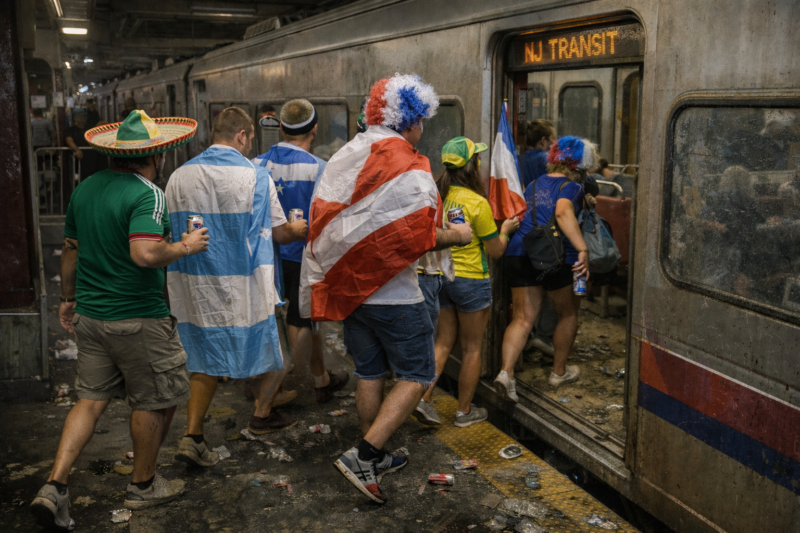
All images in this article are AI-rendered political satire. Commuters across the system have long reported persistent issues: late trains, last-minute cancellations, equipment failures, and confusing or inconsistent communication. Mechanical problems—from aging rail cars to overhead wire issues—continue to disrupt service. Crew shortages and infrastructure constraints add another layer of instability. Even by the agency’s own benchmarks, on-time performance has struggled to meet internal targets.
These are not isolated complaints. They are systemic patterns.
Beyond reliability, there is the issue of basic presentation. Riders frequently describe train cars that are unclean, with worn interiors, lingering odors, and poor maintenance. Air conditioning failures in the summer and heating issues in the winter are recurring concerns. Public-facing reviews—on platforms like Yelp, Google, and transit forums—paint a consistent picture: a system that feels outdated, strained, and, at times, neglected.
For daily commuters, this has become a frustrating norm. For international visitors, it will be something else entirely: a first impression.
Consider the context. Many World Cup attendees will be arriving from countries with highly efficient, modern transit systems. Visitors from Japan are accustomed to trains that run with near-perfect punctuality. Travelers from Germany, Switzerland, or France expect clean, reliable rail service with clear communication. Even within the United States, systems like Washington’s Metro or parts of New York’s commuter rails offer a more consistent experience.
When those same visitors step onto an NJ Transit train that is delayed, overcrowded, or poorly maintained, the contrast will be immediate and stark.
This is not about perfection. No transit system is flawless, especially under the strain of a major global event. But there is a baseline expectation—especially in a wealthy, densely populated state hosting one of the world’s biggest sporting events—that the system will function reliably and presentably.
Right now, NJ Transit is struggling to meet that baseline.
Layered on top of these service concerns is another issue: cost. Specifically, the growing discussion around temporary tax increases and surcharges tied to the World Cup.
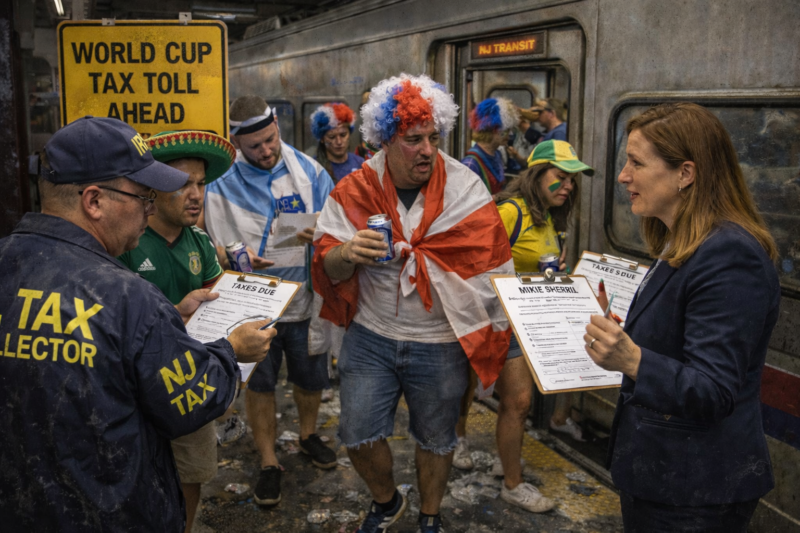
State leaders, including Governor Mikie Sherrill, have supported measures aimed at offsetting the cost of hosting the event. These proposals include increases in sales tax within designated zones, higher hotel occupancy taxes, and additional fees connected to tourism-related spending.
From a budgetary standpoint, the logic is straightforward. Hosting a global event requires significant investment in security, infrastructure, staffing, and logistics. The argument is that visitors—rather than residents—should bear a portion of that cost.
But policy does not exist in a vacuum. It interacts directly with experience.
If visitors are paying elevated prices for hotels, food, transportation, and entertainment, they will expect a level of service that justifies those costs. That expectation is not unreasonable. It is standard in global tourism economies.
The concern arises when the experience does not match the price.
Imagine the sequence: A visitor arrives in New Jersey, pays a premium rate for a hotel room due to increased occupancy taxes, spends more on meals and goods due to elevated sales tax, and then boards a train that is delayed, crowded, and visibly worn. That is not a hospitality success story. It is a disconnect.
And in the age of social media, that disconnect does not remain private.
Every delay, every malfunction, every negative interaction becomes content. Photos of dirty train cars, videos of overcrowded platforms, posts about confusion or poor communication—these are the impressions that will circulate globally in real time.
New Jersey will not just be hosting visitors. It will be broadcasting itself.
There is also a broader philosophical question at play: what does it mean to host the world?
Hosting is not just about accommodating large numbers of people. It is about presenting a place—its values, its systems, its identity—in the best possible light. It is about creating an experience that reflects competence, care, and pride.
Right now, there is a risk that New Jersey is prioritizing revenue extraction over experience delivery.
To be clear, the goal of avoiding burdening taxpayers is valid. No one is arguing that residents should absorb all the costs of a global event. But there is a balance to be struck between fiscal responsibility and reputational investment.
Because the World Cup is not just a short-term event. It is a long-term opportunity.
For many visitors, this will be their first and possibly only time in New Jersey. Their impressions—formed over a few days—will shape how they talk about the state, how they recommend it to others, and whether they ever return.
Tourism is built on experience. Reputation is built on consistency.
If New Jersey wants to position itself as a destination—not just a pass-through to New York City—it needs to deliver an experience that stands on its own merits. That means reliable transportation, clean facilities, clear communication, and a sense that visitors are being welcomed, not simply charged.
There is still time to address these issues.
NJ Transit can prioritize targeted improvements for the World Cup period: enhanced cleaning protocols, additional staffing, clearer communication systems, and contingency planning for high-volume events. Infrastructure upgrades may take years, but operational improvements can happen more quickly.
State leaders can also reassess how tax measures are implemented and communicated. Transparency matters. So does proportionality. Visitors are more likely to accept higher costs if they understand the value they are receiving in return.
Most importantly, there needs to be a shift in mindset.
The World Cup should not be viewed primarily as a revenue opportunity. It should be seen as a showcase—a chance to demonstrate that New Jersey is capable of delivering a world-class experience.
Because the alternative is not just a few weeks of complaints. It is a lasting impression that New Jersey is a place where expectations and reality do not align.
That is not an image worth exporting.
New Jersey has the assets: proximity to New York City, a diverse population, strong regional connectivity, and a history of hosting major events. What it needs now is execution.
The world is coming. The question is not whether New Jersey can host it. The question is how it will be remembered after it does.
- Wawa recalls popular drinks in New Jersey and surrounding states over milk allergen risk
Undeclared allergen prompts removal of iced teas, lemonade, and fruit punch from stores.
Media, PA – Wawa has issued a multi-state recall affecting several of its popular bottled beverages, including products sold in New Jersey, due to a potential undeclared milk allergen that could pose serious health risks.
The recall, announced Friday and published by the FDA, impacts 16-ounce bottles of Wawa-branded Iced Tea Lemon, Iced Tea Diet Lemon, Diet Lemonade, and Fruit Punch distributed to select stores across New Jersey, Pennsylvania, Delaware, Maryland, and Virginia.
Wawa said the issue stems from a temporary equipment problem that may have introduced milk into the beverages without proper labeling.
Specific products and stores impacted
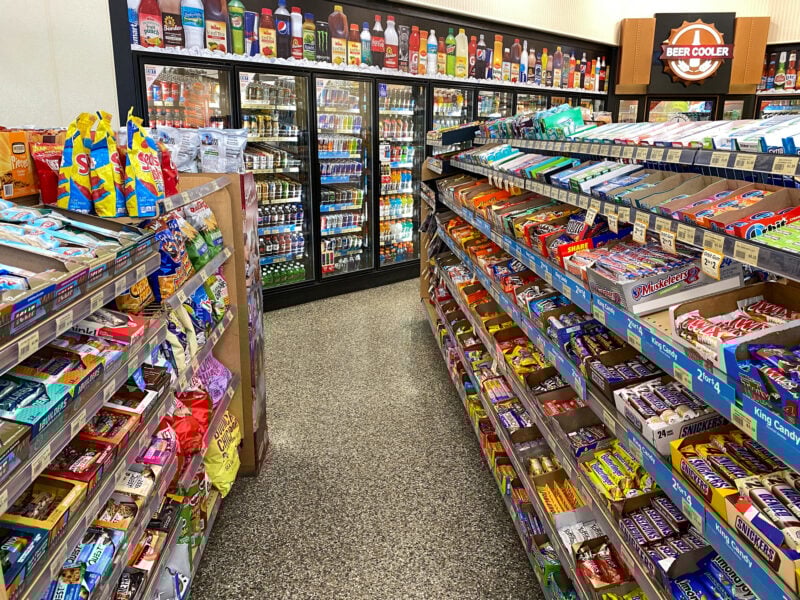
The recall includes multiple products with specific UPC codes and expiration dates:
- Iced Tea Lemon (UPC: 726191018425, code date May 15, 2026) – distributed to 123 stores across five states
- Diet Iced Tea Lemon (UPC: 726191018548, code date May 18, 2026) – limited to 8 stores in New Jersey and Pennsylvania
- Diet Lemonade (UPC: 726191055901, code date May 18, 2026) – sold in 12 stores in Delaware and New Jersey
- Fruit Punch (UPC: 726191018432, code date May 19, 2026) – distributed to 53 stores across the region
“All affected products have been removed from sale and disposed of by impacted stores,” the company said in its announcement.
No illnesses reported, but warning issued
Wawa said no illnesses have been reported, but warned that people with milk allergies could face serious or life-threatening reactions if the products are consumed.
“People who have allergies to milk run the risk of serious or life-threatening allergic reaction if they consume this product,” the company stated.
Consumers who purchased the affected beverages are urged to discard them and contact Wawa for a refund or additional information.
“The recall was initiated after Wawa identified and corrected a temporary equipment issue,” the company said.
Customers can reach Wawa’s 24-hour customer service line at 1-800-444-9292 or visit the company’s website for full recall details and a list of affected store locations.
Key Points
- Wawa recalls 16-oz beverages due to possible undeclared milk allergen
- Products sold in New Jersey and four other states impacted
- No illnesses reported; customers urged to discard products and seek refunds