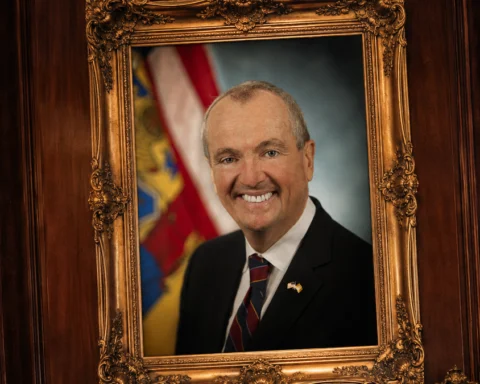
New Jersey Governor Phil Murphy has positioned himself as one of the most vocal opponents of President Donald Trump’s hardline immigration policies. With Trump promising to remove all criminal illegal immigrants and enforce widespread deportations against those who have entered the U.S. unlawfully or skipped immigration hearings, Murphy’s defiance sets the stage for a high-stakes battle. However, his staunch support for undocumented immigrants, including those with minor criminal records, raises questions about the potential fallout for New Jersey.
The Trump administration’s position is clear: entering the U.S. without authorization is, by default, a violation of federal law. In their view, every migrant who has crossed the border illegally has committed a crime. Trump’s promise to crack down on sanctuary jurisdictions like New Jersey could put the state at risk of significant financial and legal repercussions.
Federal Funding at Risk
President Trump’s Department of Justice previously threatened to withhold federal grants from sanctuary states and cities. This includes funding earmarked for law enforcement, infrastructure, education, and social programs. New Jersey, as a sanctuary state under Murphy’s leadership, relies heavily on these funds to maintain essential services.
Losing federal funding could cripple key programs, including state and local law enforcement grants used to combat violent crime and drug trafficking. It could also impact infrastructure projects and healthcare programs that serve low-income residents. The potential loss of federal support could create a budgetary shortfall, forcing the state to find alternative revenue sources or cut services.
Economic Consequences
New Jersey’s economy benefits significantly from its immigrant population, including undocumented workers. Industries such as agriculture, construction, hospitality, and food services rely heavily on immigrant labor. If Trump’s deportation policies are aggressively implemented, New Jersey could face labor shortages that disrupt these industries.
However, the state’s non-compliance with federal immigration enforcement could also backfire. Penalties or funding cuts might exacerbate the economic challenges already facing the state. The tension between supporting immigrant communities and maintaining fiscal stability highlights the precarious position Murphy finds himself in.
Public Safety and Legal Challenges
Governor Murphy’s policies, such as the Immigrant Trust Directive, limit local law enforcement’s cooperation with ICE. While these measures aim to foster trust between immigrant communities and police, they have drawn criticism from opponents who argue they hinder the ability to remove individuals with serious criminal records.
Trump’s administration has painted sanctuary states as obstacles to public safety, claiming that they protect dangerous criminals. Murphy, however, has countered that these policies focus on safeguarding law-abiding immigrants while addressing public safety concerns in other ways. Still, the lack of coordination between federal and local law enforcement creates potential gaps in addressing serious crime.
The legal disputes stemming from sanctuary policies also come with a cost. Lawsuits and challenges to the state’s policies require resources that could be directed elsewhere. Additionally, the uncertainty surrounding federal-state relations complicates long-term planning for law enforcement agencies.
Cultural and Social Impacts
Murphy’s stand has gained him support from immigrant advocacy groups and progressive voters who see his efforts as a defense of human rights and dignity. For undocumented immigrants and their families, New Jersey’s sanctuary policies provide a sense of security and stability in an otherwise hostile national climate.
Yet, there’s a growing divide among residents. Critics argue that these policies prioritize undocumented immigrants over law-abiding citizens, particularly when it comes to the use of public resources. Some view Murphy’s defiance of federal laws as a disregard for the rule of law, fueling political polarization in the state.
Trump’s Enforcement Agenda vs. Murphy’s Resistance
President Trump’s immigration policies are built on a foundation of strict law enforcement and national security. His administration has framed the crackdown on illegal immigration as necessary to uphold the integrity of U.S. borders and laws.
In contrast, Murphy’s resistance aligns with his broader progressive agenda, positioning New Jersey as a leader in inclusivity and immigrant rights. However, his approach could inadvertently make the state a target for federal retaliation, leading to loss of funding, economic instability, and legal battles.
Weighing the Pros and Cons
On one hand, Murphy’s policies protect immigrant communities, foster diversity, and uphold the values of inclusion that many New Jersey residents support. On the other hand, the state risks losing crucial federal funding, straining its economy, and facing criticism over public safety concerns.
If federal penalties or enforcement actions intensify, New Jersey’s budget could be stretched thin. Programs benefiting residents across the board—not just undocumented immigrants—could face cuts. Meanwhile, industries reliant on immigrant labor might suffer, creating ripple effects throughout the economy.
Conclusion
Governor Murphy’s fight against Trump’s immigration agenda highlights the deep ideological divide between state and federal governments. While Murphy’s commitment to protecting undocumented immigrants is laudable to his supporters, the potential consequences for New Jersey are significant.
As the state navigates this contentious issue, the question remains: how much is Murphy willing to risk to stand by his principles, and at what cost to New Jersey’s future?