

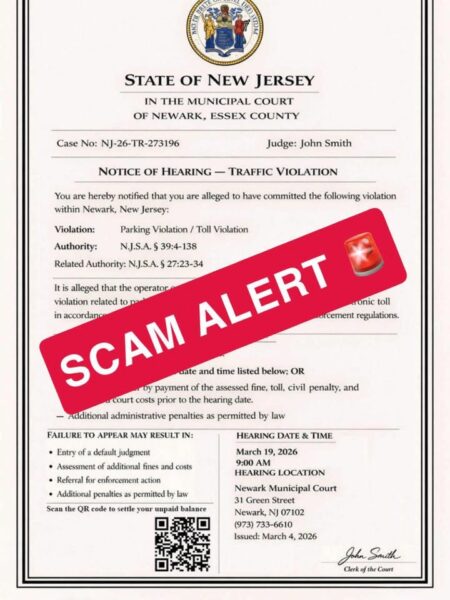
Bold red “scam alert” flags fraudulent court notices targeting residents with payment demands.
Newark, NJ – A new wave of fraudulent traffic violation notices is targeting New Jersey residents, using official-looking documents and urgent language to pressure victims into paying bogus fines. The scam, circulating primarily through text messages, mimics legitimate municipal court notices and directs recipients to scan a QR code to resolve alleged violations.
Key Points
- Fraudulent “Notice of Hearing – Traffic Violation” messages are being sent via text
- Messages include QR codes and threats of court action to pressure payment
- Officials warn residents not to scan codes or provide personal information
Local officials say the notices closely resemble authentic court documents, often citing Newark Municipal Court and referencing toll or parking violations under New Jersey statutes. The messages warn of penalties such as default judgments, additional fines, or enforcement action if payment is not made before a listed hearing date.
The inclusion of QR codes has raised particular concern, as scanning them can lead users to phishing websites designed to collect financial or personal data. In some cases, victims may unknowingly authorize payments or expose sensitive information.
How the scam works
The fraudulent notices typically arrive via SMS, instructing recipients to review a violation and settle it immediately. The documents may include case numbers, court addresses, and even a named judge to appear legitimate. A payment demand is then paired with a scannable code or link.
Officials stress that legitimate court systems do not solicit payments through unsolicited text messages or require QR code scans for violation resolution. Residents are urged to independently verify any notice by contacting their local municipal court or visiting official government websites.
What residents should do
Anyone who receives a suspicious notice is advised not to engage with the message. That includes avoiding scanning QR codes, clicking embedded links, or entering personal or financial details.
Instead, residents should confirm the legitimacy of any alleged violation through verified court channels. Reporting the scam to local authorities can also help track and limit its spread.