Toms River’s strange past: ghosts, buried treasure, and a burning town
TOMS RIVER, N.J. — With its deep roots and storied past, Toms River stands as one of New Jersey’s most historic — and unusual — towns, full of name debates, environmental scandals, and even ghost stories.
Originally part of Shrewsbury Township, the town was known as Dover Township until voters approved the name change to Toms River in 2006.
The origin of the name remains unsettled: it may honor Thomas Luker, an English captain named William Tom, or even a Native American named Tom. To add to the confusion, the Toms River itself was once labeled Goose Creek, and old maps showed both names for years.
As Dover Township, Toms River became the geographic source for many other communities in Ocean County, including Jackson, Manchester, and Berkeley, all created from carved-out land divisions. It also gained prominence in 1850 when it was designated the county seat after Ocean County split from Monmouth.
Toms River’s modern growth was fueled by infrastructure. The opening of the Garden State Parkway in 1954 helped transform it into a residential hub, with a population boom that defined the town’s suburban expansion. But some say the highway brought more than just commuters. A 2018 Patch report referenced local rumors of the “Parkway Phantom,” a ghost said to haunt drivers near Exit 82.
The town is also the site of one of New Jersey’s major environmental incidents. In 1971, more than 4,500 drums of chemical waste were dumped at Reich Farm, later found to have contaminated groundwater, triggering decades of legal and environmental fallout.
It is also the site of the notorious Ciba-Geigy federal superfund site. Ciba-Geigy, a defunct chemical corporation now owned by BASF is responsible for a cancer cluster that has reportedly killed dozens of people and made many others sick over the years.
The company now wants to build a small city at the site, to which the community, including current Mayor Dan Rodrick strongly opposes.
Despite these darker chapters, Toms River has had moments of national pride. Its Little League team, dubbed the “Beast from the East,” won the Little League World Series in 1998. And folklore continues to draw interest, especially local legends that Captain Kidd may have stashed treasure on nearby Money Island.
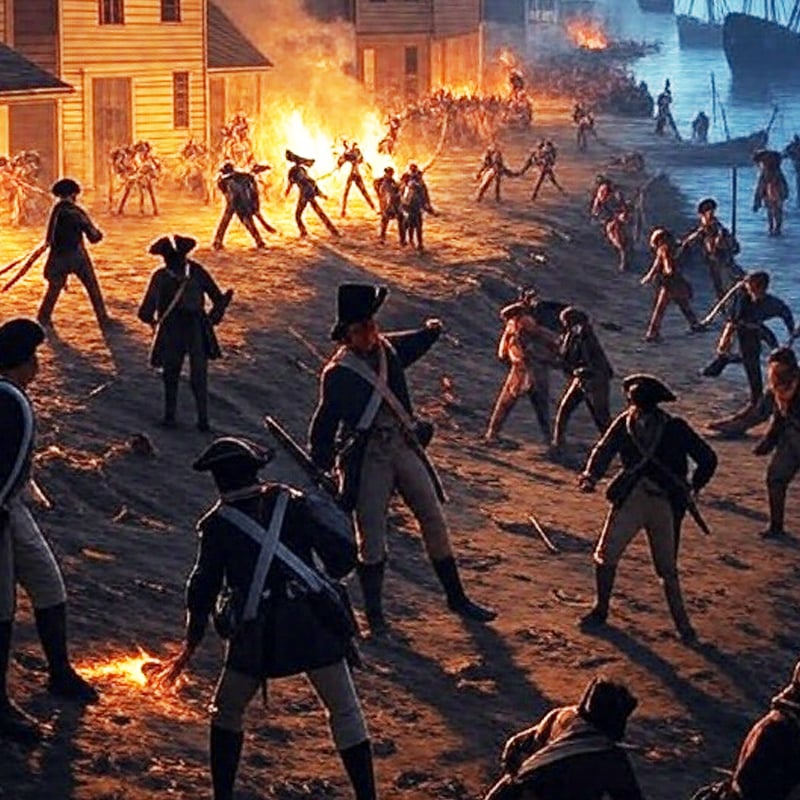
The area’s long history includes a violent episode during the Revolutionary War. In 1782, British and Tory forces raided and burned Toms River, destroying homes and salt works in a targeted attack.
On March 24, 1782, the village of Toms River, New Jersey, was attacked and burned by British forces during the American Revolutionary War. The British, along with Loyalist militia, targeted the town’s salt works and blockhouse, which were vital to the American war effort. The attack resulted in the destruction of nearly all buildings, the capture of Patriot leader Captain Joshua Huddy, and the beginning of the “Asgill Affair” due to Huddy’s subsequent execution.
Long before any settlers arrived, the land was home to the Lenape people, who lived in the region for thousands of years before European colonization.