
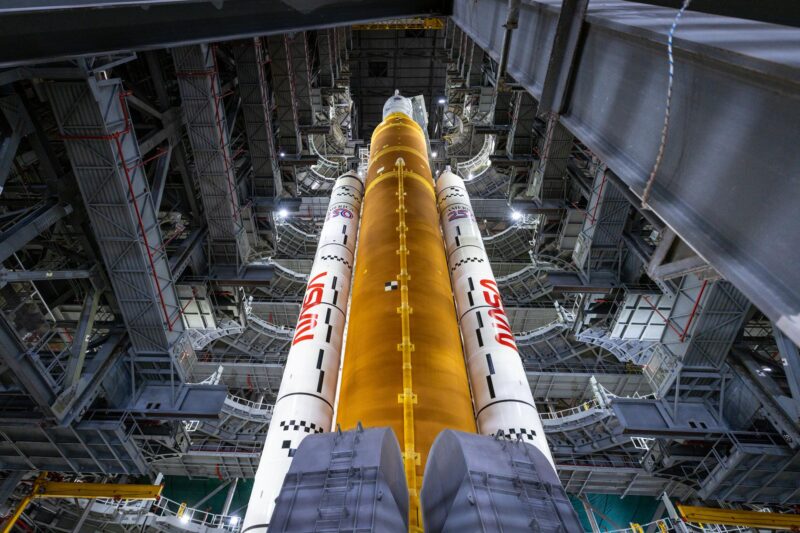
A delayed overnight rollout clears a key milestone ahead of a narrow April launch window.
KENNEDY SPACE CENTER, Fla. – NASA has completed the rollout of its Artemis II rocket to the launch pad following an overnight delay caused by weather, moving the mission one step closer to its first crewed flight around the Moon. The massive Space Launch System rocket began its journey from the Vehicle Assembly Building later than planned after winds forced officials to postpone the initial Thursday evening start time.
The rollout, which typically takes between eight and 12 hours, marks the second time NASA has transported the Artemis II vehicle to the launch pad as the agency works through technical challenges ahead of launch. Officials are targeting a liftoff window between April 1 and April 6, following repairs tied to an issue with helium flow in the rocket’s upper stage.
Launch window follows repairs to rocket systems
NASA has linked recent delays to a range of technical concerns, including the helium system issue that required troubleshooting before rollout could proceed. The helium is critical for pressurizing the rocket’s propellant systems, and engineers worked to resolve inconsistencies before clearing the vehicle for launch preparations.
The Artemis II mission will carry four astronauts on a flight around the Moon, marking NASA’s first crewed lunar mission since the Apollo era. The agency has emphasized safety testing and verification as key reasons behind the extended timeline.
Key Points
- Artemis II rocket rollout completed after weather-related delay overnight
- Launch window set between April 1 and April 6 following helium system repairs
- Mission will carry four astronauts on first crewed lunar flight since Apollo
Delays tied to technical, funding, and logistical hurdles
The Artemis program has faced repeated delays driven by technical and operational challenges. Issues involving the Orion capsule, including heat shield performance and system validation, have required additional testing. Engineers have also addressed complex valve systems and propulsion-related concerns within the Space Launch System rocket.
Beyond engineering hurdles, the program operates under tighter budget constraints compared to the Apollo era, contributing to a slower development pace. Launch timing is further limited by orbital alignment between Earth and the Moon, restricting opportunities to specific windows.
NASA is also managing development challenges tied to supporting systems, including the Human Landing System and next-generation spacesuits, while incorporating refurbished components originally developed during the Space Shuttle program.