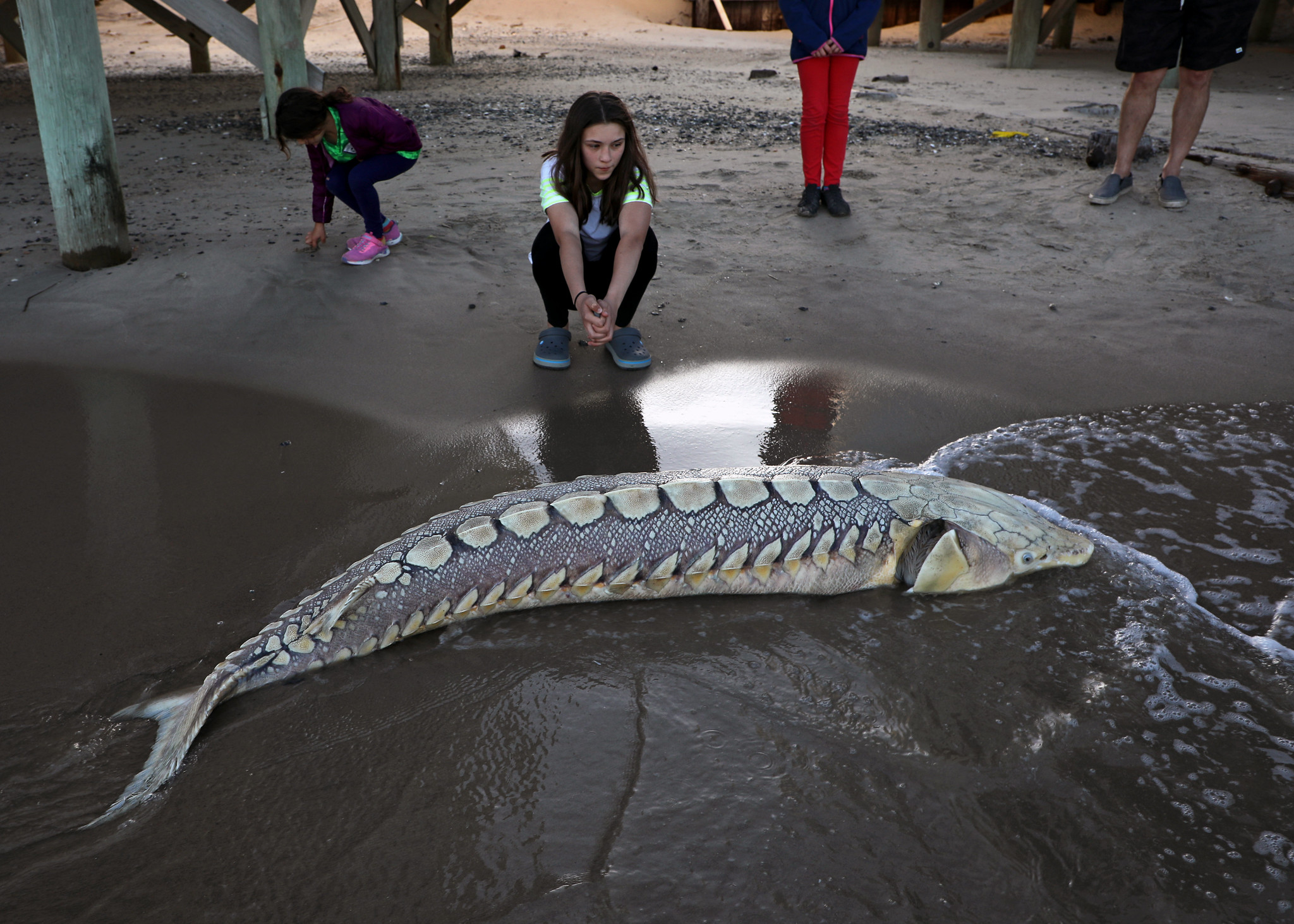
TRENTON, N.J. — Fewer than 250 spawning Atlantic sturgeon remain in the Delaware River, putting one of the region’s most ancient and genetically distinct fish populations on the brink of extinction, conservation officials warn.
The Atlantic sturgeon — a species that has survived for more than 100 million years — once thrived in the Delaware River and supported a booming 19th-century caviar industry in South Jersey. The town of Caviar even operated a rail line to ship sturgeon roe to markets in Newark and New York.
But the population collapsed due to overfishing, and decades of habitat loss, dredging, pollution, and ship strikes have prevented any recovery. Climate change has worsened conditions further by raising water temperatures and pushing saltwater farther upstream, shrinking critical spawning grounds, according to the Delaware Riverkeeper Network says.
“They’re literally getting slammed from all sides, at every level of their life cycle,” said Maya van Rossum, founder of the Delaware Riverkeeper Network.
The sturgeon population in the Delaware River is genetically unique and migrates far into the Atlantic Ocean before returning to spawn in the same river. Scientists say losing the Delaware group would damage the genetic resilience of the entire East Coast sturgeon population. Only three rivers in the Northeast — the Delaware, Hudson, and Kennebec — still support spawning runs.
“Losing one more of these populations pushes us really, really close to eliminating the whole northeastern population of the species,” said Erik Silldorff, a scientist with the Riverkeeper Network.
Although federally listed as endangered, the sturgeon remain vulnerable. Advocates have called on the Environmental Protection Agency to enforce stronger oxygen standards in the river and limit harmful dredging operations.
Without immediate action, scientists warn, the Atlantic sturgeon in the Delaware River could disappear entirely — a loss for the species and a warning sign for the health of the river itself.
With its numbers in steep decline, the ancient Atlantic sturgeon may vanish from the Delaware River unless protections are quickly enforced.
Kickin’ bass: New Jersey fisherman sets new record for largest hybrid striped bass
You’ve probably heard plenty of fish tales in your life about fisherman bragging about the big one that got away, but one fisherman in New Jersey now has certifiable bragging rights.
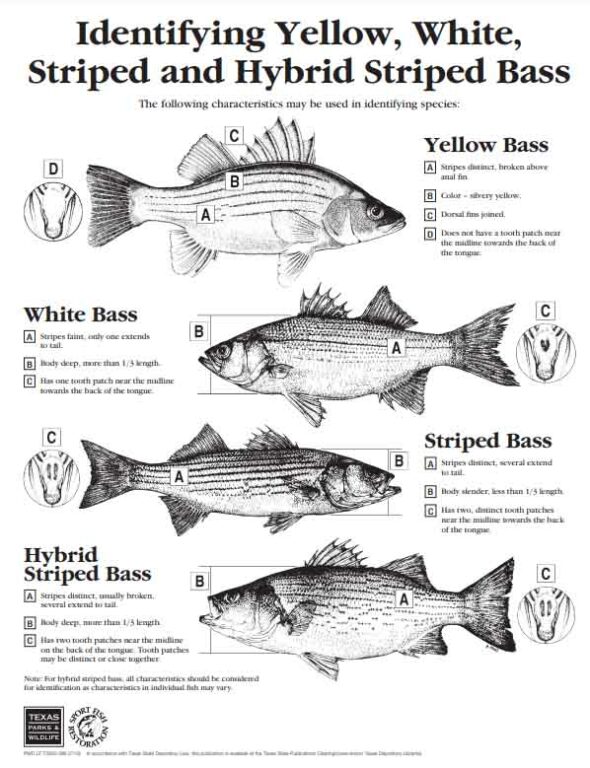
Many people don’t know that striped bass live in both fresh and saltwater and that there are several types of striped bass, including yellow bass, white bass, striped bass and hybrid striped bass. While each species is similar to the naked eye, there are definitely distinct differences that separate them.
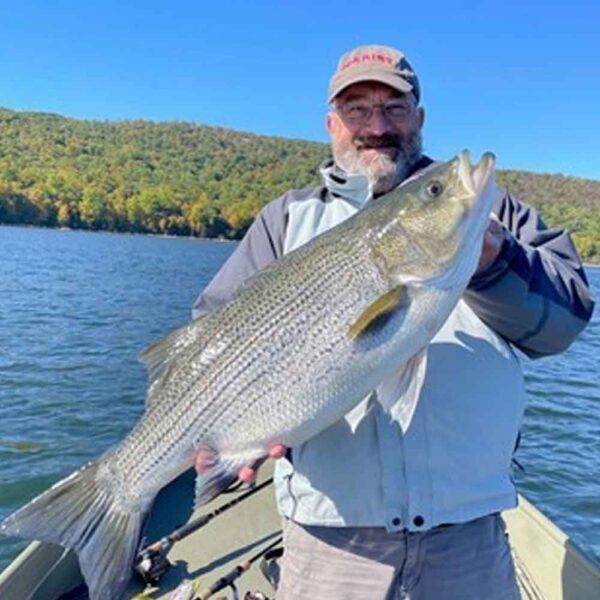
Last week, an angler fishing in the Monskville Reservoir just set a new state record for the largest freshwater hybrid striped bass. John Vayda hauled in a 16-pound, 10-ounce striped bass from the lake on October 9th. It measured 31 inches in length.
According to the NJ Fish and Wildlife agency, Vayada’s catch beats Bill Schmidt’s 1999 record hybrid that weighed 16 pounds, 4 ounces.
This article has been updated from an earlier report that did not distinguish the different types of striped bass in New Jersey.