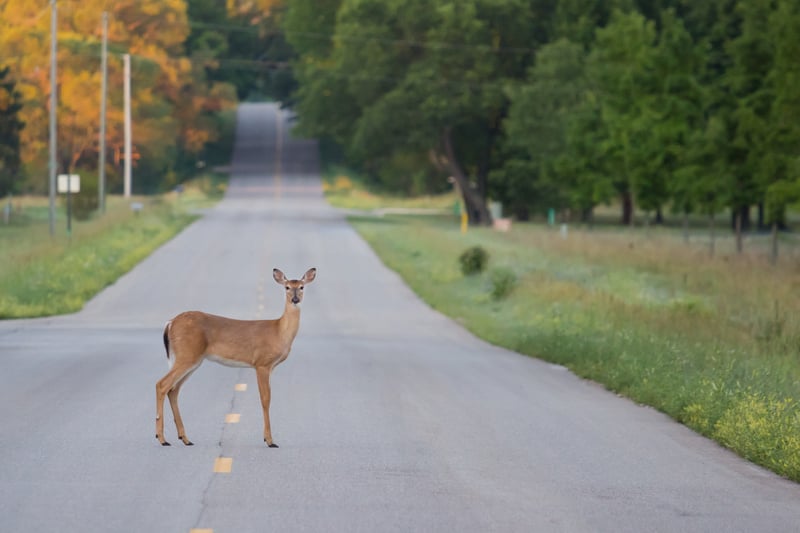
GLOUCESTER TOWNSHIP, NJ — New Jersey motorists are urged to exercise heightened caution due to increased deer activity during the fall rutting season. As daylight decreases, white-tailed deer mating causes a spike in movement, raising collision risks, especially around morning and evening commutes.
According to New Jersey Fish & Wildlife, “Motorists are reminded to be extra vigilant on roadways as the fall white-tailed deer rut, or mating season, gets underway.” Drivers can expect more deer to enter roadways, particularly as bucks chase does. The likelihood of encountering deer is higher during early morning and sunset when visibility is low.
The peak mating season in New Jersey spans from late October through mid-December. This period coincides with the end of daylight saving time, set for 2 a.m. on Sunday, November 2, when commutes align with peak deer activity.
To ensure safety, New Jersey Fish & Wildlife recommends slowing down when spotting deer, watching for abrupt movements, and never attempting to drive around them. High beams should be used in dark periods, providing better visibility of deer eyes, unless traffic is present.
Motorists are advised not to tailgate, as the vehicle in front may need to stop suddenly to avoid a collision. “Collisions are more likely to become fatal when a driver swerves to avoid a deer and instead collides with oncoming traffic or a fixed structure along the road,” authorities warn.
Safety measures also include wearing seatbelts and adhering to traffic laws, including rules regarding hands-free devices. Any deer-vehicle collision should be reported to local law enforcement.