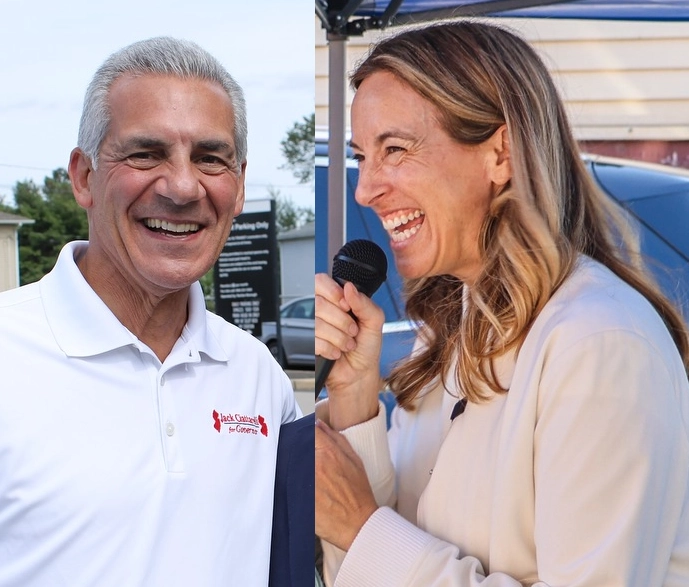
Debate clock controversy erupts over Ciattarelli-Sherrill faceoff
Trenton, NJ – A formal complaint filed by political writer David Wildstein has thrown the recent gubernatorial debate between Jack Ciattarelli and Mikie Sherrill into question, claiming it failed to meet the full 60-minute legal requirement under New Jersey’s public financing rules.
The state Election Law Enforcement Commission will convene Tuesday to determine whether the debate satisfied statutory standards for publicly funded candidates.
Under New Jersey election law, gubernatorial hopefuls who accept millions in state campaign funds must participate in two official debates, each lasting at least one hour.
Wildstein’s filing contends last week’s televised debate concluded short of the mandated duration, potentially violating N.J.S.A. 19:44A-46(b), which outlines debate obligations tied to matching funds.
Commission to weigh possible remedies
Sources close to the complaint say Wildstein suggested a third debate as a potential remedy if regulators determine the event failed to comply with the law. The commission is expected to review broadcast timing records and debate footage to confirm whether the program met the one-hour threshold.
Both campaigns have so far declined to comment directly on the pending complaint, though operatives familiar with the proceedings said neither side was notified in advance of the challenge.
Political sparring over motives
The complaint sparked swift reaction online, including criticism from party officials who questioned Wildstein’s motives. “It’s a bit rich for someone whose outlet might bid to host another debate to argue the previous one was invalid,” wrote one Democratic Party account on X, suggesting the filing could serve as a pretext to organize a third, high-profile broadcast.
Republican insiders, meanwhile, argued that adherence to debate rules was essential to preserving the integrity of New Jersey’s taxpayer-funded election system.
Public financing system under scrutiny
New Jersey’s matching fund program, one of the most expansive in the nation, grants millions to qualifying candidates in exchange for strict compliance with spending limits and public debate participation. The one-hour debate mandate has been part of the statute since 1989 and is rarely challenged.
Election lawyers note that if the commission finds the debate fell short of the time requirement, it could force campaigns to host another debate before Election Day, or risk penalties tied to public financing eligibility.
For now, all eyes are on the commission’s Tuesday meeting — and the stopwatch that could decide whether New Jersey’s highest-profile debate must be done all over again.