
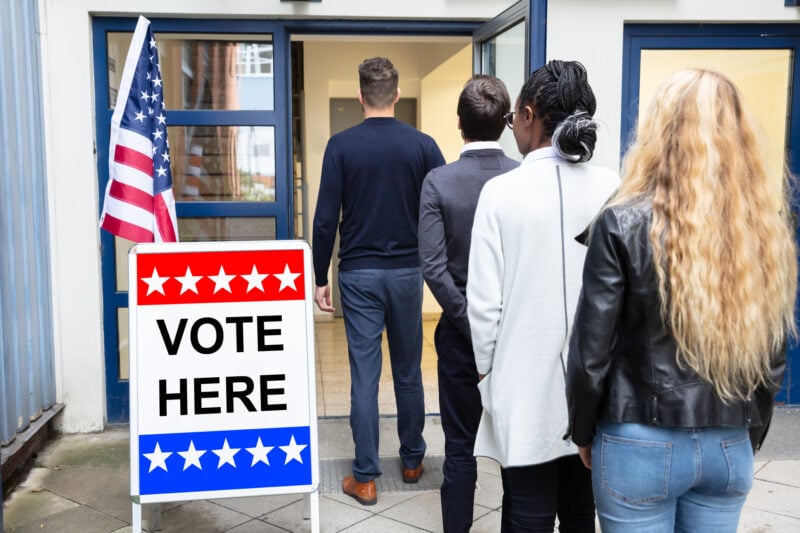
HARRISBURG, PA – Seeking to reduce polarization and strengthen voter confidence, Representatives Christopher Rabb and John Inglis III are introducing legislation that would let Pennsylvania counties and municipalities adopt ranked choice voting in local and state elections.
The Democratic lawmakers say the measure would allow jurisdictions to move away from the state’s current plurality system, under which candidates can win elections without securing a majority of votes.
Rabb said ranked choice voting, or RCV, would ensure that every elected official receives more than 50 percent of voter support, reflecting the true will of the electorate.
In RCV, voters rank candidates in order of preference. If no one earns a majority in the first round, the lowest-ranking candidates are eliminated and their votes redistributed until one contender surpasses 50 percent.
The sponsors argue that this method discourages negative campaigning, promotes coalition-building, and broadens representation by rewarding candidates who appeal to a wider base of voters.
Updated proposal revives previous session’s effort
The bill is a revised version of House Bill 1178 from the previous legislative session and would permit—but not require—local governments to adopt RCV for primaries, general elections, or special elections.
Among the updates are simplified language, public release of preliminary election night results, and a requirement that final reports include comparative results of the top two finishers.
The proposal also clarifies implementation rules, removes batch elimination requirements, and introduces an option for multi-winner elections that could enable proportional representation.
Aimed at reducing division and improving voter trust
Rabb and Inglis said Pennsylvania’s plurality system fuels extremism by allowing candidates to win with small, highly partisan bases. They argue that RCV can improve cooperation in government and refocus campaigns on consensus-driven policy issues.
Supporters note that RCV has been successfully used in cities like New York and San Francisco, as well as statewide in Maine and Alaska, where officials report higher voter satisfaction and lower rates of spoiled ballots.
Key Points
- Bill would allow Pennsylvania counties and municipalities to use ranked choice voting in local and state elections.
- Lawmakers say RCV ensures majority winners, curbs extremism, and increases voter satisfaction.
- Updated bill clarifies procedures, allows multi-winner elections, and preserves current voting options for nonparticipating jurisdictions.