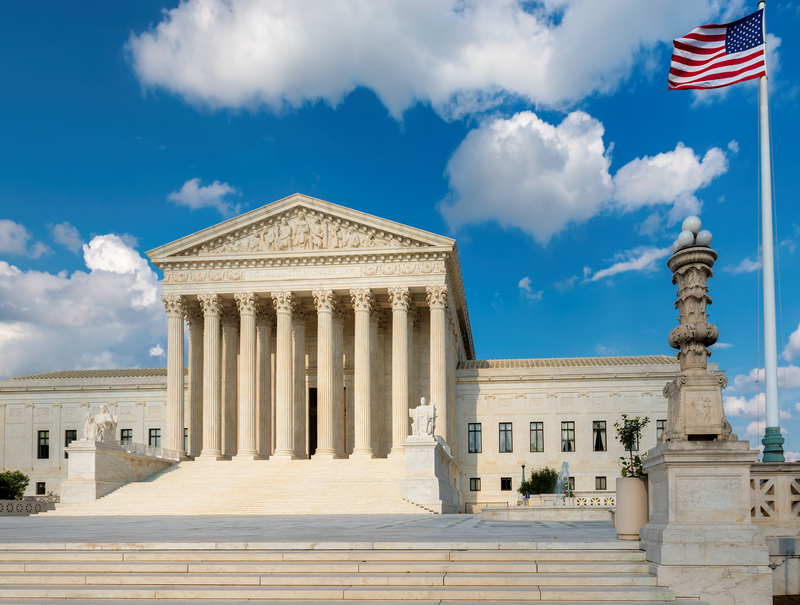
TRENTON, NJ – New Jersey Attorney General Matt Platkin has announced the opening salvos in a U.S. Supreme Court case that pits abortionj friendly New Jersey against a pro-life abortion alternative non-profit that many of the state’s Democrat political leaders want to shut down.
Supreme Court Justice Clarence Thomas has put New Jersey’s legal team on notice, asking if the group was targeted because of their anti-abortion stance, and noted the lack of any victims in the state’s legal battle against the organization. The case was labled a “fishing expedition” by Justice Thomas.
According to the New York Post:
“You had no basis to think that they were deceiving any of their contributors?” Thomas asked Chief Counsel Sundeep Iyer.
“We certainly had complaints about crisis pregnancy centers,” Iyer deflected before admitting none specifically applied to First Choice, a faith-based nonprofit with five facilities across the Garden State that discourages women from terminating their pregnancies.
“We had no complaints,” Iyer said. “But state governments, [the] federal government, initiate investigations all the time in the absence of complaints where they have a reason to suspect that there could be potential issues of legal compliance.”
“I think we had a more than ample basis to initiate this,” he added, citing concerns about misleading donors, unlicensed medical practices, violation of patient privacy, and “potentially misleading or untrue medical statements.”
A New Jersey legal battle over state subpoena power and First Amendment protections has reached the U.S. Supreme Court, centering on whether a pro-life nonprofit can challenge a state investigation before being forced to comply.
The dispute involves First Choice, a crisis pregnancy center based in New Jersey that operates multiple facilities offering counseling and pregnancy-related services.
The state’s Attorney General launched an investigation in 2023 after alleging the organization may have misled patients and donors about its mission and services through its online materials.
Investigators issued a subpoena seeking records and donor information to determine whether the nonprofit violated state consumer fraud laws.
First Choice responded by suing the state, claiming the subpoena targeted the group for its anti-abortion views and infringed on its First Amendment rights.
Core dispute reaches the nation’s highest court
The central question before the Supreme Court is not whether the state’s subpoena is valid but whether First Choice can bring its challenge in federal court before a state court enforces compliance.
New Jersey’s Attorney General argued that allowing such preemptive lawsuits would disrupt standard investigative procedures used by states nationwide. The office emphasized that thousands of subpoenas are issued every year in fraud cases and that First Choice’s legal stance “has no grounding in more than a century of history.”
State defends authority to investigate nonprofits
Attorney General officials said the state has a duty to ensure all organizations — including nonprofits — operate transparently and lawfully. “Non-profits may not deceive or defraud New Jerseyans,” the statement said, adding that the investigation is part of routine oversight to protect residents from misrepresentation.
First Choice contends that the probe amounts to selective enforcement intended to chill pro-life advocacy. The organization maintains that turning over donor information would violate the privacy of its supporters and deter contributions.
Potential implications for state investigative powers
Legal experts say the case could clarify the limits of state enforcement powers and determine how far nonprofits can go in preemptively challenging subpoenas. A ruling in favor of First Choice could make it easier for organizations to take state investigations directly to federal court.
The Supreme Court’s decision will likely define the balance between state regulatory authority and constitutional protections for advocacy groups.
The U.S. Supreme Court is weighing whether a New Jersey pro-life nonprofit can challenge a state fraud investigation before complying with a subpoena.