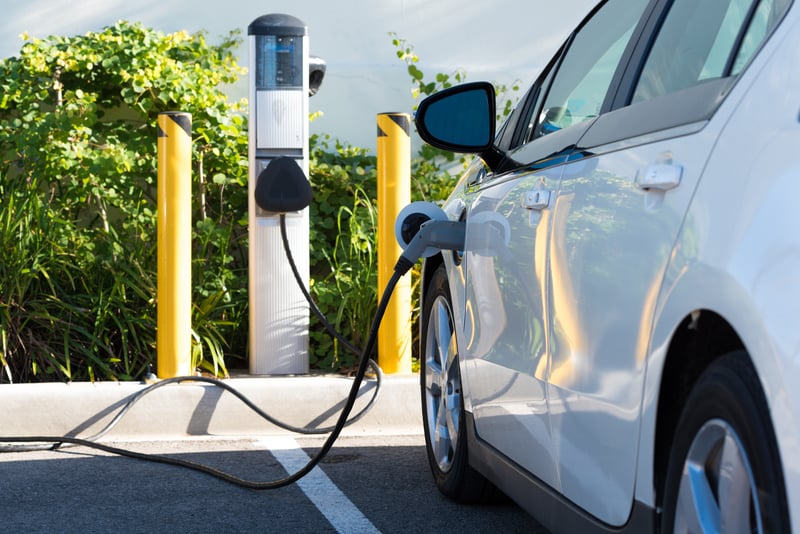
TRENTON, N.J. – Governor Phil Murphy on Wednesday announced a new Zero-Emission Vehicle (ZEV) Roadmap outlining the state’s progress in expanding electric transportation and its strategy to accelerate future adoption through major public investments and policy reforms. The report details achievements to date and sets the stage for continued infrastructure buildout, equity initiatives, and technological advancement to reduce transportation emissions.
The roadmap, produced through New Jersey’s Partnership to Plug-in and coordinated by the Governor’s Office, calls for expanding ZEV incentives, improving charging network reliability, investing in grid modernization, and developing a workforce trained for zero-emission technologies. It also addresses common barriers such as cost, charging access, and vehicle range while proposing outreach programs for underserved communities.
“Current efforts to reduce emissions and accelerate EV adoption in New Jersey rely on leveraging State and regional policy initiatives, Memorandums of Understanding, and additional federal support. State agencies have coordinated with regional stakeholders over many years to design and refine multiple vehicle and infrastructure incentive programs, grid development regulations, and utility transportation
electrification policies. New Jersey has adopted the Advanced Clean Cars II (ACC II)v regulation, which requires that 100% of new light-duty (LD) vehicle sales be zero-emission by 2035, and the Advanced Clean Trucks (ACT) rule,vi which requires manufacturers to increase sales of medium- and heavy-duty (MHD) zero-emission vehicles (ZEVs) through 2035,” the report reads.
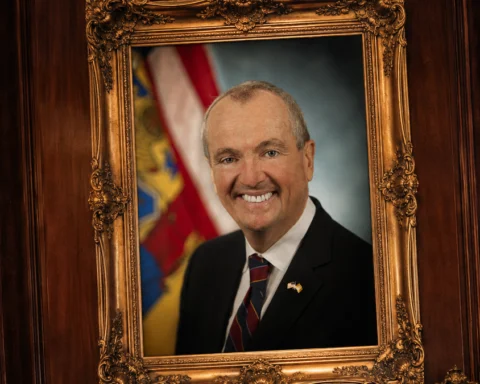
Murphy said the plan reflects his administration’s “whole-of-government approach” to tackling transportation emissions, the state’s largest source of greenhouse gases. “We are improving air quality and supporting a cutting-edge EV market and green jobs,” he said. “I am proud of the progress we’ve made to ensure affordable and clean energy solutions reach everyone in New Jersey.”
Murphy says New Jersey is expecting two million light duty electric vehicles on the roads by 2035, up from 300,000 in 2025. He also envisions a 100% electric fleet of vehicles for state agencies by then.
Recent investments include $75.5 million for Phase 3 of the New Jersey Zero-Emission Incentive Program for commercial vehicle electrification, $25 million in low-interest ZEV financing for fleet operators, $50 million for the upcoming Take Charge pilot program supporting private charging infrastructure, and $16 million toward NJ TRANSIT’s electric bus projects in South Jersey.
In December 2023, NJDEP adopted the ACC II package of regulations, which requires auto makers to
produce increasing numbers of EVs for sale for model years 2027-2035. Specifically, the ACC II
regulation requires vehicle manufacturers to steadily increase the percentage of zero-emission vehicles
(ZEVs), culminating in 100% ZEVs by 2035. Assuming State policies remain in effect, the ACC II rule is
expected to significantly boost EV adoption by ensuring a growing supply of EVs and associated charging
infrastructure and by responding to consumer preferences.
Murphy predicts “Fivefold” increase in energy demand as crisis continues.
In 2027, the peak weekend load is estimated at 556 MW, with weekday peaks at 629 MW. By 2035, these numbers are expected to increase approximately fivefold, with weekend peaks reaching 2,550 MW and
weekday peaks 2,885 MW. Adoption of smart charging strategies, including vehicle-to-grid technologies, supporting policies, and time-of-use rates, could help shift this load to off-peak hours, reducing the peak power demand and grid strain.
Studies of real-world managed charging programs in California have found that proactive planning and corresponding policies are able to lower costs for drivers and utilities, reduce GHG emissions, and decrease the collective power demand of EVs on the electric grid.xvi New Jersey has begun much of this work by establishing residential time-of-use rates, working with utilities to create fleet charging rates, and requiring all incentivized chargers and makeready installations to be networked in order to allow for future managed charging.
Environmental Protection Commissioner Shawn M. LaTourette said the roadmap underscores New Jersey’s momentum toward decarbonization. “By expanding access to incentives and building critical charging infrastructure, we are making significant progress toward achieving our emissions reduction goal,” he said.
Christine Guhl-Sadovy, president of the New Jersey Board of Public Utilities, noted that EV ownership has surged more than 800 percent since BPU programs began in 2020. “This roadmap charts the course for our continued transition,” she said. “Transportation electrification isn’t just about cleaner air – it’s an opportunity to strengthen the grid and lower costs.”
State transportation and economic officials highlighted the broader impact of the Murphy administration’s programs, which have helped put hundreds of thousands of electric vehicles on New Jersey roads. NJEDA Chief Executive Officer Tim Sullivan credited the NJ ZIP, ZEV Financing, and Take Charge initiatives with supporting green job creation and expanding clean vehicle access.
According to state data, New Jersey’s registered electric vehicles grew from just over 10,000 in 2016 to more than 280,000 by November 2025, with EVs now accounting for over 14 percent of new vehicle sales. Much of the growth has been fueled by state incentives and the 2020 EV law requiring NJ TRANSIT to purchase only zero-emission buses by 2032.
In addition to the roadmap, the state launched an online “One-Stop Shop” this year, allowing residents, municipalities, and nonprofits to identify funding opportunities for electrification and sustainability projects. The tool connects users with available federal, state, and utility programs based on eligibility and project type.
Murphy’s administration has also adopted new vehicle emissions regulations requiring manufacturers to sell increasing percentages of zero-emission models across all vehicle sectors, ensuring the state remains aligned with long-term climate goals.