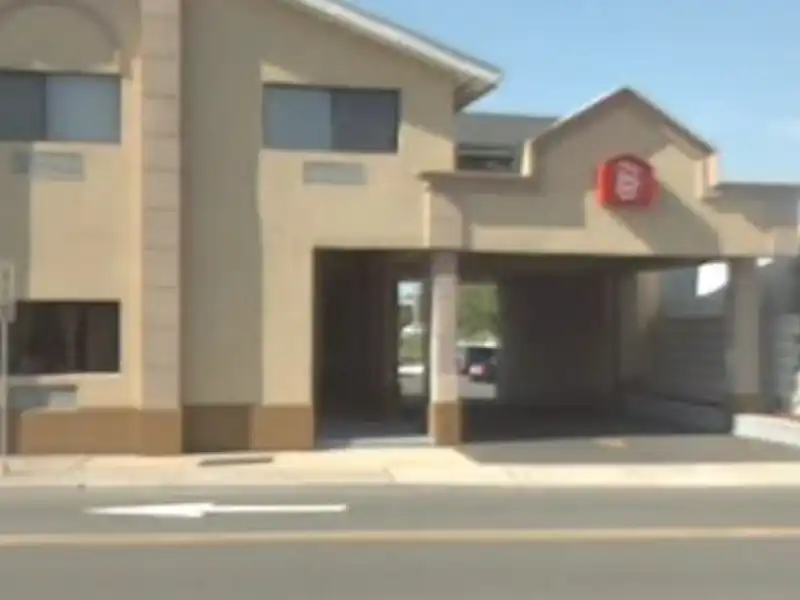
Toms River, NJ – The now vacant site once occupied by one of Ocean County’s most notorious motels stands as a reminder of how aggressive municipal action can end years of crime and nuisance in rural New Jersey.
The demolition of the Red Carpet Inn in Downtown Toms River signaled the end of an era of downtown drugs, prostution and crime, but the political powerbrokers who allowed that situation to grow out of control are back at it again.
This time, they are fighting Toms River Mayor Dan Rodrick’s fight to both care for local homeless residents by finding them longterm housing, but to also keep the state’s homeless population from turning his rural community into a homeless industrial center.
That plan is being pushed by Ocean County GOP Chairman George Gilmore and the Ocean County Board of Commissioners, who are seeking to build a permanent homeless center in Toms River.
The Red Carpet Inn at 2 West Water Street, formerly known as the Red Roof Inn and later the TR Hotel, was for years a focal point of drugs, weapons offenses, and persistent police activity.
Between 2015 and 2017, Toms River police responded to more than 750 calls at the property, ranging from narcotics investigations to theft and weapons complaints. The motel’s repeated rebranding failed to stem illegal activity, and township officials ultimately labeled it a public safety hazard.
The Toms River Police Department filed a formal nuisance complaint, and the township enacted stricter ordinances regulating motels, including bans on hourly rentals and requirements for guest identification. Inspections by the township’s Quality of Life Task Force uncovered widespread code violations, reflecting broader problems in the local motel sector.
In late 2018, Toms River Township purchased the Red Carpet Inn for $3.3 million, closed it that October, and moved forward with demolition the following year.
By July 2019, the structure was reduced to rubble, clearing the way for downtown redevelopment. The former motel property has since been incorporated into long-term plans aimed at creating a more walkable downtown with new housing, businesses, and infrastructure improvements, including the Herflicker Loop.
As that chapter closed, a new debate has emerged over homelessness and public spaces. The Ocean County Board of Commissioners is now considering turning the county’s Code Blue warming center nearby on Route 9 into a full-time, supervised homeless shelter offering support services. The proposal surfaced unexpectedly during public comment at a recent board meeting.
Toms River resident Maybelline Hicks-Samuel raised concerns about an increased presence of homeless individuals at the Ocean County Library branch in town. She told commissioners her concerns centered on safety in shared public spaces used by women, children, and seniors.
That swelling of homeless people was fueled by a soup kitchen approved by the commissioners earlier this year, operated by aging progressive 80s rock idol, Jon Bon Jovi.
Commissioner Robert Arace, a champion of the project, said he had spoken with Ocean County Sheriff Michael Mastronardy and emphasized that public safety remains a priority, citing increased police patrols, including foot patrols, in affected areas at that time.
Still, drug overdoses, sexual assaults, and violence continued before anything was done. The incident garnered national attention as local homeless industrial complex charities who get paid by the head, allegedly bused in dozens of homeless from around New Jersey and beyond.
The issue has drawn heightened attention after Mayor Dan Rodrick publicly blamed county officials and musician Jon Bon Jovi for the situation, referencing the JBJ Soul Kitchen pop-up café inside the library. Organizers have said the café is not a soup kitchen and is intended to provide community meals in a structured setting.
Those meals were provided for free, JBJ Soul Kitchen later admitted.
Commissioner Jennifer Bacchione, the county liaison to the Ocean County Library, noted that libraries often become refuges during extreme weather because they are open late and provide climate-controlled space. She acknowledged the difficulty of balancing safety concerns with humanitarian needs.
“We do not want to make it worse, but they are human needs,” Bacchione said. “A lot of them need help, and some of them just don’t have anywhere to go.”
Toms River’s homeless hotel is long gone and Mayor Rodrick has done a wonderful job working with local and state agencies to place those homeless at the library, but the financial forces behind the homeless industrial complex in New Jersey want to see them return, and this time, in a venue bigger than ever.
The county continues to do battle with Mayor Rodrick, who said he is simply trying to maintain a quality of life and public safety level for residents who live in the community.