
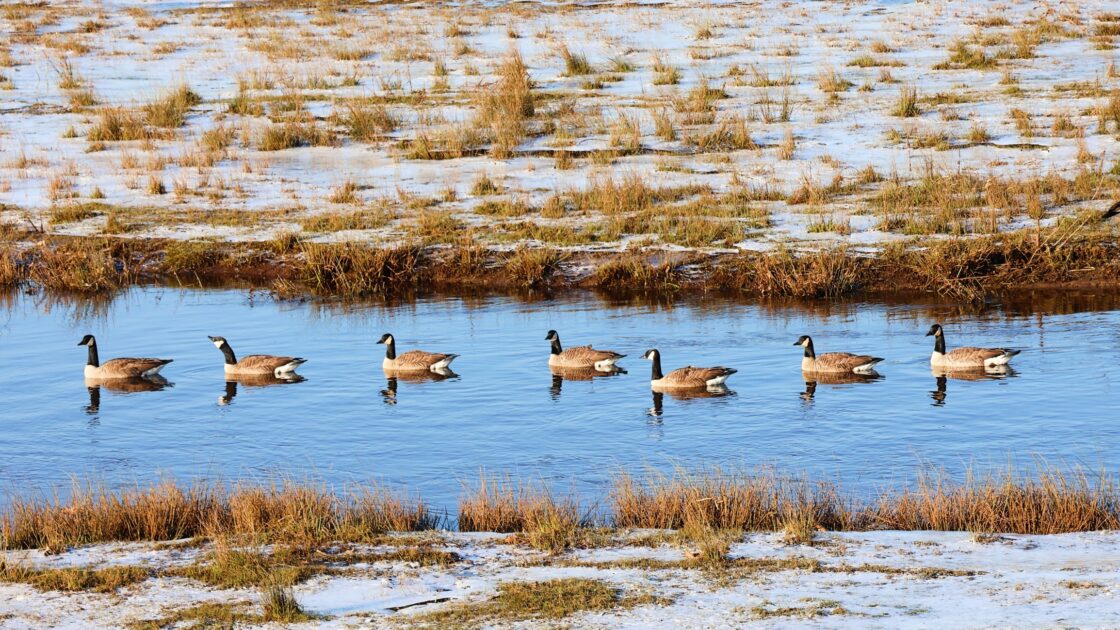
MIDDLETOWN, NJ – Wildlife officials are investigating a mass die-off of more than 100 Canada geese at the Swimming River Reservoir in Monmouth County, believed to be linked to an outbreak of highly pathogenic avian influenza (H5N1) spreading across New Jersey.
Residents near the reservoir began reporting dead and dying geese over the past week, with drone footage showing visibly sick birds spinning in circles and tilting their heads — neurological symptoms consistent with the bird flu strain that has devastated waterfowl populations nationwide. Officials have since confirmed similar cases in other counties, including Mercer, where a recent outbreak in Allentown tested positive for the same virus.
The New Jersey Department of Environmental Protection and U.S. Department of Agriculture are monitoring the situation closely. Authorities say at least two bald eagles in the area are also believed to have died from the virus.
Officials warn residents to avoid contact with sick birds
Health officials stress that the current outbreak poses little to no risk to humans and does not affect the region’s drinking water supply. Still, the public is urged not to touch or handle any dead or sick birds and to keep pets away from the shoreline and affected parks.
Some township parks and reservoirs have been temporarily closed as cleanup and testing continue. Wildlife crews are collecting carcasses for analysis to confirm the scope of the infection.
Key points:
- More than 100 dead or dying geese found at the Swimming River Reservoir in Middletown.
- Officials suspect highly pathogenic avian influenza (H5N1) as the cause.
- Residents warned to avoid handling sick or dead birds and keep pets away.
Bird flu continues to spread across New Jersey
The H5N1 avian influenza strain has been detected in several wild bird populations across the state in recent months, raising concerns about its impact on native species, particularly raptors that feed on infected waterfowl. The virus, which spreads rapidly among migratory birds, has led to similar die-offs in neighboring states and remains under federal surveillance.
State officials say they will continue tracking wildlife health data and coordinating with federal partners to contain the outbreak. For now, residents are urged to report unusual bird deaths to the New Jersey Division of Fish and Wildlife.
Read more about related topics:
Wildlife authorities are urging vigilance as the avian flu continues to spread across New Jersey.