TRENTON, NJ – A sweeping proposal in the New Jersey Legislature could reshape the state’s voting landscape for decades. Assembly Bill No. 1715, introduced by Assemblywoman Verlina Reynolds-Jackson and backed by more than 30 co-sponsors, seeks to establish the John R. Lewis Voter Empowerment Act of New Jersey — a comprehensive overhaul designed to safeguard access to the ballot, fight discrimination, and enhance election transparency statewide.
The bill, named after the late civil rights icon Congressman John R. Lewis, would create a Division of Voting Rights within the Department of the Treasury to enforce state and federal voting protections. The division would serve as New Jersey’s central authority on voting rights enforcement, investigations, and oversight of local election offices. Lawmakers have earmarked $2.5 million to fund its creation and operations.
The legislation’s stated purpose is clear: “to encourage participation in the elective franchise by all eligible voters to the maximum extent; and to ensure that eligible voters who are members of protected classes… shall have an equal opportunity to participate in the political processes of the State of New Jersey.”
Division of Voting Rights to oversee elections
Under the act, a director appointed by the governor would head the Division of Voting Rights for a six-year term, reporting directly to the governor. The division would hold broad investigative powers, including the authority to subpoena, issue reports, and initiate legal actions against violations of election law. It would also advise municipalities and counties on compliance with state and federal voting rights standards.
The act places strict limits on any voting policy that may burden the right to vote, requiring such actions to be “narrowly tailored to promote a compelling policy justification supported by substantial evidence.” It explicitly bans practices that result in racial or language-based disparities in access to the ballot.
A new institution, the New Jersey Voting and Elections Institute, would also be established at a public university. Its role would be to centralize election data and maintain a public database containing voter registration statistics, redistricting maps, and historical election results — all accessible to researchers, journalists, and the public.
Language access and anti-suppression measures
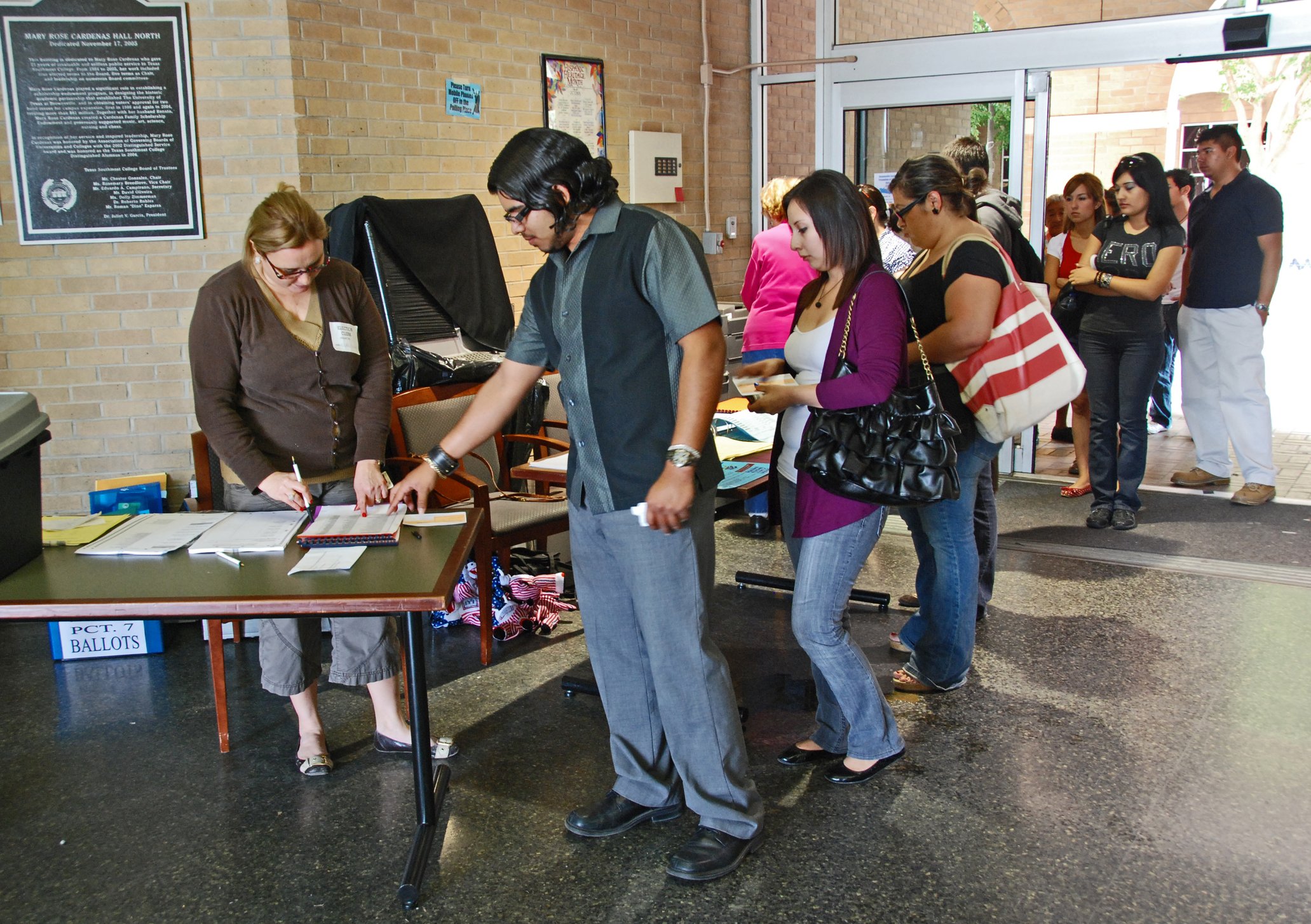
Local election offices would be required to provide ballots, notices, and instructions in multiple languages for limited English proficient voters. Jurisdictions where more than two percent of eligible voters — or at least 4,000 people — speak a shared non-English language would be required to provide translated voting materials and bilingual assistance at polling locations.
The act also introduces a “preclearance” system. Certain counties and municipalities with histories of voter discrimination or significant racial and language-minority populations would need state approval before changing election procedures, polling locations, or district maps. This system mirrors the former federal preclearance provisions of the Voting Rights Act of 1965.
Enforcement and legal remedies
The bill gives voters and advocacy groups the right to file lawsuits over violations, allowing for court-ordered remedies, damages, and injunctive relief. It also imposes penalties for voter intimidation, deception, or obstruction — including spreading false information about election dates or eligibility.
The Division of Voting Rights would hold power to enforce these provisions swiftly, especially during election periods. Lawsuits would be prioritized by state courts to prevent elections from proceeding under unlawful conditions.
Key takeaways:
- Creates a new Division of Voting Rights to enforce election laws
- Requires multilingual ballot access and assistance statewide
- Mandates preclearance review for counties with histories of voter disparities
The John R. Lewis Voter Empowerment Act of New Jersey would apply to all elections at every level of government in the state. If approved, it would make New Jersey one of the first states to implement a state-level voting rights law modeled directly on the federal Voting Rights Act, expanding protections once guaranteed nationally.