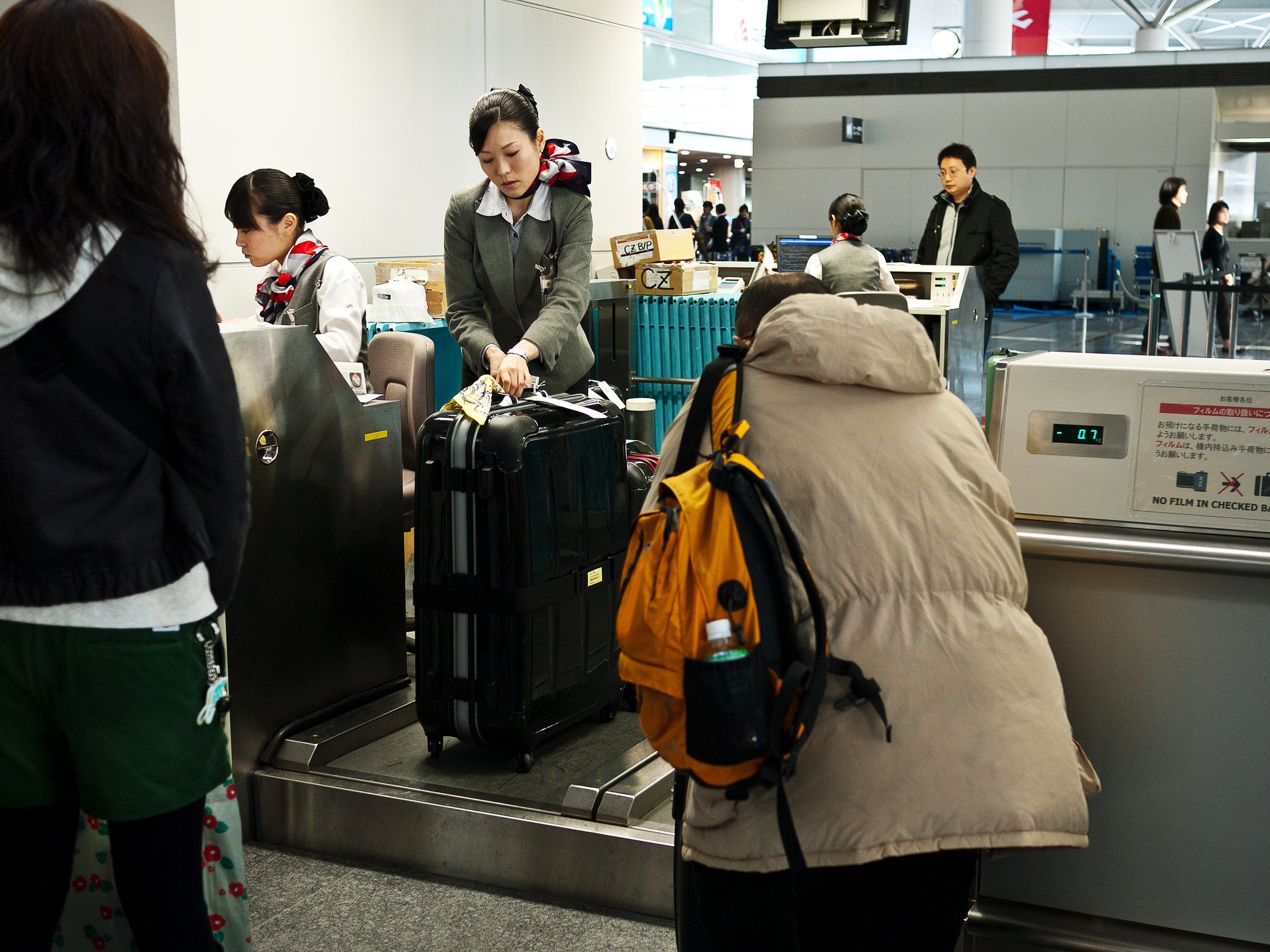
Newark, NJ — Travelers passing through Newark Liberty International Airport may have paid inflated baggage fees after state data analyzed by NJ Spotlight News and NYCity News Service found that 27% of inspected scales produced inaccurate readings, raising concerns about widespread overcharges.
The findings point to a persistent issue with baggage scale accuracy at one of the region’s busiest airports, where faulty measurements — described as “phantom weight” readings — appeared far more frequently than at nearby airports.
Inspection data reveals widespread inaccuracies
According to the analysis by NJ Spotlight News and NYCity News Service, more than a quarter of baggage scales tested during recent inspections failed to meet accuracy standards. These discrepancies could directly impact passengers, particularly those charged overweight baggage fees based on incorrect readings.
The New Jersey Division of Consumer Affairs, which oversees weights and measures enforcement, conducted the inspections but had not examined the airport’s baggage scales since 2023, NJ Spotlight News reported. That gap in oversight may have allowed inaccuracies to persist undetected.
Even after repairs, some scales continued to produce incorrect results. In one case cited in the reporting, a scale that had already been fixed and reinspected still showed a discrepancy of up to 35 pounds, highlighting the severity of the problem.
Newark lags behind regional airports
The issue appears more pronounced at Newark than at other major airports in the region.
LaGuardia Airport and John F. Kennedy International Airport undergo more frequent annual inspections, according to the NJ Spotlight News analysis. Those routine checks may help prevent the kind of prolonged inaccuracies now documented at Newark.
By contrast, the less frequent inspection schedule in New Jersey may have contributed to higher failure rates. The data suggests that Newark’s 27% inaccuracy rate significantly exceeds that of its regional counterparts, though exact comparative figures were not detailed in the provided analysis.
—
Key Points
• 27% of baggage scales at Newark Airport failed accuracy tests, per NJ Spotlight News analysis
• Some repaired scales still showed errors as high as 35 pounds
• Newark’s failure rate exceeds nearby airports with more frequent inspections
—
What it means for travelers
For passengers, even small discrepancies can translate into unexpected costs. Airlines typically charge fees when checked luggage exceeds weight limits, often by just a few pounds. A miscalibrated scale could push a bag over that threshold unfairly.
The reporting emphasized that these “phantom weight” readings may have led to systematic overcharging, though the total financial impact on travelers remains unclear.
Industry experts cited in the broader discussion note that scale inaccuracies are not uncommon, particularly when calibration is infrequent. Regular maintenance and testing are critical to ensure compliance with measurement standards.
Oversight gaps and ongoing concerns
The lack of recent inspections by the New Jersey Division of Consumer Affairs stands out as a key factor in the findings. NJ Spotlight News reported that no examination had taken place since 2023, raising questions about regulatory consistency at high-traffic transportation hubs.
While the agency is responsible for ensuring fairness in commercial measurements, the data suggests that enforcement may not have kept pace with operational demands at Newark.
The issue also raises broader concerns about consumer protection. Inaccurate measurement devices — whether at airports, gas stations, or grocery stores — can erode public trust and lead to cumulative financial harm.
What happens next
It remains unclear what corrective actions, if any, have been implemented since the inspections or whether additional audits are planned. The findings, however, are likely to increase pressure on regulators and airport operators to address the discrepancies and prevent further overcharges.
Travelers using Newark Airport may want to weigh their luggage independently before arriving, especially if close to airline limits, until confidence in the system is restored.
As of now, the New Jersey Division of Consumer Affairs has not publicly detailed a timeline for reinspection or broader corrective measures, and the accuracy of baggage scales at Newark remains an active concern based on the latest available data.