
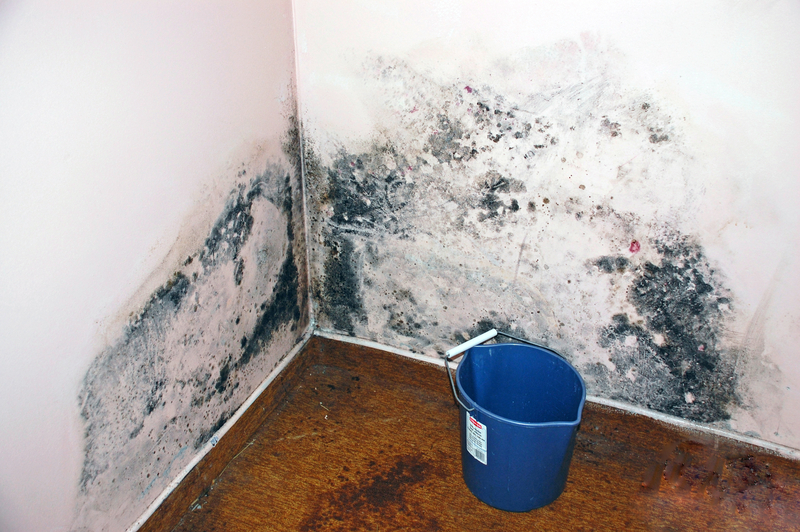
Trenton, NJ — A federal judge in New Jersey has dismissed a lawsuit brought by a Princeton tenant who claimed that AvalonBay Communities, Inc., the national apartment developer and property management firm, failed to address mold and unsafe living conditions in her affordable housing unit.
In an opinion issued by U.S. District Judge Zahid N. Quraishi, the court granted AvalonBay’s motion to dismiss the fifth amended complaint filed by Marcia Rafter, who represented herself in the case. The ruling ends a long procedural battle that included five iterations of Rafter’s complaint and multiple motions before the District of New Jersey.
Procedural History
Rafter first filed suit on August 31, 2023, alleging that AvalonBay and its CEO, Benjamin Schall, had violated her rights by neglecting necessary maintenance and retaliating against her for raising health and safety concerns. Since that initial filing, she amended her complaint four times, most recently submitting a Fifth Amended Complaint on May 12, 2025.
AvalonBay and Schall filed a motion to dismiss that same month, arguing that the plaintiff’s claims were legally insufficient. Their motion (ECF No. 77) was supported by a detailed brief, and Rafter filed an opposition (ECF No. 80), to which AvalonBay replied (ECF No. 83). Judge Quraishi decided the motion without oral argument, pursuant to Federal Rule of Civil Procedure 78 and the local rules of the District of New Jersey.
This was not the first time the court had dismissed Rafter’s claims. In March 2025, the judge dismissed her Fourth Amended Complaint but granted her permission to amend once more.
Background
According to court filings, Rafter resides in an affordable housing unit at Avalon Princeton, an apartment complex operated by AvalonBay in Princeton, New Jersey. Her initial lease began in February 2020 and was renewed annually. She alleges that the apartment was one of several affordable units required under Princeton and Mercer County approvals for AvalonBay’s development.
Rafter’s complaint centered on two main allegations: that AvalonBay failed to properly remediate mold and perform needed repairs, and that the company retaliated against her after she complained about the unsafe conditions.
She claimed that in July and September 2021, AvalonBay failed to “properly remove mold and repair faulty construction” in her apartment. She alleged that as a result of the company’s negligence, she became sick and continued to suffer from mold exposure-related illness.
Rafter also alleged that AvalonBay’s maintenance staff, including a technician named Lewis Heredia, admitted to maintenance errors that contributed to the problem. Specifically, Heredia allegedly told her that he had failed to drain the air-conditioning system in the apartment above hers during a 2020 preventive maintenance check. She claimed that this failure caused a significant water leak that saturated her kitchen ceiling, creating an environment conducive to mold growth.
Despite repeated notifications to AvalonBay management, Rafter alleged that the company’s only response was “a campaign of retaliation and reprisals,” which she described as attempts to intimidate or discredit her rather than address the underlying health concerns.
Court’s Analysis
Judge Quraishi’s opinion focused primarily on whether Rafter’s Fifth Amended Complaint met federal pleading standards. The court accepted her factual allegations as true for the purpose of the motion but concluded that she failed to state a claim upon which relief could be granted.
The court applied the well-established pleading standard from Phillips v. County of Allegheny, 515 F.3d 224 (3d Cir. 2008), which requires that a complaint contain enough factual matter to “state a claim to relief that is plausible on its face.” The opinion noted that Rafter’s latest filing, like her earlier versions, lacked the necessary legal specificity and factual support.
While Rafter described her health concerns and AvalonBay’s alleged negligence in general terms, the court found that she did not adequately connect those allegations to a recognized cause of action under federal or state law. Moreover, the opinion indicated that her assertions of retaliation and corporate misconduct were conclusory and unsupported by factual detail sufficient to survive dismissal.
AvalonBay had argued that Rafter’s claims sounded in negligence and breach of contract but failed to allege any specific breach of a duty owed or any evidence of discriminatory or retaliatory intent. The court agreed, ruling that Rafter’s allegations—though concerning—did not meet the threshold required to proceed to discovery.
Outcome
For these reasons, Judge Quraishi granted AvalonBay and Schall’s motion to dismiss the Fifth Amended Complaint in full. The court’s opinion did not expressly grant further leave to amend, suggesting that this dismissal may be final.
The decision marks the latest in a series of legal victories for AvalonBay, which has faced multiple tenant complaints over living conditions in its developments but has generally prevailed in court where plaintiffs failed to substantiate claims of systemic neglect or retaliation.
Broader Context
AvalonBay Communities, headquartered in Arlington, Virginia, is one of the largest publicly traded real estate investment trusts (REITs) in the United States, with apartment communities across the country, including several in New Jersey. The company often participates in mixed-income housing developments that include affordable units required by local zoning approvals.
Rafter’s case drew attention from local tenant advocacy circles because it highlighted the challenges faced by affordable housing residents in holding large property management firms accountable for maintenance and health issues.
Despite her case’s dismissal, tenant advocates note that such lawsuits underscore ongoing concerns about mold remediation, habitability standards, and the responsiveness of corporate landlords.
The case is Marcia Rafter v. AvalonBay Communities, Inc., et al., Civil Action No. 23-13674 (ZNQ) (JTQ), before the U.S. District Court for the District of New Jersey.