
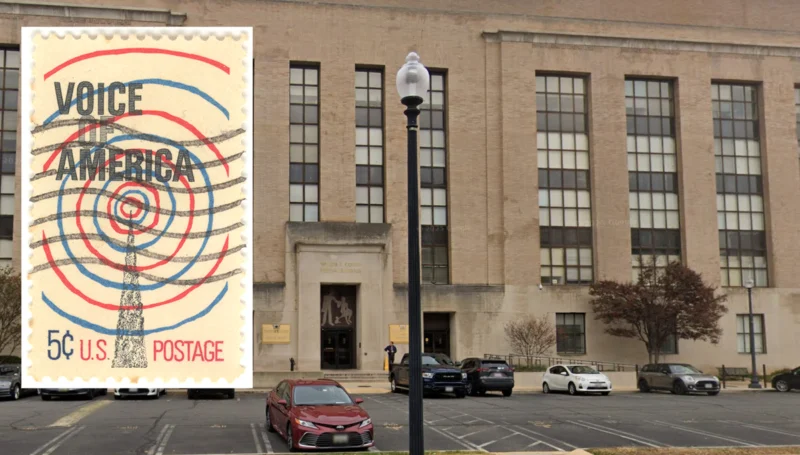
A sweeping court decision has sided with journalists and employees who challenged a major overhaul of U.S. international broadcasting operations.
Washington, DC – A federal judge has ruled that actions taken in March to significantly downsize the U.S. Agency for Global Media (USAGM) and Voice of America (VOA) violated federal law, delivering a partial victory to plaintiffs in a closely watched case involving the future of government-funded international broadcasting.
Voice of America (VOA) is a U.S. government-funded international multimedia broadcaster providing news and information to global audiences in 49 languages, with a weekly reach of over 360 million people. Founded in 1942 to combat Nazi propaganda, it provides objective news where press freedom is limited. VOA is, as of March 2026, undergoing legal challenges regarding its operation.
Key Points
- Federal court finds USAGM downsizing actions violated Administrative Procedure Act
- Plaintiffs win most claims, though contractor reinstatement requests denied
- Ruling centers on March 2025 overhaul of Voice of America operations
In a memorandum opinion, the U.S. District Court for the District of Columbia concluded that plaintiffs “prevail on all aspects of their APA claims except for certain contractors’ requests for reinstatement.” The ruling addresses cross-motions for partial summary judgment filed by both sides.
Court examines legality of agency overhaul
The case stems from actions taken in March 2025 to reduce operations at USAGM and its subsidiary, Voice of America. Plaintiffs argued the changes violated provisions of the Administrative Procedure Act, which governs how federal agencies implement policy changes.
The court agreed in large part, determining the defendants’ actions did not comply with legal requirements under Sections 706(1) and (2) of the APA. As a result, both parties’ motions were “GRANTED IN PART and DENIED IN PART,” according to the opinion.
VOA’s role highlighted in ruling
The decision also outlines the historical and legal framework behind Voice of America, which was established during World War II and later codified by Congress to provide information about the United States to international audiences.
The court noted that U.S. law defines a policy of promoting “the right of freedom of opinion and expression, including the freedom to seek, receive, and impart information and ideas through any media and regardless of frontiers.”
The case consolidates challenges brought by multiple plaintiffs against officials tied to the agency’s restructuring, marking a significant development in ongoing legal disputes over the direction and independence of U.S. international media operations.