
JACKSON, NJ – Jackson Township is staring down the barrel of a major population and congestion boom like it has never seen before.
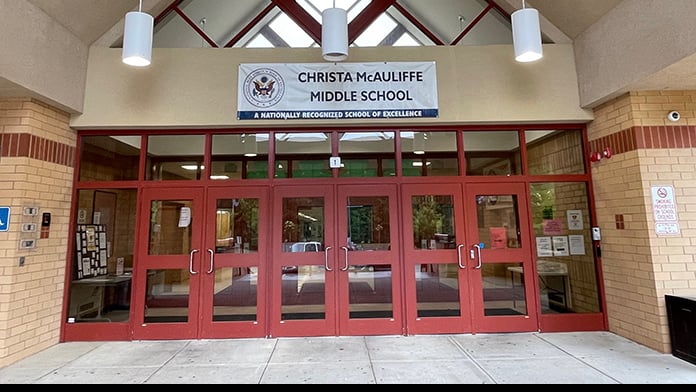
The recent sale of Christa McAuliffe Middle School to Beth Medrash Govoha, of Lakewood, the world’s largest yeshiva, marks a pivotal moment for Jackson Township.
The $40 million transaction transfers ownership of the 38-acre property on South Hope Chapel Road, once Jackson’s only Blue Ribbon school and named in honor of Challenger astronaut Christa McAuliffe, to an institution whose rapid growth has already reshaped neighboring Lakewood.
BMG was the driving factor behind Lakewood’s rapid growth over the past few decades.
The Jackson site could now serve as an extension of BMG’s operations, and Lakewood’s expansion, which have long exceeded the capacity of its downtown Lakewood footprint.
That $40 million sale price was $15 million below the school district’s appraisal and asking price, but at $55 million, there were no immediate buyers.
For the Jackson School District, the sale offers immediate financial relief at a time of declining enrollment and shrinking state aid.
At this week’s council meeting, Council Vice President Giuseppe Palmeri delivered more bad news. The BMG sale is only a short-term fix, which could last three or four years, or maybe just one, depending upon the actions of New Jersey Governor-Elect Mikie Sherrill.
There is no plan for what happens next. Will more schools close and be sold? Will there be consolidation of elementary schools? Nobody from the township or the district is willing to have that conversation yet, but planning should be priority, now, and not knee-jerk reaction like the sale of Rosenauer Elementary School and McAuliffe Middle School.
However, for many residents, the transaction raises serious concerns about long-term consequences. The eastern edge of Jackson could face profound changes, including intensified traffic congestion, mounting infrastructure strain, and a shift in the township’s character that some fear may be irreversible.
Beth Medrash Govoha’s expansion is well documented.
Founded in 1943, the yeshiva enrolls more than 9,000 adult male students engaged in full-time Talmudic study, making it the largest Orthodox Jewish institution outside of Israel.
Its growth has fueled extensive development throughout Lakewood, where population increases have contributed to housing shortages and overburdened roads and utilities. In recent years, BMG has pursued additional land acquisitions to meet housing and facility needs, underscoring the scale and momentum of its expansion. The McAuliffe site could accommodate an estimated 2,500 to 3,000 additional students, despite being designed originally as a middle school campus.
Turning the school into BMG West would mean a need for dorms and an increase in low-rent, affordable housing. It will increase traffic and with the recent approvals of three large shuls within a two-mile radius, it could make East Veterans Highway, an already dangerous road, more dangerous than ever if county officials do not immediately plan to widen it between South Hope Chapel Road and Whitesville Road.
No such plans are in the works, according to minutes from county commissioner meetings.
Traffic remains one of the most immediate and visible concerns. The corridor connecting Lakewood and Jackson is already heavily congested, particularly around commercial hubs and major arteries such as Route 9 and now in the East Veterans Highway and South Hope Chapel Road area.
Ongoing school consolidations, private-school busing, and daily commuter traffic have strained the road network beyond its limits.
Adding a large yeshiva campus would increase daily trips by thousands for students, staff, service providers, and visitors.
As a middle school, McAuliffe only saw traffic during its opening and closing each day. As a yeshiva, it could see round the clock traffic increases in the area.
Even with planned road improvements, residents fear that congestion could worsen dramatically, slowing emergency response times and turning routine travel into prolonged delays.
Housing pressures represent another major challenge.
Many BMG students are young families who seek affordable housing close to campus. Lakewood’s growth has already pushed significant numbers of Orthodox families into eastern Jackson, accelerating residential development.
Jackson’s own master plan includes substantial affordable housing construction, some of it in environmentally sensitive areas, which has sparked debate over density and land use.
Critics at town council meetings have argued that increased demand tied to the increase in private schools, and the yeshiva’s expansion could hasten high-density development, strain utilities, raise property taxes, and increase already significant costs associated with busing non-public school students.
Supporters of the sale, mostly school board members and school district officials, contend that it stabilizes district finances and may help ease longstanding legal tensions between the township and the Orthodox community.
But, we learned on Tuesday, that might not even be the case.
Jackson has previously faced costly litigation related to zoning and discrimination claims, and some view the transaction as a step toward coexistence and economic stability.
Nonetheless, many longtime residents see the deal as a tipping point. While Jackson is geographically far larger than Lakewood, they warn that without careful planning and firm limits, it risks becoming an extension of its densely populated neighbor.
Ocean County Commissioner Frank Sadeghi predicts Jackson will grow from 65,000 residents to 200,000 residents in a few years. It will become the state’s third-largest city behind Newark and Jersey City, according to that estimate.
Ultimately, the sale of Christa McAuliffe Middle School is more than a real estate transaction.
It is a catalyst for potential transformation that will test Jackson’s infrastructure, zoning policies, and community identity.
Township leaders should now face mounting pressure to conduct comprehensive traffic studies, invest in infrastructure, and establish clear development guidelines.
Without decisive action, residents fear the township could wake up to a future defined less by deliberate growth and more by unchecked expansion.