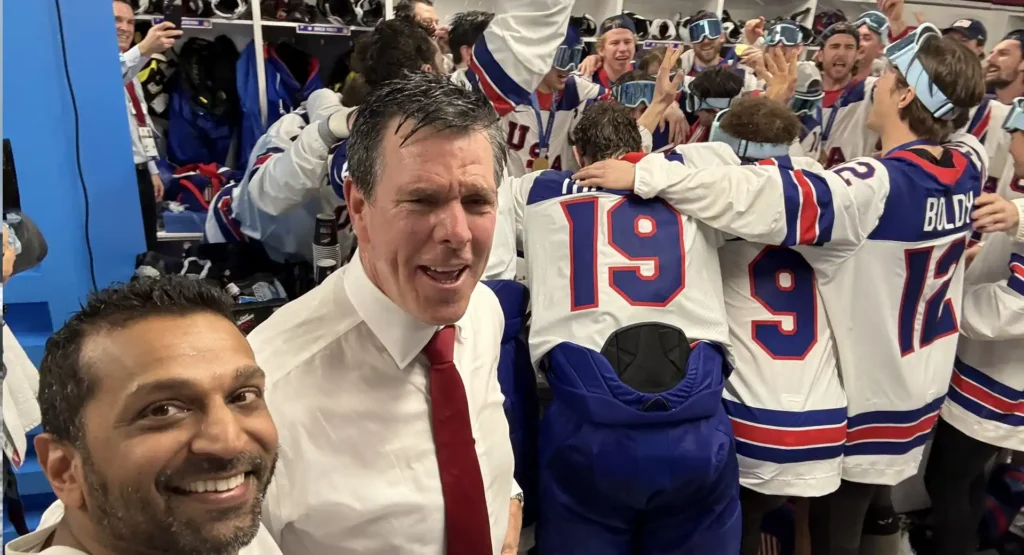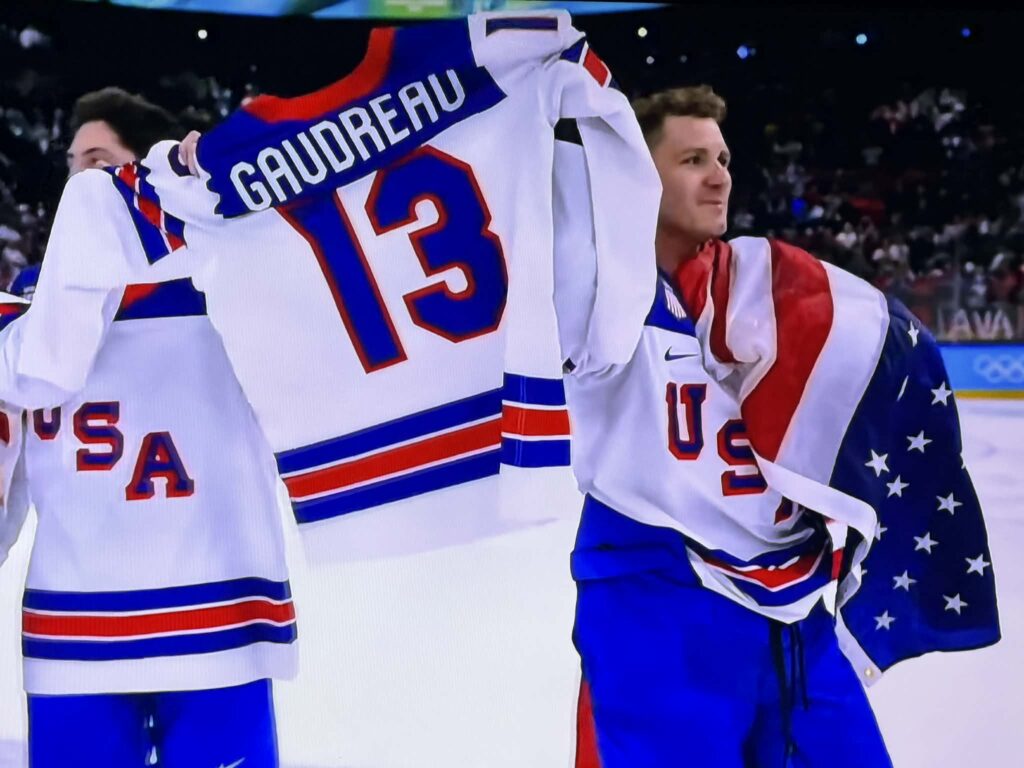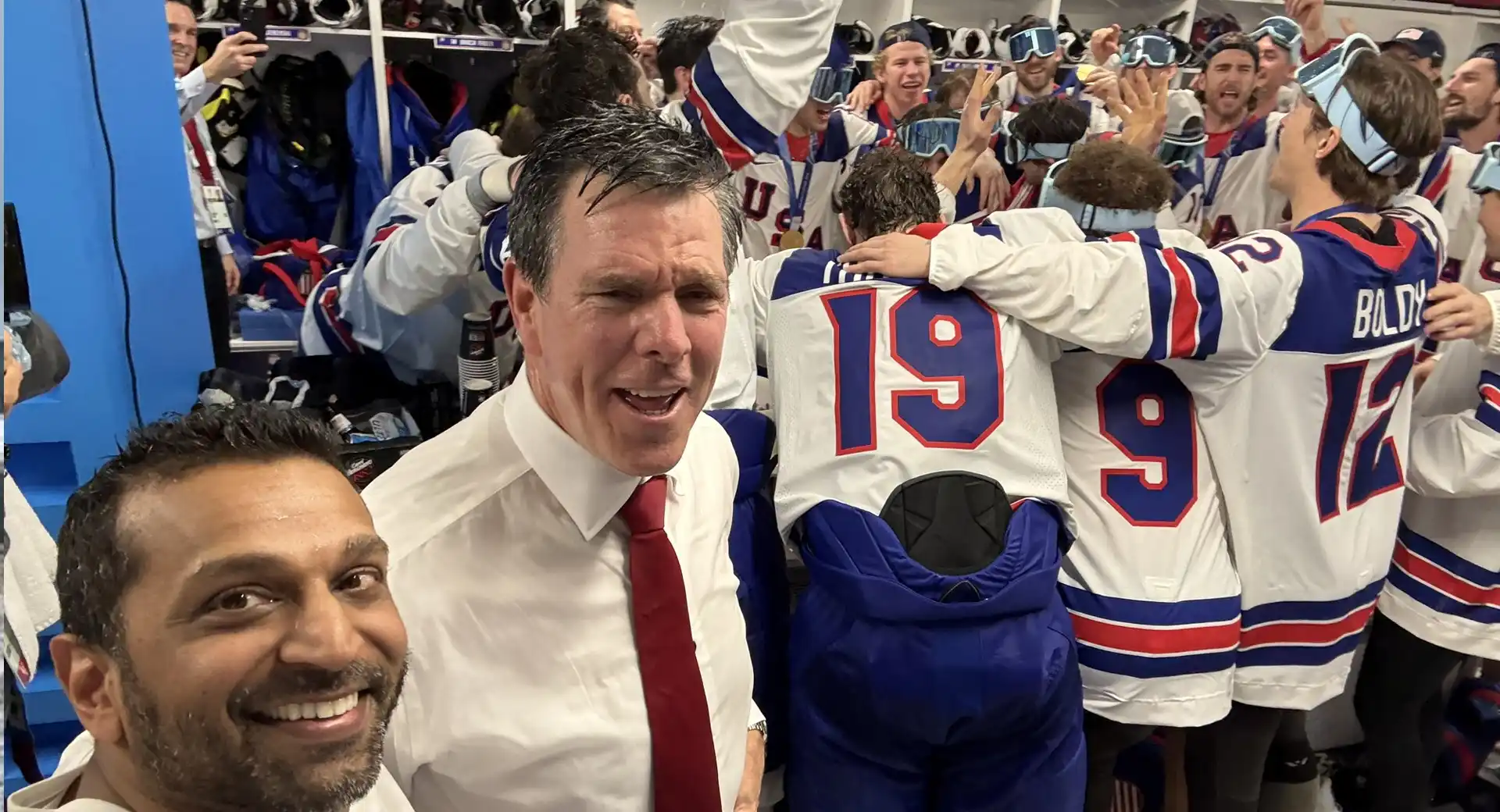
Washington, DC – In an era when political outrage can ignite in minutes, a locker room celebration thousands of miles away has become the latest flashpoint. FBI Director Kash Patel is facing criticism after joining Team USA in its locker room following a gold medal victory at the 2026 Winter Olympics in Milan. Videos show him smiling, holding a medal and celebrating alongside players.
The reaction was instant.
Critics questioned whether Patel’s presence blurred the line between official duty and personal celebration. Reports that he traveled on an FBI aircraft intensified scrutiny, with opponents raising concerns about taxpayer expense and optics.
FBI Director Kash Patel got the murder rate to a 125 year low in America in only one year.
— Brenden Dilley (@WarlordDilley) February 23, 2026
If he wants to celebrate with our gold medal winning hockey team, not only is it appropriate it's based as fuck!
This is what winning looks like.🇺🇸pic.twitter.com/DNlhEE95ok
Yet beneath the viral clips and heated commentary lies a more measured question: is this truly a controversy, or a moment inflated by political reflex? Patel was in Italy, according to the FBI, for official security engagements tied to the 2026 Winter Olympics. His stop in the locker room followed an invitation from newly crowned Olympic champions representing the United States.
Official duties and public optics collide
The FBI stated that Patel met with the Milan Joint Operations Center and participated in security-related engagements during his trip. Such coordination is routine for major international events, particularly those drawing global attention and heightened security risks. The Olympics are among the largest and most complex security operations in the world.
As FBI Director, Patel’s portfolio includes overseeing federal law enforcement and intelligence coordination. Engagement with international counterparts at a global event aligns with the bureau’s mission. Senior U.S. officials frequently travel overseas for meetings tied to security and diplomacy.
The debate intensified because the celebration was public. Video showed Patel holding a gold medal and sharing in the team’s excitement. For some, that image clashed with expectations of how a federal law enforcement leader should comport himself while abroad.
- Patel attended Olympic events while on an official overseas trip
- The FBI says meetings in Milan were part of security coordination
- Critics questioned the use of government aircraft and optics of celebration
Public officials operate in a space where symbolism often outweighs context. A photograph can define a narrative faster than a briefing memo can clarify it. But perspective matters.
The United States men’s hockey team had just secured a gold medal on one of the world’s largest stages. The locker room, by tradition, is a place of camaraderie and celebration. Presidents, governors and cabinet officials have long visited championship teams in similar settings. The difference here is that the moment occurred overseas and during official travel.
Celebration versus misconduct
There is no allegation of criminal wrongdoing. There is no indication that Patel diverted from official meetings or misused classified resources. The criticism centers largely on appearance and consistency, particularly because Patel previously criticized travel practices of prior FBI leadership.
Government aircraft usage by senior officials is governed by policy and security considerations. Directors of federal agencies often use official planes due to scheduling, security protocols and operational demands. The fact that a celebratory stop occurred during the trip does not, in itself, negate the official purpose of travel.
The deeper issue is whether Americans should view the image of a law enforcement leader celebrating with athletes as inappropriate, or as a display of national pride. The United States invests heavily in both its security apparatus and its athletic representation abroad. The Olympics combine those spheres: global sport under intense security scrutiny.
Critics argue that leaders should avoid even the perception of impropriety. Supporters counter that visibility at a national victory reinforces unity and morale. Both perspectives stem from differing expectations about the separation of duty and personal expression.
It is also worth noting that high-ranking officials frequently attend sporting events domestically and internationally. Cabinet members, members of Congress and other agency heads often appear at championship games or in post-game ceremonies. Such appearances rarely generate sustained controversy unless broader political tensions amplify them.
Are Americans fatigued by constant outrage?
The intensity of reaction may reflect a broader national mood. Political polarization has sharpened the lens through which every action is judged. For some, Patel’s locker room appearance confirmed prior views about him. For others, it illustrated what they see as overreach by critics searching for fault.
The question “Should we be mad or happy?” captures the divide. Should Americans resent a federal official celebrating with Olympic champions? Or should they welcome a visible show of support for athletes representing the country on a global stage?
Reasonable people can agree that accountability matters. Transparency about travel expenses and official duties is essential. If taxpayer dollars are used, disclosure and oversight should follow established procedures. That standard applies to all officials, regardless of party.
At the same time, not every celebratory image signals misconduct. The Olympics are a rare event that draws bipartisan support. Gold medals are national achievements, not partisan victories. A moment of shared pride does not inherently diminish the seriousness of public office.
The broader debate may hinge less on the facts of this trip and more on cumulative political distrust. When public confidence in institutions declines, even routine actions invite suspicion. Rebuilding trust requires clarity, consistency and restraint from both officials and critics.
If the FBI’s account of official engagements in Milan is accurate, and if the travel complied with established guidelines, the controversy may ultimately fade as another episode in the rapid news cycle. The episode then becomes less about a locker room and more about how Americans process political imagery.
In the end, the image of an FBI director standing beside Olympic athletes can be interpreted in multiple ways. It can be seen as a lapse in decorum or as a celebration of national accomplishment. Context matters, and so does proportion.
Public service demands scrutiny. It also demands perspective. When the confetti settles and the medal ceremony ends, the enduring question remains whether the reaction matches the reality. In this case, the facts suggest a security-focused overseas trip that included a celebratory stop.
Americans can reasonably expect integrity from their leaders. They can also recognize moments of national pride without immediately assigning scandal. The locker room scene may reveal more about the country’s polarized climate than about the conduct of the official at its center.
A moment of pride or a manufactured scandal?