Trenton, NJ – Few would dispute that New Jersey’s tangled web of more than 600 school districts is inefficient, costly, and unsustainable. Consolidation, in some form, is long overdue.
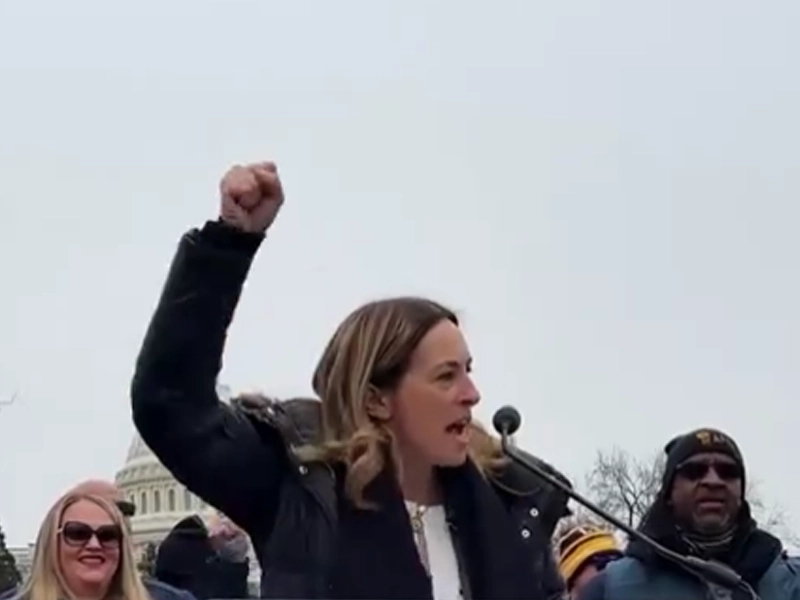
But Mikie Sherrill’s proposal to force countywide districts risks turning a necessary reform into a political power grab that could harm the very communities already reeling under the state’s flawed school funding system.
At first glance, countywide districts promise streamlined operations, fewer administrators, and more equitable sharing of resources. Yet under Sherrill’s vision, decision-making would shift from local school boards made up of local parents and invested residents to 21 powerful county-level bodies controlled by the NJEA and political parties.
That would hand disproportionate influence to the biggest cities and to statewide political forces capable of mounting costly campaigns for these seats. Small and suburban districts, already shortchanged by Gov. Phil Murphy’s S2 funding formula, would lose even more ground.
The risk is clear: suburban schools could see resources drained toward urban centers, not through collaboration, but through a redistribution system that ignores local priorities. The result would be less community control, more political patronage, and an education system dictated not by parents and teachers but by the New Jersey Education Association (NJEA), party machines, and lobbyists. With countywide boards, the NJEA would effectively have leverage over all 21 counties—an unprecedented consolidation of power into the hands of one of the state’s most influential unions.
In Ocean County, already feeling the financial strain of state politics and retribution, we could seek all of the towns from Brick south to Tuckerton being used to bail out the failing Lakewood school district.
Also, a centralized county school board would be filled with politically connected politicians subsidized by the NJEA, the Democratic party, and the Republican party, cutting out local PTO moms, coaches, dads, and concerned residents and seniors that currently fill most school boards in the county.
They won’t be able to compete in a countywide election with the powerful political forces or the NJEA.
There is another way. School boards should decide if, when, and how they merge—whether it’s combining with neighboring districts, sharing services, or creating regional K-12 systems that make sense for their communities. Organic consolidation, driven by local needs, preserves accountability while still addressing inefficiencies. Forced consolidation from Trenton or Washington strips communities of their voice in how their schools are run.
If administrative costs are the problem, the Democrat led state senate and legislature can fix it today…if they wanted to. They can pass a law that would cap administrative salaries to a percentage of a district’s overall budget. If they go over that cap, that overage would be deducted from the district’s state aid.
The call for reform is real, but Sherrill’s countywide model would politicize New Jersey’s education system further, not fix it. Genuine progress lies in empowering school boards to pursue thoughtful, voluntary consolidation plans—plans that put children, not politics, at the center of education policy.
Key Points
- Rep. Mikie Sherrill has proposed countywide school districts for New Jersey.
- Critics argue the plan would favor large cities and politicize education by concentrating power in the NJEA and party machines.
- Local boards should be allowed to choose consolidation partners and timelines to preserve accountability.
When it comes to fixing schools, bigger isn’t always better.