
Small summer increases highlight gap between Sherrill’s promises and how utility pricing actually works.
Newark, NJ – New Jersey electric bills are set to tick up slightly this summer for some customers despite Governor Mikie Sherrill’s pledge to freeze rate hikes, revealing the limits of state intervention in a complex, multi-layered energy market. New rate adjustments taking effect June 1 show modest increases for certain utilities even as others decline, following a sharp spike in 2025.
The changes are relatively small—about 1.6 percent for JCP&L customers and 0.11 percent for Atlantic City Electric—while PSE&G and Rockland Electric customers are expected to see slight decreases. Still, the mixed outcome has raised questions about how a promised “freeze” translates into actual bills.
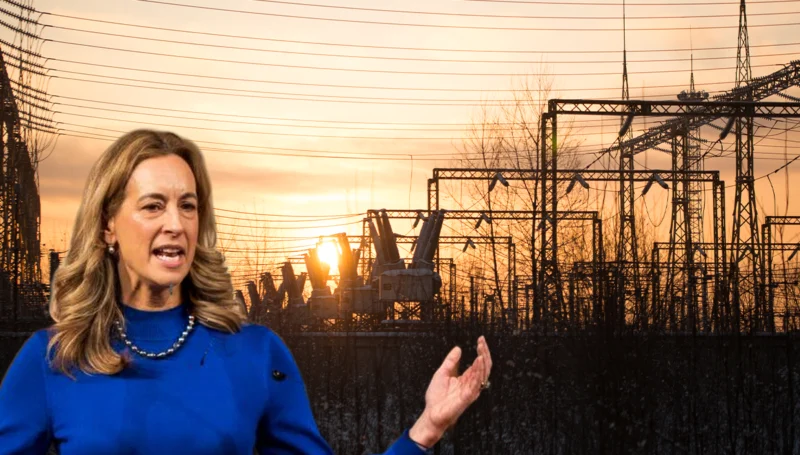
Sherrill, in her inaugural address, said, “These executive orders will deliver relief to consumers and stop rate hikes, so New Jerseyans aren’t facing ever increasing electric bills.” She added, “I heard the people of New Jersey loud and clear – these rate hikes are unacceptable – and as your governor, I will not stop fighting to lower costs.”
Key Points
- Some NJ electric customers will still see small rate increases starting June 1
- Sherrill’s executive order aimed to offset hikes, not fully eliminate all changes
- Energy market forces and prior contracts limit how much the state can control rates
Why rates can still rise under a “freeze”
The central issue is that New Jersey does not directly set most electricity prices. Supply costs are largely determined through regional auctions run by PJM, the grid operator that serves multiple states. Those prices were locked in earlier and reflect market conditions, including demand and generation capacity.
Sherrill’s Executive Order No. 1 directs the state Board of Public Utilities to offset increases and potentially pause certain actions by utilities, but it does not override wholesale market pricing or existing supply contracts. Instead, it can shift costs, delay increases, or apply financial relief using state funds.
That means customers may still see slight increases on their bills even as the state works to blunt the overall impact.
Lingering effects from 2025 spike
The current adjustments come after a roughly 20 percent increase in electric rates in 2025, which significantly raised the baseline cost of power. Even where small decreases are occurring this year, overall bills remain elevated compared to prior years.
Additional pressure is coming from rising electricity demand tied to data centers, electric vehicles, and grid upgrades, along with investments in reliability and weather resilience.
Sherrill’s second executive order focuses on expanding in-state power generation, including solar, battery storage, and nuclear, with the goal of lowering long-term costs. However, those projects will take years to influence pricing.
For now, the summer 2026 rates reflect a stabilized—but still expensive—energy market where state policy can cushion increases but not fully prevent them.