
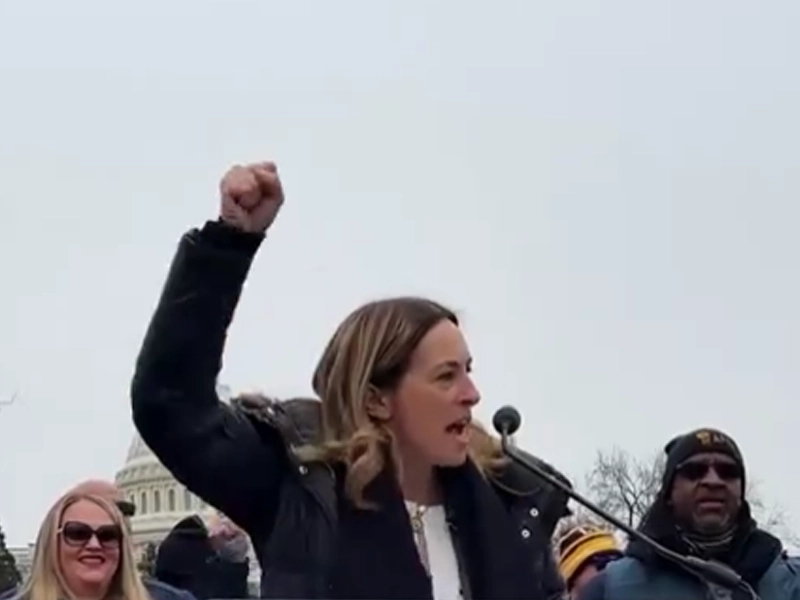
TRENTON, NJ – In the wake of her decisive victory in the gubernatorial election, Mikie Sherrill has New Jersey buzzing with optimism over her bold pledge to freeze skyrocketing energy costs on her first day in office.
“I will freeze energy prices on day one,” the Governor-elect said on the campaign trail, but we haven’t heard too much about it since election day.
“Utility costs are out of control,” Sherrill declared in campaign materials, vowing to “take on anyone driving up costs for New Jerseyans.”
Families across the Garden State, battered by utility bills that have surged 20% in the past year and sit 17% above the national average, see the promise as a lifeline amid an affordability crisis.
But as experts dissect the plan, a sobering reality emerges: the freeze may offer temporary relief at best, while deeper structural issues could leave those hopes unfulfilled, potentially leading to higher costs or energy instability down the line.
Sherrill, a former Navy helicopter pilot and U.S. Representative, rode energy affordability to a double-digit win over Republican Jack Ciattarelli, framing the issue as a battle against “utility companies with record profits” crushing working families.
Key Points
- Mikie Sherrill plans to declare a state of emergency to freeze energy rates for one year.
- Experts warn the move could face legal, financial, and structural hurdles.
- Outgoing Gov. Phil Murphy and critics call the proposal impractical and risky.
Sherrill’s plan aims to halt rate hikes while boosting energy supply
Her plan? Declare a state of emergency on utility costs, halting rate hikes for a year while ramping up a “diverse energy arsenal” of solar, wind, nuclear, and natural gas to boost supply and drive down prices long-term.
“Utility costs are out of control,” Sherrill declared in campaign materials, vowing to “take on anyone driving up costs for New Jerseyans.”
For residents like those in Newark or Camden, where bills can devour budgets, this resonates as a beacon of hope—potentially saving hundreds annually through offsets or rebates, according to advocacy groups like Evergreen Action.
The hopes are palpable. Polls showed Sherrill leading on energy by wide margins, with voters trusting her to deliver relief after years of frustration under Gov. Phil Murphy’s administration.
Clean energy proponents envision a greener, cheaper grid, with expanded renewables slashing dependence on volatile imports and creating jobs. “There’s an energy crisis, and clean energy is the solution,” one analyst posted on X, echoing a sentiment that helped Democrats sweep energy-focused races nationwide.
Complex realities could derail immediate relief
Businesses, too, hope for stability amid projections of 78% demand growth by 2050 from EVs and data centers.
Yet, the reality is far more complex, and those aspirations may falter. Even Murphy, a fellow Democrat, poured cold water on the idea, admitting he’s “not sure” how to implement it given utilities’ private status and federal influences like PJM capacity markets.
Experts warn the freeze could merely lock in high rates without reductions, labeling it a “gimmick” prone to legal challenges or shortages if investment dries up.
“Price controls aren’t always harmful, but for necessities like energy, only boosting supply works,” noted one economist, pointing to New Jersey’s 12% capacity drop since 2016 under Murphy’s green push.
Offshore wind projects, a Murphy hallmark, remain incomplete due to overruns, and new supply could take a decade—far beyond “Day One.”
“Price controls aren’t always harmful, but for necessities like energy, only boosting supply works,” noted one economist, pointing to New Jersey’s 12% capacity drop since 2016 under Murphy’s green push. Offshore wind projects, a Murphy hallmark, remain incomplete due to overruns, and new supply could take a decade—far beyond “Day One.”
Critics say plan ignores long-term supply issues
Critics like Ciattarelli argue it ignores root causes, such as Murphy-era plant closures and carbon taxes, potentially exacerbating the crisis.
If the freeze falters—through court battles, utility pushback, or unchecked demand—New Jerseyans could face backlash: higher future rates, blackouts, or stalled clean energy transitions. As one report quipped, “Easier said than done.”
Sherrill’s team insists the plan is viable, with tools like BPU reforms or profit caps ready to deploy.
But as inauguration approaches, the state holds its breath: Will this be the thaw families need, or just another frozen promise in New Jersey’s turbulent energy saga?