
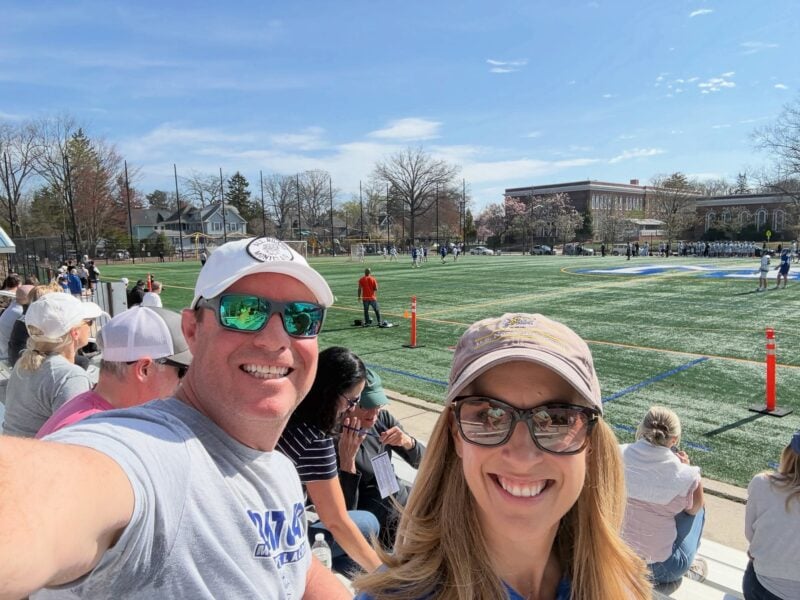
At first glance, the image is unremarkable—two smiling spectators enjoying a sunny day at a school sporting event. The field is immaculate, lined with bright turf and crisp markings. The stands are full of casually dressed, comfortable-looking attendees. In the background, a well-maintained campus and organized game atmosphere reflect stability and investment. It’s the kind of scene that conveys ease, prosperity, and a sense that everything is functioning as it should.
But that’s precisely the problem. This kind of polished, almost idyllic snapshot—like those often shared by Congressman Mikie Sherrill—does not reflect the lived reality for much of New Jersey. Sherrill, who resides in Montclair, represents a district where resources are comparatively abundant. Fields are maintained, programs are funded, and extracurriculars flourish. It is a curated version of public education that exists—but only for a select slice of the state.
Across New Jersey, the picture looks very different. School districts are grappling with budget shortfalls driven by state aid cuts and rising operational costs. Administrators are making difficult decisions: eliminating sports programs, cutting arts and music, increasing class sizes, and laying off teachers. For many families, the school experience is no longer about enrichment and opportunity, but about loss and uncertainty. The contrast between that reality and the pristine setting in photos like this one is stark.
That’s where the criticism of being tone deaf begins to take hold. When elected officials showcase only the most polished environments—without acknowledging the widespread struggles elsewhere—it creates a perception of detachment. It suggests either a lack of awareness or a reluctance to engage with the harder truths facing constituents outside affluent enclaves. The smiles and sunshine in these moments may be genuine, but they risk masking systemic issues that demand attention.
The broader concern is not about one photo, but about what it represents. Leadership requires confronting uncomfortable realities, not just celebrating the exceptions. If policymakers continue to highlight only the best-case scenarios while districts across the state are forced into austerity, the gap between perception and reality will continue to widen. For many New Jersey families, the current state of school funding is anything but picture-perfect—and they’re looking for leaders who reflect that urgency.