
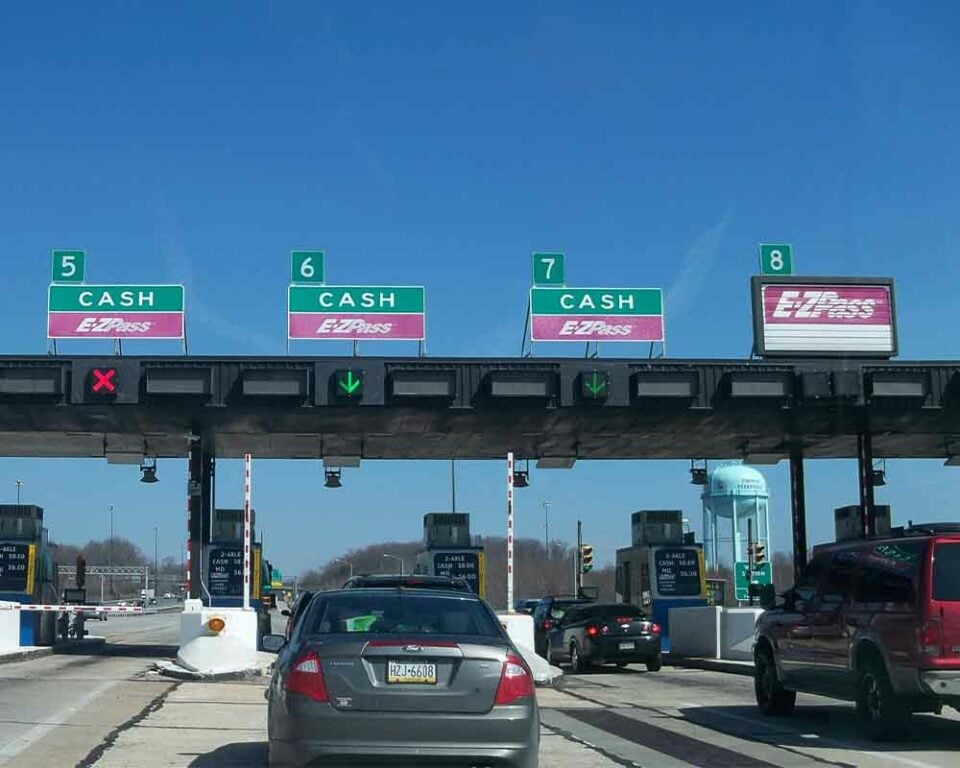
TRENTON, NJ – New Jersey drivers will soon face a new round of toll increases across several major highways and bridge systems beginning in early 2026, affecting millions of commuters and travelers who rely on the Turnpike, Garden State Parkway, and regional crossings.
The New Jersey Turnpike Authority confirmed that a 3 percent toll hike will take effect January 1 on both the Turnpike and Garden State Parkway.
The increase follows an annual adjustment formula adopted in 2020 that links toll changes to inflation and revenue needs for ongoing capital improvements.
The adjustment means the average Turnpike toll for passenger vehicles will rise by several cents depending on distance traveled, while Parkway motorists can expect modest increases at entrance and exit plazas across the state.
Bridge tolls rising across Delaware River crossings
The Delaware River Joint Toll Bridge Commission announced that tolls for passenger vehicles will rise to $2 for E-ZPass users and $5 for Toll-by-Plate drivers under its proposed 2026 schedule. For larger vehicles, rates will increase to $6.50 per axle for E-ZPass and $8 per axle for Toll-by-Plate.
The commission said the increase is necessary to fund structural rehabilitation projects and deferred maintenance across its 20-bridge network, which connects New Jersey and Pennsylvania. The new rates are expected to take effect sometime after mid-December, once the commission finalizes its approval.
Port Authority to add 25-cent toll increase
Separately, the Port Authority of New York and New Jersey will implement a 25-cent toll increase at its bridges and tunnels, including the George Washington Bridge, Lincoln Tunnel, and Holland Tunnel, beginning in early January. The increase applies to both E-ZPass and cashless Toll-by-Mail transactions and continues the agency’s policy of automatic annual inflation adjustments.
Commuters brace for higher travel costs
The simultaneous toll increases come on top of a 4.2-cent per gallon gas tax hike set to take effect on January 1, further raising the cost of driving in New Jersey. State transportation officials say the revenue is essential to maintaining infrastructure, while motorists and business groups warn that the cumulative costs are straining commuters already facing higher living expenses.
By early 2026, drivers using New Jersey’s major toll roads and bridges will pay more across the board — a 3 percent hike on the Turnpike and Parkway, higher bridge tolls across the Delaware River, and a quarter-dollar bump on Port Authority crossings.
