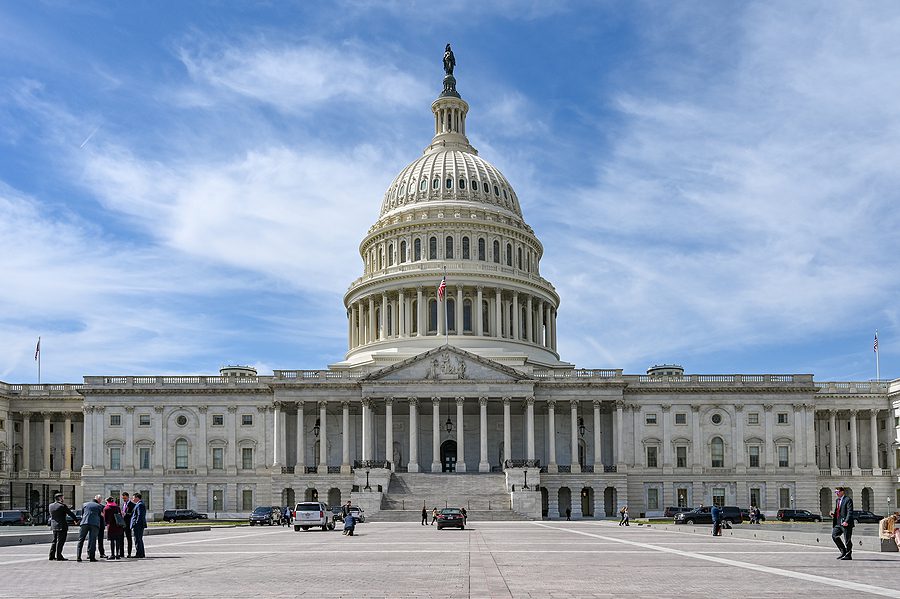
WASHINGTON, D.C. – The U.S. House of Representatives passed the Stop Insider Trading Act on Thursday by a 232-198 vote, advancing legislation that would prohibit members of Congress and their spouses and dependent children from purchasing individual stocks while imposing new disclosure requirements for stock sales.
The vote exposed a sharp divide within New Jersey’s congressional delegation. All four Republican members voted in favor of the bill, while seven of the state’s eight Democratic representatives voted against it. Rep. Josh Gottheimer was the only New Jersey Democrat to support the legislation.
Related: Congress stock trading ban, Stop Insider Trading Act, New Jersey congressional delegation, House vote
How New Jersey lawmakers voted
The legislation received “yea” votes from Reps. Josh Gottheimer (D-NJ), Thomas H. Kean Jr. (R-NJ), Christopher H. Smith (R-NJ), and Jefferson Van Drew (R-NJ).
Voting against the measure were Reps. Herbert Conaway Jr. (D-NJ), LaMonica McIver (D-NJ), Analilia Mejia (D-NJ), Robert Menendez Jr. (D-NJ), Donald Norcross (D-NJ), Frank Pallone Jr. (D-NJ), Nellie Pou (D-NJ), and Bonnie Watson Coleman (D-NJ).
Nationally, the bill passed with bipartisan support, although a majority of House Democrats opposed the measure.
Mikie Sherrill’s Stock Trading Scandal
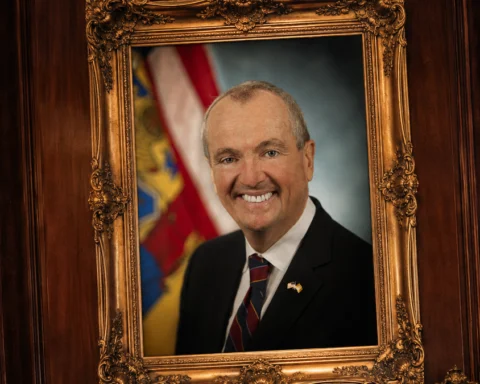
She’s now the governor, but as a representative in Congress, Mikie Sherrill (D-NJ) faced scrutiny and was fined for late financial disclosures under the STOCK Act.
The primary elements of the controversy include:
In 2021, Sherrill was fined by the House Ethics Committee for failing to properly disclose up to $350,000 in stock sales, missing the 45-day reporting deadline required by the STOCK Act. Her office attributed this to an administrative oversight and stated she proactively paid the fine.
Much of the couple’s portfolio growth stems from the career of her husband, Jason Hedberg, an executive at a New York investment bank. His compensation package included UBS stock, which they regularly sold off.
Critics pointed to Sherrill trading stocks in defense companies (such as Airbus) while serving on the House Armed Services Committee. However, reviews of her trades by political watchdog groups found that these were block selloffs and did not suggest the timing was tied to undisclosed, privileged intelligence.
What the bill would do
The Stop Insider Trading Act would generally prohibit members of Congress, as well as their spouses and dependent children, from purchasing individual stocks and other covered investments.
Before selling a covered investment, lawmakers would be required to file a public notice with the Clerk of the House or the Secretary of the Senate between seven and 14 days before the transaction. Those notices would be published online, and if a planned sale does not occur, the notice must be withdrawn.
The bill exempts certain investments, including broadly diversified mutual funds, widely held investment funds, and qualifying trust holdings.
Penalties for violations
Members who violate the law by purchasing prohibited investments would be required to divest those holdings and pay a financial penalty.
Under the legislation, violators would owe the greater of $2,000 or 10% of the transaction’s value, plus any net gains realized during a specified period. The bill also prohibits lawmakers from using campaign funds or official congressional allowances to pay those penalties.
Certain transactions by spouses or dependent children remain exempt, including trades made on behalf of another person or as part of compensation from an employer.
What happens next
Having passed the House, the Stop Insider Trading Act now heads to the Senate for consideration. If approved there, it would be sent to President Donald Trump for his signature or veto.
The measure has drawn bipartisan support from lawmakers and government ethics advocates who argue members of Congress should not be able to trade individual stocks while having access to nonpublic information and influence over federal policy. Opponents have raised concerns about implementation, constitutional questions, and the impact on lawmakers’ families, although many have said they support stronger ethics rules in principle.