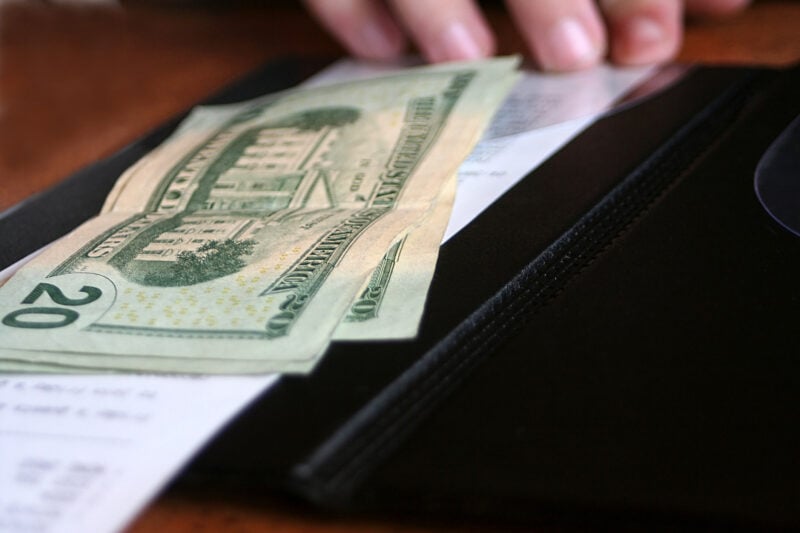
TRENTON, N.J. — New Jersey lawmakers moved forward Thursday with legislation that would require restaurants to prominently disclose mandatory gratuity charges before diners receive their bill, responding to growing consumer frustration over unexpected service fees added at checkout.
The Assembly Consumer Affairs Committee advanced Assembly Bill 3256 with amendments that would give restaurants six months after enactment to comply with the new disclosure rules. Businesses that fail to notify customers about automatic gratuity charges could face fines starting at $1,000 for a first violation and climbing to $5,000 for repeated offenses.
Restaurants Would Need Multiple Fee Disclosures
Under the amended bill, restaurants that impose mandatory gratuity charges would have to clearly display those fees in several places, including menus, restaurant entrances, customer bills, and company websites if the business operates online.
Lawmakers said the disclosures must appear in a “prominent manner,” though the bill does not specify exact formatting requirements.
The legislation targets situations where diners only learn about automatic service charges after receiving the final check — a practice that has sparked complaints nationwide as restaurants increasingly add fees tied to labor costs, large parties, or operational expenses.
The Assembly Consumer Affairs Committee reported the measure favorably on Feb. 12 during the 2026-2027 legislative session.
Fines Increase for Repeat Violations
Restaurants that violate the disclosure requirements would face escalating financial penalties under the proposal.
The bill sets penalties at:
• $1,000 for a first offense
• $2,500 for a second offense
• $5,000 for a third or subsequent offense
Lawmakers also included provisions for ongoing violations, meaning restaurants could face additional penalties for every day they remain out of compliance.
Enforcement would occur through civil actions under New Jersey’s “Penalty Enforcement Law of 1999,” according to the committee statement.
Lawmakers Push for Transparency in Dining Costs
The proposal reflects a broader push by lawmakers and consumer advocates to increase transparency around added restaurant fees that customers may not expect when ordering meals.
Mandatory gratuity policies became more common in recent years as restaurants adjusted pricing structures and labor compensation practices, particularly after rising operating costs and staffing challenges across the hospitality industry.
Critics of undisclosed service fees argue customers should know the full cost structure before ordering food, while some restaurant operators maintain automatic gratuities help stabilize employee income and offset business expenses.
The committee statement did not indicate whether the bill would limit or prohibit mandatory gratuities. Instead, the legislation focuses solely on requiring businesses to clearly disclose the charges before payment.
Amendment Delays Implementation by Six Months
Committee members amended the original bill to change the effective date, giving restaurants six months after enactment to implement the required disclosures.
The committee statement also noted the bill had been prefiled for introduction in the 2026-2027 legislative session pending technical review. Lawmakers incorporated those technical revisions into the version advanced Thursday.
Key Points
• New Jersey restaurants would have to prominently disclose mandatory gratuity fees under Assembly Bill 3256
• Violations could trigger fines from $1,000 to $5,000, with daily penalties for ongoing noncompliance
• The Assembly Consumer Affairs Committee amended the bill to take effect six months after enactment
What Happens Next
Assembly Bill 3256 now moves forward in the New Jersey Legislature for additional consideration. Lawmakers have not yet announced a final floor vote schedule.
If enacted, restaurants across New Jersey would need to update menus, billing systems, entrance signage, and websites to comply with the new consumer disclosure requirements before the six-month implementation window closes.
You might also like













You might also like