
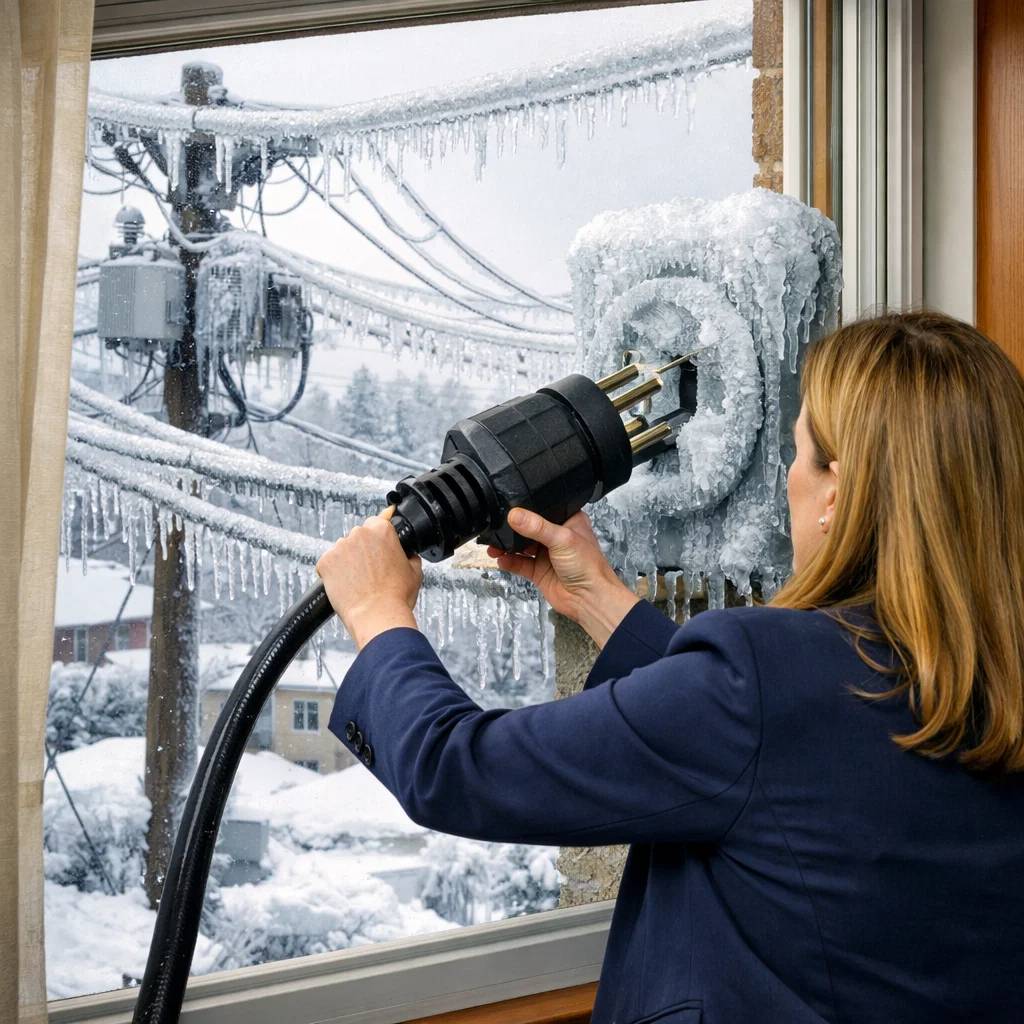
TRENTON, NJ – The only people who will see a freeze on day one of Mikie Sherill’s term in the governor’s office are the people who can’t afford to pay their electric bills after eight years of energy mismanagement and failures under Governor Phil Murphy.
Governor-elect Mikie Sherrill is set to take office in just two days, promising an immediate freeze on energy price hikes as New Jersey residents reel from more than 35% increases over the past two years. The move comes amid growing frustration over surging electric bills and skepticism from industry analysts who warn that another 5% rate hike may already be inevitable for 2026.
One thing few politicians in Trenton are talking about these days is how to bring prices back down. While it was a cornerstone of 2025 GOP candidate Jack Ciattarelli’s campaign to restore some of the lost power plants such as nuclear and natural gas plants, Sherrill’s energy plan is similar to Phil Murphy’s.
Blow baby blow. Offshore wind.
New Jersey households saw steep energy cost jumps through 2024 and 2025, with rates rising between 17% and 20% beginning June 1, 2025, according to filings approved by the New Jersey Board of Public Utilities. Many customers saw increases up to around 30% and 40%.
Those increases, driven by higher wholesale energy prices in PJM Interconnection’s capacity auctions, added more cost per month to many residential bills.
Major utilities—PSE&G, JCP&L, and Atlantic City Electric—passed on the higher costs to consumers as energy demand climbed, fueled by data centers, population growth, and delays in bringing new renewable energy projects online.
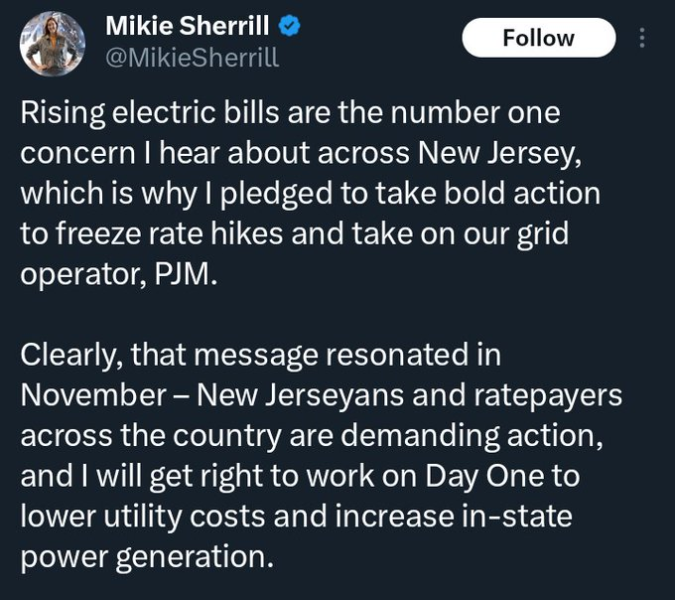
Sherrill’s “Day One” plan includes an executive order to halt further utility rate increases for at least a year. The governor-elect said the freeze will be part of a broader State of Emergency on Utility Costs, designed to protect families struggling with soaring monthly bills.
“We can’t ask New Jersey families to pay the price for grid mismanagement and corporate delay,” she said during a press briefing earlier this week.
Governor Phil Murphy said he’s not sure how Sherill is going to do it, or if she can.
We’re currently facing another 5% increase in electric bills in 2026.
Her proposed energy strategy focuses on expanding in-state generation through what she calls an “Energy Arsenal” initiative—boosting solar and battery storage projects, extending the life of existing nuclear plants, and modernizing gas-fired facilities. Sherrill also vowed to hold PJM accountable, accusing the regional grid operator of mismanagement that has stalled the connection of new power sources.
The governor-elect’s plan calls for mandatory transparency from utilities and potential legal action against PJM to expedite lower-cost, cleaner energy development. The state currently imports roughly 40% of its electricity, leaving New Jersey vulnerable to regional market fluctuations and transmission bottlenecks.
It also calls for fighting President Donald Trump’s war against offshore wind farms here in New Jersey.
While Sherrill’s proposal has drawn praise from consumer advocates, energy analysts remain cautious. Experts say that without substantial infrastructure investment and grid modernization, the freeze could create regulatory and financial strain for utilities already facing higher wholesale costs. Industry observers also question whether a governor has the authority to impose a long-term price freeze without approval from the Board of Public Utilities.
PSEG, the state’s largest electric provider, said it is prepared to work with the incoming administration to stabilize rates while investing in long-term grid improvements. However, company representatives noted that continued cost pressures—especially from capacity auctions scheduled for later this year—could still drive prices higher in 2026 despite any temporary freeze.
As Sherrill prepares to take office, the challenge ahead is clear: balance short-term relief for consumers with the costly reality of building a more reliable, affordable energy future.