
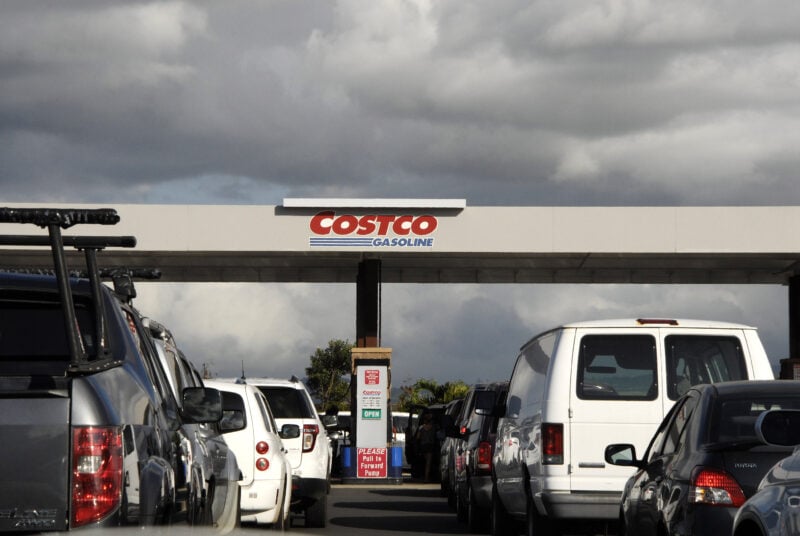
NJ gas prices jump more than $1 as Iran conflict rattles oil markets and hits Ocean County. New Jersey drivers are getting hit with a sharp jump at the pump as turmoil tied to U.S. military action against Iran sends oil prices higher and pushes local fuel costs up fast.
Toms River, NJ – New Jersey motorists are facing a steep rise in gas prices after the Trump administration’s military campaign against Iran triggered major disruption in global energy markets, according to the information provided. In roughly a month, prices in New Jersey have climbed by more than $1 per gallon, a sharp increase that is now being felt across Ocean County from Toms River to Brick, Manahawkin, Bayville, Point Pleasant Beach, and Lakehurst.
Key Points
- New Jersey gas prices have risen more than $1 per gallon in about a month, according to the information provided
- The increase follows U.S. military action against Iran and disruption tied to the Strait of Hormuz and regional energy infrastructure
- Ocean County drivers are seeing the impact at stations in Toms River, Brick, Bayville, Point Pleasant Beach, Manahawkin and nearby communities
The price spike follows the launch of “Operation Epic Fury,” which the provided information says began Feb. 28 and expanded in March as U.S. and Israeli forces carried out coordinated strikes on Iranian military, nuclear and energy-related targets. Those reported attacks included strikes on the South Pars gas field and mine-laying boats in the Strait of Hormuz, a key global shipping route for oil. With tanker traffic disrupted and market fears spreading, crude prices surged and gasoline costs followed.
Figures cited in the material provided show U.S. gasoline prices rose roughly 20% to 27% shortly after the conflict began, with the national average climbing from about $2.93 to more than $3.70 per gallon. The same information says Brent crude briefly approached $110 a barrel in early March, its highest point since 2022, as shipping through the Strait of Hormuz was halted.
Global oil shock reaches New Jersey drivers
For New Jersey, where many households depend on daily driving for commuting, work, errands and school trips, the increase is landing quickly and broadly. The supplied material says the rise at the pump is tied not just to fighting itself, but to the wider fear of interrupted supply, attacks on energy infrastructure in Iran and Qatar, and uncertainty over how long shipping in the Persian Gulf could remain unstable.
The Trump administration, according to the provided information, has said the military objective is to eliminate “imminent threats” from Iran while continuing a “maximum pressure” strategy aimed at dismantling the country’s nuclear and ballistic missile capabilities. But the economic fallout is already showing up in fuel markets far from the Middle East.
Analysts cited in the information provided say the average U.S. household could pay hundreds of dollars more for gasoline in 2026 if elevated prices continue. For New Jersey drivers, where fuel consumption is heavy and travel between suburbs, shore towns and job centers is routine, that could mean a noticeable hit to family budgets even before summer driving season fully begins.
Ocean County stations and shore-area drivers feel the squeeze
In Ocean County, the impact is being seen at stations across a broad stretch of the region. Locations included in the material provided include Conoco at 104 Route 70 in Lakehurst, Costco at 245 Stafford Park Blvd. in Manahawkin, Exxon at 2096 Lakewood Road in Toms River, BJ’s Wholesale Club at 941 Route 37 West in Toms River, National Fuel at 2064 Route 88 in Brick, Pasmel at 103 Atlantic City Blvd. in Bayville, and additional stations in Point Pleasant Beach.
The local list also points to prices being tracked in communities including Barnegat, Beachwood, Forked River, Lakehurst, Lakewood, Lavallette, Leisure Knoll, Manahawkin, New Egypt, Pine Beach, Point Pleasant Beach, Seaside Heights, South Toms River, Toms River, Tuckerton and Waretown. While the station details provided do not include a full side-by-side month-over-month breakdown for every location, the broader claim presented is that New Jersey prices have risen by more than $1 a gallon in about a month.
That kind of jump can quickly change household spending. A driver filling a 15-gallon tank could now be paying roughly $15 more per fill-up than they were just weeks earlier if the full $1 increase is reflected locally. For families with multiple vehicles, long commutes or spring and summer shore travel plans, the added cost compounds fast.
Administration moves to limit fallout as uncertainty continues
The materials provided say the administration has tried to blunt some of the pressure through policy steps including sanctions management, possible waivers for other countries, a temporary Jones Act waiver to move supplies more freely, and U.S. Navy escorts for tankers moving through the Persian Gulf. Those steps are aimed at stabilizing supply and reassuring markets that energy shipments can keep moving.
Still, the same information suggests economists do not expect immediate calm unless the Strait of Hormuz fully reopens and fears of further escalation begin to fade. That means volatility could remain a factor for motorists in New Jersey and nationwide.
The supply route matters because the Strait of Hormuz is one of the world’s most important chokepoints for oil transport. Even limited disruption there can send prices surging globally, and that shock tends to move quickly into U.S. wholesale fuel costs and then retail gas prices.
Price pain comes as public watches conflict expand
The information provided describes a broad campaign involving attacks on nuclear facilities, missile programs, naval assets and the Islamic Revolutionary Guard Corps. It also references reported high casualties and major strikes against Iranian leadership and infrastructure. Whether or not those operations continue at the same pace, the market response has already been severe.
The White House, according to the supplied material, has indicated the spike may be short-term. But for motorists in New Jersey, the effect is already immediate. Higher prices are appearing during a period when many drivers are preparing for spring travel, shore traffic and increased seasonal driving demand.
For Ocean County residents especially, fuel costs can play an outsized role because daily life often involves regular driving between towns, county roads and major state routes. A sustained jump in prices would affect workers, delivery drivers, shore businesses, service employees and families planning warm-weather travel.
“Safer driving saves lives” may be the message in highway safety campaigns, but right now the sharper issue for many New Jersey drivers is affordability. Based on the information provided, that concern is being driven by international conflict, disrupted shipping, higher crude prices and the broad uncertainty still hanging over one of the world’s most critical energy corridors.