

Discrepancy between registered voters and eligible residents raises scrutiny in Trenton and beyond.
Trenton, NJ – A reported gap between New Jersey’s total registered voters and its citizen voting-age population is drawing renewed attention from lawmakers and political advocates, raising questions about how voter data is tracked and interpreted. The figures show 6,630,364 registered voters in 2024 compared to a citizen voting-age population of 6,397,695, a difference of more than 230,000.
The numbers, circulating in policy discussions and online, have become a flashpoint in a broader debate over election integrity and access. While the raw totals appear inconsistent, election administrators and data experts caution that such comparisons are not always direct, as the two figures are compiled using different systems and timelines.
The issue has also intersected with federal legislation. U.S. Senator Cory Booker has opposed the Save America Act, a proposal aimed at requiring proof of citizenship for voter registration. Supporters of the bill argue that discrepancies like those seen in New Jersey underscore the need for stricter safeguards.
New Jersey is the only state which showed more registered voters than eligible voters.
Key Points
- New Jersey lists 6.63 million registered voters versus 6.39 million eligible residents
- Gap of roughly 230,000 reflects differences in data systems and timing
- Debate tied to federal legislation on voter eligibility and verification
Understanding the data behind the discrepancy
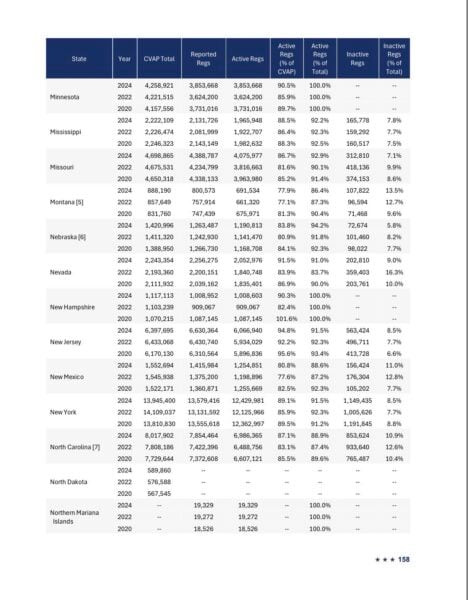
Gaps between voter registration totals and citizen voting-age population estimates are not uncommon and often stem from how the data is collected. Voter rolls are administrative records that can include inactive registrations, individuals who have moved but not yet been removed, or voters who remain listed across state lines for a period of time.
By contrast, citizen voting-age population figures are estimates produced using Census Bureau modeling and survey data. These estimates are subject to margins of error and may not fully capture population changes in real time.
In New Jersey, the dataset indicates that more than 563,000 registrations are classified as inactive, meaning those individuals are not regularly participating in elections but remain on the rolls pending removal under federal and state guidelines.
Policy debate intensifies in Washington and New Jersey
The discrepancy has become part of a wider political argument over how to balance election security with voter access. Advocates for tighter controls say the numbers warrant closer review and routine maintenance of voter rolls.
Opponents, including Booker, argue that additional requirements such as proof of citizenship could create barriers for eligible voters and complicate registration systems. They maintain that discrepancies in aggregate data do not necessarily indicate improper voting activity.
State election officials have not indicated that the gap reflects verified cases of ineligible voting. Still, the figures are likely to remain central to ongoing legislative debates as both parties push competing approaches to election law.