
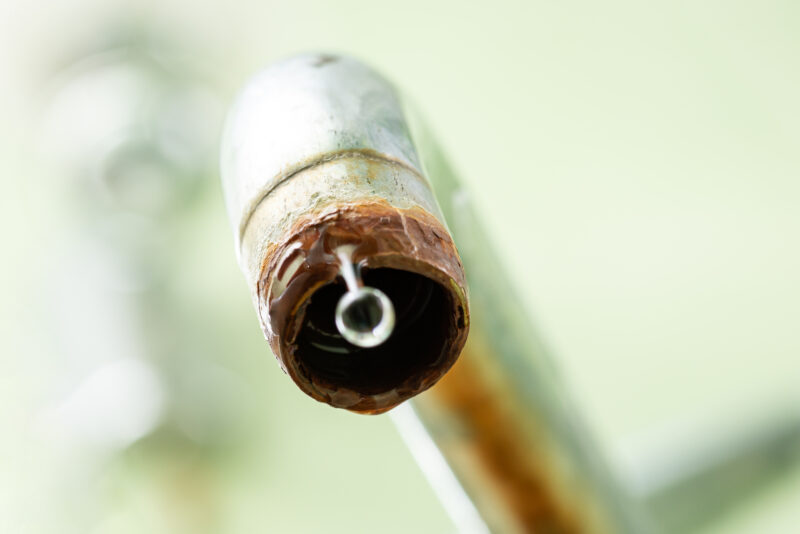
A new report warns that contaminants linked to cancer and developmental risks are present in water systems across New York, with thousands of violations still unresolved.
Suffolk County, NY – A new analysis of drinking water systems across New York has found widespread contamination and thousands of violations, raising concerns about public health and enforcement, according to a report highlighted by environmental advocate Erin Brockovich.
The study, conducted by Afina using Environmental Protection Agency data, found that New York ranks 18th worst in the nation for drinking water quality, with contaminants including lead, arsenic, benzene, and nitrate detected in some systems . Researchers reviewed five years of data covering public water systems serving at least 750 people.
“Children are drinking water laced with arsenic. Families are bathing in water contaminated with PFAS, the forever chemicals linked to cancer, thyroid disease, and developmental problems,” Brockovich said in response to the findings .
Thousands of violations recorded across state systems
The report found that roughly one-third of New York’s 8,107 public water systems—2,764 in total—had at least one informal enforcement action within the past five years. As of January, 470 systems still had active violations, including 65 classified as significant .
Key Points
- Study finds lead, arsenic, benzene, and nitrate in some NY water systems
- Over 2,700 public water systems cited for violations in past five years
- Erin Brockovich calls for stronger penalties on utilities
At the county level, Greene County recorded the highest rate of unresolved violations per capita, while New York City and Nassau County reported no compliance delays. Suffolk County was also listed among counties with no unresolved violations per capita in the latest data .
The report also identified specific systems with poor water quality histories, including Sinclairville Village and Canaseraga Village, based on violation rates and contaminant levels.
Calls for stricter enforcement and accountability
Brockovich criticized what she described as weak enforcement mechanisms, urging stronger penalties for water providers that fail to address contamination.
“These aren’t just statistics. These numbers show how U.S. children are drinking water laced with arsenic,” she said. “Elderly residents on fixed incomes have to choose between buying bottled water and paying for medication.”
She added that “too many violations do linger because there’s no meaningful penalty. Utilities need to know that poisoning their communities will cost them more than the price of fixing the problem.”
The study also noted that asbestos had been detected in certain regions, including parts of the Hudson Valley and Orange County, in prior years, though it has since not appeared in recent testing .
Researchers concluded that millions of Americans may be exposed to unsafe drinking water, calling on authorities to treat access to clean water as a fundamental public health priority.