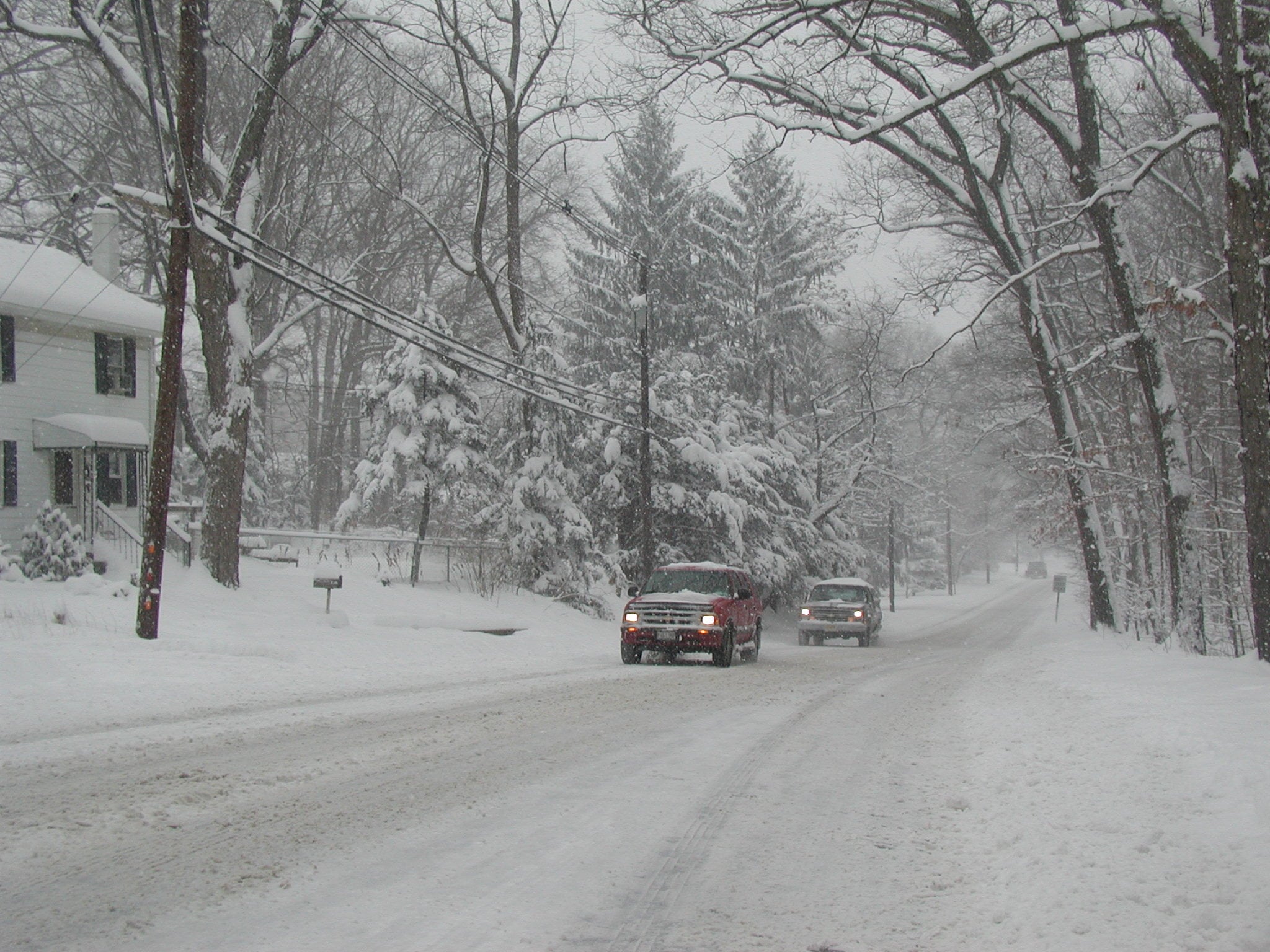
TRENTON, N.J. – New Jersey residents hoping last winter was the end of the snow may want to keep the shovel within reach. The Old Farmer’s Almanac has released its 2026-27 winter outlook, and parts of the Northeast are being put on notice for a colder, snowier season.
For New Jersey, though, the forecast isn’t quite as simple as “more snow.” The state falls largely within the Almanac’s Atlantic Corridor, where a milder winter and slightly below-normal snowfall are predicted, while areas just north and west sit closer to a Northeast outlook calling for below-normal temperatures and above-normal snow in its southern reaches.
- The Old Farmer’s Almanac predicts above-normal temperatures and slightly below-normal snowfall for its Atlantic Corridor.
- Its southern Northeast forecast is considerably snowier, with below-normal temperatures and above-normal snowfall.
- January could be the month to watch, with both regional forecasts identifying periods early or midway through the month for cold and snow.
New Jersey Sits Near a Winter Forecast Divide
This is where the details matter.
The Almanac doesn’t issue one statewide New Jersey forecast. Instead, its long-range predictions divide the country into 18 regions, and New Jersey’s geography puts it in an interesting position along the East Coast.
The Atlantic Corridor outlook calls for a relatively mild winter overall.
Temperatures are forecast to finish above normal, precipitation below normal and snowfall slightly below normal. The Almanac identifies early to mid-December, early to mid-January and portions of February as the coldest periods.
Snow could still arrive.
The Atlantic Corridor’s snowiest periods are projected for late November, early and mid-January, early and late February and late March.
That means a winter can finish warmer than normal without being snow-free. A handful of well-timed coastal storms can still make for some difficult mornings on the Garden State Parkway, New Jersey Turnpike and local roads.
North Jersey Could Have a Different Winter
Go farther north, and the Almanac’s outlook changes noticeably.
For the Northeast, it predicts above-normal temperatures in the northern part of the region but below-normal temperatures in the south. Snow follows a similar split: below normal in the north, above normal in the south.
“The southern part of the Northeast will experience a more difficult winter, with below-normal temperatures and above-normal snowfall,” the Almanac says.
Its snowiest periods are expected in mid- and late December, mid-January and early and late March.
That forecast raises the possibility of a sharper north-to-south or northwest-to-southeast contrast around New Jersey depending on how individual storms track.
Anyone who has lived through a New Jersey winter knows how much a few miles can matter. A storm producing heavy snow in Sussex County can bring rain along the Jersey Shore, while a coastal system taking a different track can bury the Interstate 95 corridor.
The Almanac isn’t predicting individual storms this far out. Its outlook is about broader seasonal patterns.
January Shows Up Again and Again
One part of the forecast stands out: January.
For the Atlantic Corridor, early and mid-January are among the predicted snowiest periods, while early to mid-January is also listed among the coldest stretches.
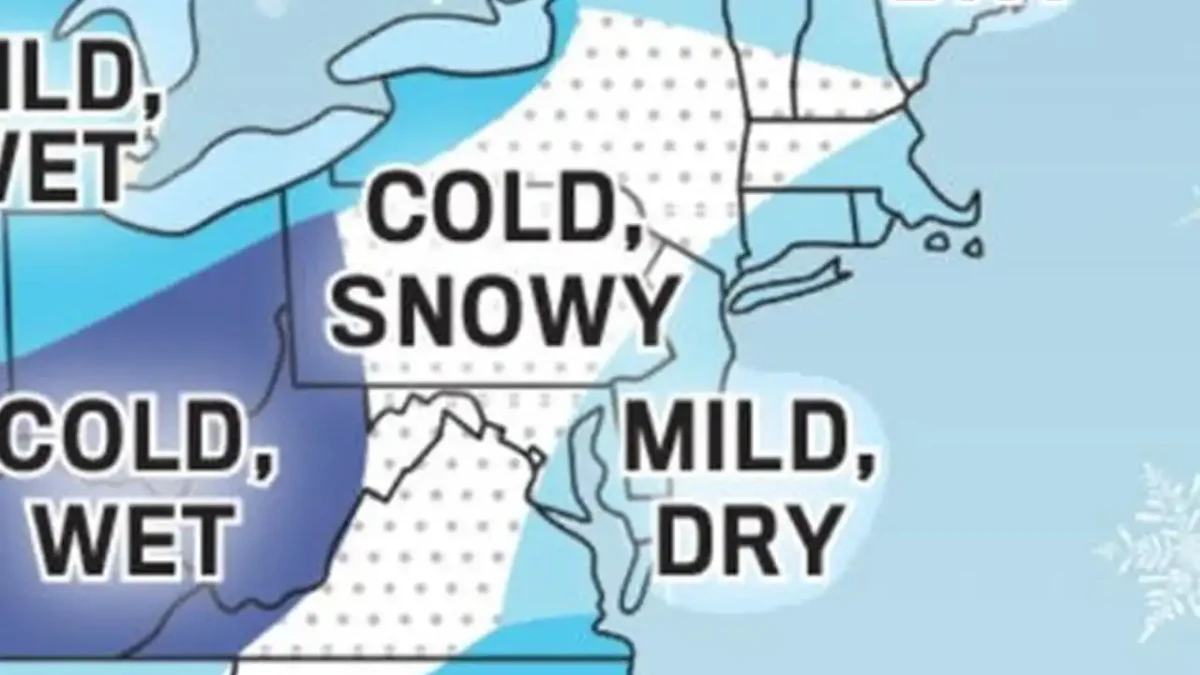
The Northeast forecast points to early and mid-January for its coldest weather, with mid-January among its snowiest periods.
In other words, if the Almanac’s long-range outlook proves accurate, January could provide New Jersey’s best opportunity for a traditional stretch of winter weather.
February remains in play for the Atlantic Corridor, while March makes a surprisingly strong appearance in both forecasts.
The Almanac sees late March as a potential snowy period along the Atlantic Corridor and both early and late March as snowy periods in the Northeast.
So don’t put the snowblower away after Presidents Day.
What Does a ‘Milder Winter’ Actually Mean?
This is an important distinction in seasonal forecasts.
Above-normal temperatures don’t mean every day will be warm. They mean temperatures averaged across the season are expected to come in higher than the historical normal used by the forecast.
The Almanac makes that point itself.
“‘Above normal’ is relative,” its winter outlook says. “While it won’t be as cold as usual, it’s still winter!”
A season can have an overall mild temperature average and still produce a brutal cold snap, a nor’easter or several significant snowfalls.
Likewise, below-normal precipitation doesn’t automatically translate into little snow. Temperature and storm track determine whether precipitation arrives as rain, snow, sleet or a messy combination of all three.
That’s particularly important in New Jersey, where many winter storms flirt with the freezing line.
How Much Faith Should You Put in an Almanac Forecast?
There’s also a reason not to buy an extra snowblower based solely on a September forecast.
The Old Farmer’s Almanac specializes in extremely long-range predictions, issuing forecasts months before meteorologists can identify specific winter storms.
Those forecasts are very different from the shorter-range predictions produced when an actual storm begins developing and forecasters can analyze its track, temperature profile and expected precipitation.
The Almanac describes its long-range method as relying on solar science, climatology and meteorology.
For planning purposes, its forecast is best viewed as a broad seasonal outlook rather than a promise that snow will fall on particular dates.
Even the Almanac acknowledges how much conditions can vary.
“Winter won’t look the same everywhere this year,” Editor-in-Chief Carol Connare said. “While much of the country is headed for a milder season, some areas will still see plenty of cold and snow.”
For New Jersey, that may be the most useful takeaway.
The statewide outlook isn’t a straightforward blockbuster-snow prediction. The Atlantic Corridor leans milder with slightly less snow, while the southern portion of the neighboring Northeast forecast leans colder and snowier.
And sitting between those signals is New Jersey — a state where winter forecasts are rarely simple.
The Old Farmer’s Almanac is not predicting a uniformly snowy winter across New Jersey.
Its Atlantic Corridor forecast calls for slightly below-normal snowfall, while the southern Northeast outlook calls for above-normal snow.
January could bring some of New Jersey’s better chances for winter weather.
Both relevant regional outlooks identify January periods for colder temperatures and potential snow.
A seasonal forecast cannot predict individual New Jersey snowstorms months in advance.
The Almanac’s outlook describes broad winter patterns. Specific storm tracks, snowfall totals and rain-snow lines won’t become clear until individual systems develop.
Sources: The Old Farmer’s Almanac 2026-2027 Winter Forecast
 Police Blotter
 Breaking
Former Fox News Maria Bartiromo Confirmed Exit: White House Bound?
Shore News Network Police Blotter
6-Year-Old New Jersey Girl Escapes Kidnapper, Walks Back Home
Shore News Network Business News
NJ Gas Prices Surge Past $4 a Gallon — Here’s What Commuters Are Spending
Shore News Network6-Year-Old New Jersey Girl Escapes Kidnapper, Walks Back Home