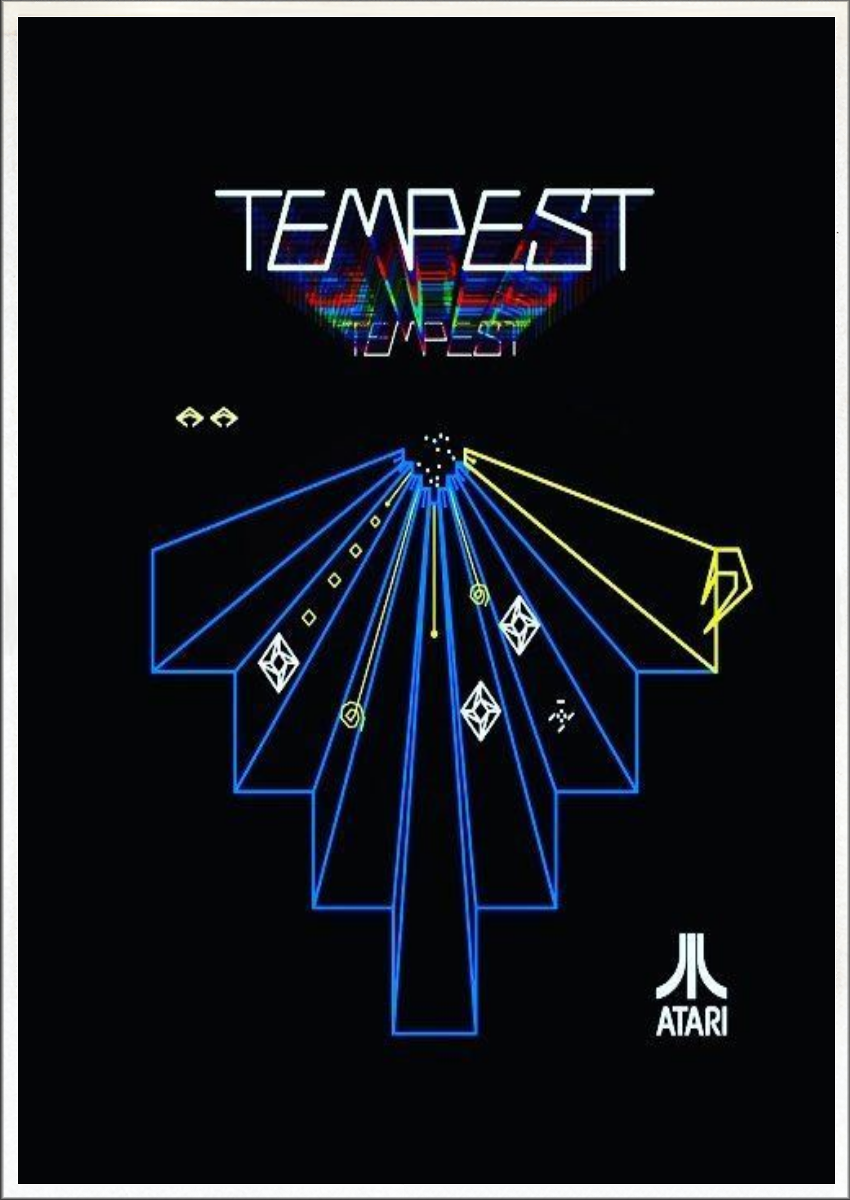
If you’ve ever walked into a dimly lit arcade, the air buzzing with the sounds of bleeps and bloops, you might have stumbled upon Tempest. Released in 1981 by Atari, Tempest wasn’t just another space shooter—it was a full-on, neon-drenched, mind-melting experience that still holds up as one of the greatest arcade games of all time.
Let’s take a trip down the Tempest tube and explore why this game was ahead of its time and why it remains a beloved classic.
A Game Ahead of Its Time

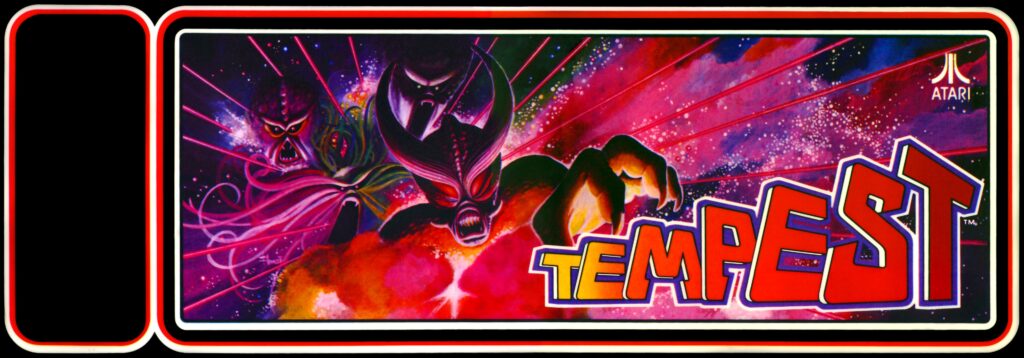
Arcades in the early ’80s were dominated by side-scrolling and top-down shooters—games like Defender, Galaga, and Asteroids. Then Tempest came along and flipped the whole idea of shooting games (literally) on its head. Designed by the legendary Dave Theurer (who also created Missile Command), Tempest introduced a revolutionary 3D perspective, using a tube-like playfield that made it feel like you were flying through a digital wormhole.
This was groundbreaking in 1981. Tempest used Atari’s Color-Vector Display technology, which allowed for crisp, glowing, wireframe graphics that looked like something out of Tron. The gameplay was fast, fluid, and felt years ahead of what was available at the time.

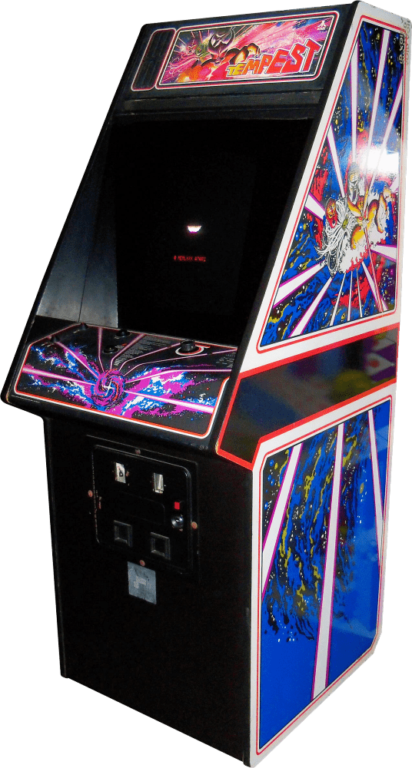
Gameplay: Simple, Yet Incredibly Addictive
At its core, Tempest is a tube shooter where you control a claw-like spaceship that zips around the edges of a geometric tunnel, blasting enemies that emerge from the depths. The enemies? Nightmarish, spiky creatures that crawl, spin, and shoot up toward you. Your job? Blow them away before they reach the top, or it’s game over.
The game featured:
- Rotational Movement – Instead of moving left and right like most shooters, you spun around the tube’s edge. This gave Tempest an incredibly unique feel.
- Progressive Level Design – The game’s levels weren’t just harder; they changed shape, keeping the gameplay fresh and increasingly difficult.
- The Super Zapper – A one-time-per-level “get out of jail free” card that obliterates all enemies on the screen. A true lifesaver.
- Warping and Level Skipping – A hidden trick let experienced players jump to higher levels, adding depth to the game’s strategy.
This mix of high-speed gameplay, strategy, and twitch reflexes made Tempest one of the most challenging—and rewarding—games of the early arcade era.

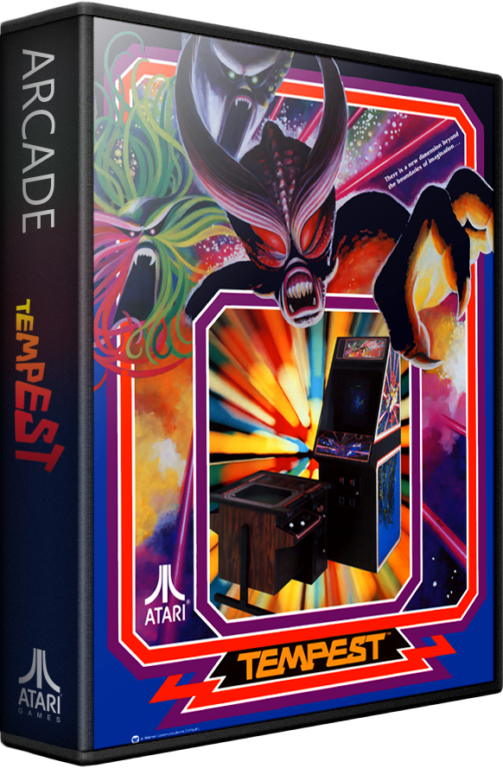
The Sound and Visuals: A Psychedelic Experience
Tempest didn’t just play great—it looked and sounded amazing. The neon-colored vector graphics created a hypnotic effect, while the pulsing electronic soundtrack made the game feel like an adrenaline-fueled techno fever dream.
The audio design was especially unique. Instead of looping music, the game had dynamic sound effects that responded to gameplay. The eerie hum of the enemy movement, the sharp zap of your shots, and the escalating tension as enemies closed in all combined to make Tempest feel almost alive.
Why Tempest Still Holds Up Today
So, why is Tempest still considered one of the best arcade games ever? Because it did things that other games wouldn’t attempt for years:
- Innovative 3D Perspective – It was one of the first arcade games to create a pseudo-3D effect, a precursor to the first-person shooters and immersive games of today.
- Fast-Paced, High-Skill Gameplay – Unlike many early arcade games that relied purely on pattern recognition, Tempest required quick reflexes and strategy, making it more dynamic.
- It Was Crazy Hard (In a Good Way) – Tempest didn’t hold your hand. Every level ramped up the difficulty, and if you weren’t sharp, you were toast.
- It Inspired Future Games – Many games, including Rez, Dyad, and TxK (created by Jeff Minter, a huge Tempest fan), have drawn inspiration from its unique mechanics and visual style.
Even modern gamers who try Tempest for the first time can feel how special it is. It’s a pure arcade experience—fast, intense, and endlessly replayable.
The Legacy of Tempest
Tempest has seen multiple sequels and remakes over the years:
- Tempest 2000 (1994) – A legendary Jaguar update that brought in techno music and insane visuals.
- Tempest 3000 (2000) – A more obscure update for the failed Nuon console.
- TxK (2014) – Jeff Minter’s spiritual successor, made for the PS Vita, and later evolved into Tempest 4000.
- Tempest 4000 (2018) – A modern reimagining that keeps the core gameplay intact while adding flashy, psychedelic visuals.
Despite these updates, the original 1981 arcade version remains the definitive experience.
Final Thoughts: A Timeless Classic
Tempest isn’t just a great arcade game—it’s a milestone in gaming history. It pushed the limits of arcade technology, delivered an experience unlike anything else at the time, and still feels exhilarating over 40 years later.
If you’ve never played Tempest, do yourself a favor: find an arcade cabinet (or grab a modern port), crank up the volume, and prepare for a neon-lit rollercoaster of chaos.
This is what arcade gaming is all about.