
Top New Jersey Education Senator Calls for Mandatory School District Consolidation
New Jersey’s top Democrat overseeing education policy is now openly calling for mandatory consolidation of school districts, reigniting a controversial debate that surfaced during the state’s 2025 gubernatorial race and drawing renewed attention to long-standing concerns about school funding and administrative costs across the state.
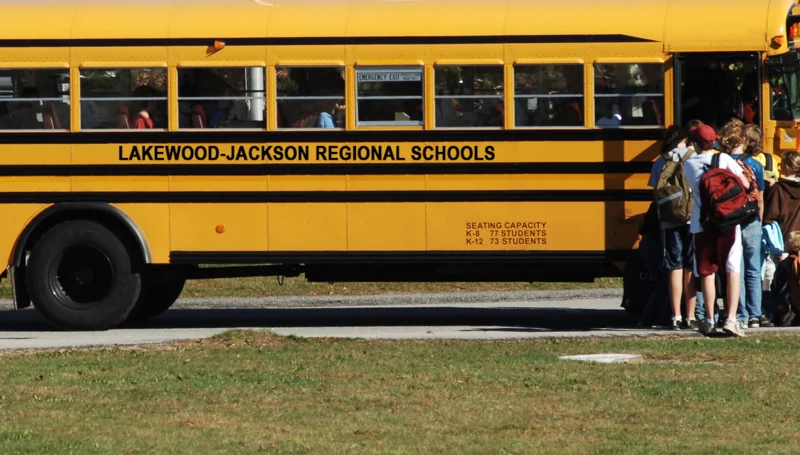
Those forced consolidations could eventually lead to the merger of the Jackson and Lakewood school districts, two districts operating with state monitors who have the power override the local school board’s decisions.
State Senator Vin Gopal, who serves as chair of the New Jersey Senate Education Committee, recently argued that the state’s sprawling system of more than 600 school districts is inefficient and financially unsustainable. In a guest column published Sunday, Gopal said the state should move toward mandatory regionalization and shared services to reduce administrative overhead and ease the burden on taxpayers.
The comments come after a similar proposal from Governor Mikie Sherrill during last year’s campaign stirred controversy, particularly after critics said the plan could lead to forced mergers between school districts. At the time, when Shore News Network reported on Sherrill’s proposal, the administration pushed back and denied that the state intended to force unwilling districts into consolidation.
Now, one of the state’s most influential lawmakers on education policy is openly advocating for such changes.

“New Jersey has more than 600 school districts. More than 200 of them enroll fewer than 500 students,” Gopal wrote. “Many operate buildings that are less than 30% full. Some have sharply increased administrative costs, hiring more administrators even as enrollment has declined.”
Gopal said the structure of New Jersey’s education system has led to significant inefficiencies, with many small districts maintaining separate administrative staffs and services that could potentially be shared across regions.
“We cannot continue paying separate salaries for superintendents, special education administrators and specialists such as guidance counselors in dozens of small, individual districts when costs could be reduced through shared services or consolidation,” Gopal wrote.
The senator said mandating regional cooperation on services could significantly reduce costs for taxpayers.

“With more than 600 districts, mandating the regionalization of expenses such as health care, waste management, snow removal, IT, administrative services, special education and mental health would save taxpayers tens of millions of dollars — while improving educational quality for students,” he said.
Gopal also suggested that additional coordination between local elementary and regional high school districts could improve academic outcomes for students while lowering costs.
“For example, local K-8 districts should be required to coordinate with their regional high school districts, aligning curricula and sharing contracting costs,” Gopal wrote.
He pointed to an example involving the Freehold Regional High School District, where a parent reportedly raised concerns about curriculum misalignment between districts.
“At one point, a parent in the Freehold Regional High School District told us that the Colts Neck K-8 system did not even coordinate math instruction, leaving their child unprepared and struggling upon entering the regional district,” Gopal said.
The senator also criticized what he described as resistance from some local school boards to shared service agreements or consolidation efforts.
“Local school board members are blocking basic shared services that would benefit students, prioritizing institutional self-preservation over taxpayer relief and student outcomes,” Gopal wrote.
According to Gopal, the issue extends beyond administrative staffing and into the broader network of professionals and vendors hired by individual districts.
“More than 600 school districts means more than 600 school board attorneys, engineers, architects, insurance brokers and other contracted professionals,” he wrote. “The question is how to regionalize these services in a way that reduces costs while improving educational quality.”
The senator acknowledged that consolidation proposals face significant political challenges in New Jersey, a state known for its strong tradition of home rule and local control over schools.
“We recognize the political challenges of merging and consolidating school districts in a home-rule state,” Gopal wrote.
However, he argued that the financial pressure on taxpayers and school systems makes the conversation unavoidable.
“As chair of the Senate Education Committee, I can say we have heard from educators and administrators across the state who acknowledge they cannot continue raising local taxes, as well as from residents who say they can no longer afford high school property taxes,” he wrote. “I agree.”
Gopal also emphasized that New Jersey’s education system remains among the highest performing in the country, but said structural changes are needed to maintain that standard.
“New Jersey’s public education system is among the best in the nation, and we want to keep it that way,” he said.
The renewed push for consolidation is already drawing attention in Ocean County, where two school districts — Lakewood and Jackson — have faced mounting challenges in recent years.
Lakewood’s school district has struggled with funding pressures tied to the cost of transporting thousands of students to private schools under state law, while the Jackson School District has dealt with its own financial strains and declining enrollment.
Both districts have already experienced state intervention at various points, and discussions about potential regional solutions have surfaced periodically behind the scenes over the years. While there is no plan for such a merger at this time, and both school boards have opposed such a plan, the bottom line is, the school boards are both already under state control. The state monitors in both towns can force the issue if push comes to shove in the future.
Although no formal proposal has been introduced to merge Lakewood and Jackson, the broader debate over consolidation has raised questions about whether the state could eventually pursue regional solutions in areas where districts face ongoing financial or administrative challenges.
The issue has also reentered the political spotlight following remarks by Governor Sherrill last year suggesting that New Jersey may need to consider consolidating some of its more than 600 school districts as education spending continues to rise. During her first budget address, Sherrill raised concerns about the long-term sustainability of maintaining hundreds of separate school systems across the state.
The governor’s comments echoed many of the same concerns outlined by Gopal, including administrative duplication and rising costs in smaller districts. For critics of consolidation, however, the proposals raise concerns about local control, community identity and the potential impact on school governance.
Local school boards in many parts of the state have historically resisted consolidation efforts, arguing that smaller districts allow communities to maintain greater influence over education policy and budgeting decisions.
Gopal acknowledged that those concerns are part of the broader debate, but said the financial reality facing taxpayers and school systems requires a serious examination of the current structure.
“But New Jersey has too much government,” he wrote. “Consolidating services and districts would save money through efficiencies, ease the burden on taxpayers, and expand resources and programs available to students in consolidated schools.”
As the conversation continues in Trenton, the question remains whether lawmakers and the governor will move beyond discussion and introduce legislation that could require districts to merge services or fully consolidate operations.
If such proposals gain traction, they could reshape the structure of public education across New Jersey and reopen long-running debates about local control, education funding and the role of state government in managing school systems.
The one thing New Jerseyans need to know is that if Vin Gopal is now behind consolidation, you can bet money that he has been dispatched by Governor Sherrill’s administration to be the front man on the consolidation of school districts statewide. The plan has already been approved.