
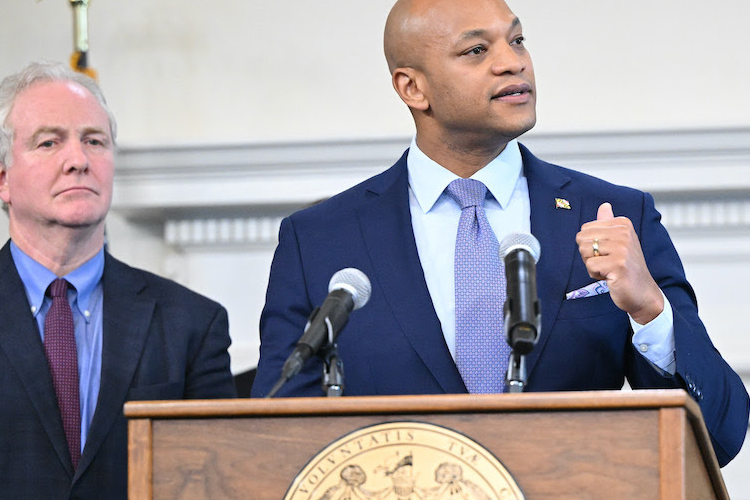
Maryland Governor Wes Moore has taken his political influence beyond state lines, joining New Jersey Congresswoman Mikie Sherrill on the campaign trail as Democrats seek to defend vulnerable seats ahead of the 2026 elections.
Moore’s appearance in New Jersey highlights his thirst to expand his growing national profile — one that has drawn both admiration from his party and scrutiny from critics who question his rapid rise, progressive agenda, and the controversies surrounding his leadership in Maryland.
Understanding his key policies and the debates they’ve sparked sheds light on why his presence on the campaign trail matters.
Moore’s tenure as governor has been defined by ambitious progressive reforms paired with a charismatic leadership style that appeals to both grassroots activists and centrist voters. One of his hallmark achievements has been a sweeping series of pardons for , which he framed as a historiccstep toward justice reform.
Publications such as The Guardian praised the move as a significant gesture toward correcting past racial disparities, while The Washington Post reported that critics saw it as largely symbolic, arguing that the practical effects remain limited because some records persist in state databases.
Moore’s allies say the pardons represent a first step in a broader effort to modernize Maryland’s criminal justice system, while detractors suggest they fall short of addressing systemic inequities.
On energy and environmental policy, Moore has positioned Maryland as a leader in clean energy transition, pushing for state fleet electrification, emissions cuts, and Chesapeake Bay restoration.
His administration, however, has drawn controversy for supporting exemptions for power generators at data centers, raising accusations of inconsistency between his climate rhetoric and regulatory decisions. Yahoo News reported that Moore’s “grave concerns” about the Piedmont Reliability Project — a planned 70-mile transmission line — highlighted tensions between environmental ideals and community opposition. This balancing act between ecological protection and economic growth continues to define his environmental legacy.
Education and cultural policy have also placed Moore at the center of ideological battles. By signing the Freedom to Read Act, he positioned Maryland as a bulwark against what he views as politically motivated book bans in public schools and libraries.
Supporters hailed the legislation as a defense of intellectual freedom, but conservative critics claim it sidelines parental authority and local input. Similarly, Moore’s housing initiatives — including expanding tenant protections and combating historical redlining — have earned praise from housing advocates, while developers and some economists argue his reforms risk discouraging new construction and destabilizing housing markets.
Gun control, reproductive rights, and national ambition further contribute to Moore’s complex political image. His administration’s push to tighten firearm regulations and ban “ghost guns” has energized gun safety advocates while drawing ire from Second Amendment supporters.
On abortion, Moore has been one of the nation’s most outspoken governors in favor of enshrining reproductive rights into state law, a stance that has both solidified his support among progressives and intensified opposition from conservatives. Meanwhile, his increasing appearances on the national stage — including his high-profile campaigning in New Jersey — have fueled speculation that he harbors broader political ambitions. Critics, including some in his home state, suggest that his focus on national visibility may distract from Maryland’s challenges.
Perhaps most personally controversial was the Bronze Star incident that surfaced in 2024, when The Associated Press reported that Moore had listed the award on a 2006 application before the official paperwork had been processed.
Though the Army later retroactively issued the medal to “correct” the oversight, the episode prompted accusations of résumé inflation and political opportunism from opponents. Supporters countered that Moore’s service record remains honorable and the controversy overblown.
As he steps into New Jersey politics to bolster Mikie Sherrill’s campaign, Wes Moore brings with him both the credibility of a rising Democratic star and the baggage of a governor whose progressive record continues to polarize audiences. His appeal lies in his energy and moral clarity, yet his growing national involvement raises questions about whether Maryland’s youngest governor in decades is already looking toward the next stage of his political career.